
Undergraduate nursing education often presents students with large content volumes and limited collaborative engagement, particularly in medical‑surgical courses. Yanika Kowitlawakul, Associate Professor in George Mason University’s College of Public Health, School of Nursing saw a unique opportunity to utilize “digital escape room games” (DERGs) to provide an innovative approach to enhance engagement while fostering collaboration, critical thinking, and clinical judgment.
After attending a presentation by Virginia Serious Game Institute’s (VSGI) Jacob Enfield at George Mason’s annual Innovations in Teaching and Learning conference, Kowitlawakul was intrigued by the work conducted at VSGI. She recognized the potential to support the design, development, implementation, and evaluation of DERGs aimed at addressing health-related decision making processes in her medical-surgical nursing course. She saw particular value in leveraging these innovative learning approaches to enhance engagement, collaboration, problem-solving skills, and academic performance among undergraduate nursing students.
However, Kowitlawakul reasoned, the effort would be greatly enhanced with a broader wisdom and knowledge base from nursing programs at other 4-VA schools. Consequently, she called upon Gretchen Wiersma, Associate Professor and Registered Nursing – Bachelor of Science in Nursing Program Coordinator at UVA and Michelle K. Edmonds, Associate Professor and Associate Dean of the Undergraduate Nursing Program at VCU to join in the 4-VA effort.

Kowitlawakul also included on the project a supporting group of volunteers from the George Mason University community including Amanda Brooks, Associate Professor, BSN and ABSN Program Coordinator at the School of Nursing, and Terri Ann Guingab, an instructional designer, who both helped develop case scenarios, reviewed prototypes, provided feedback, collected pre- and post-test data, and evaluated and disseminated the results.
At VSGI, Jacob Enfield recruited and supervised the student workers on game design, conducted the study, and provided feedback throughout the production. Enfield’s students, Alexander Schrivner and Alex James, served as the project’s game artist and programmer, respectively, bringing the games to life.
|
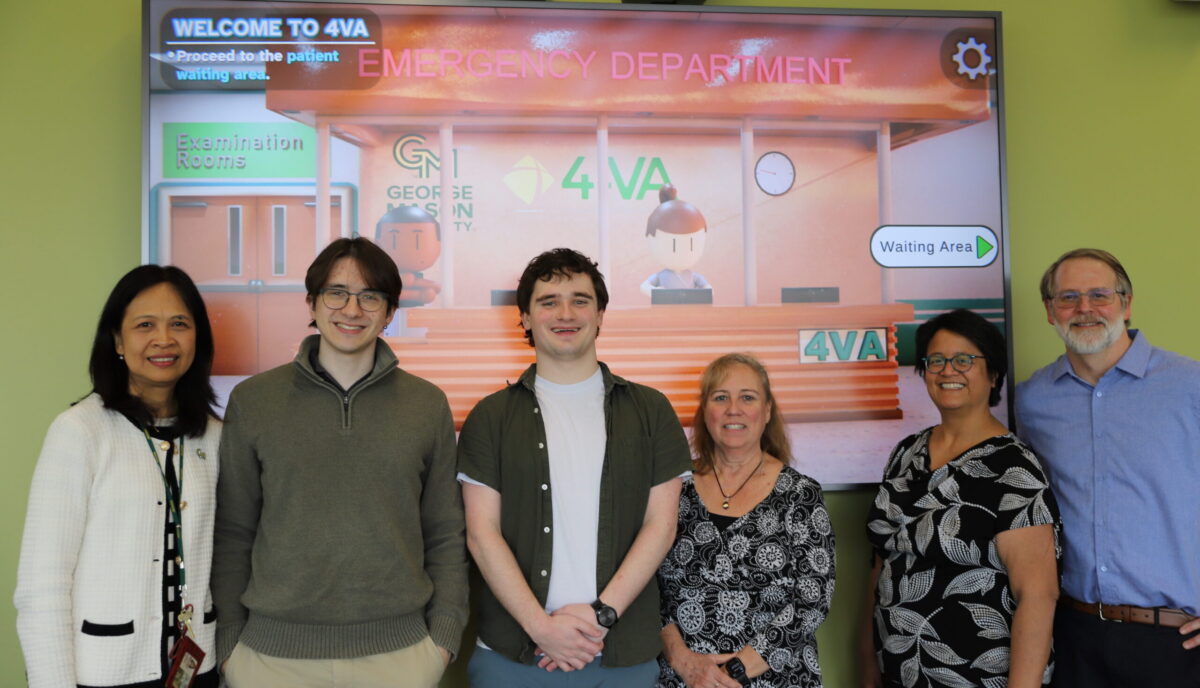
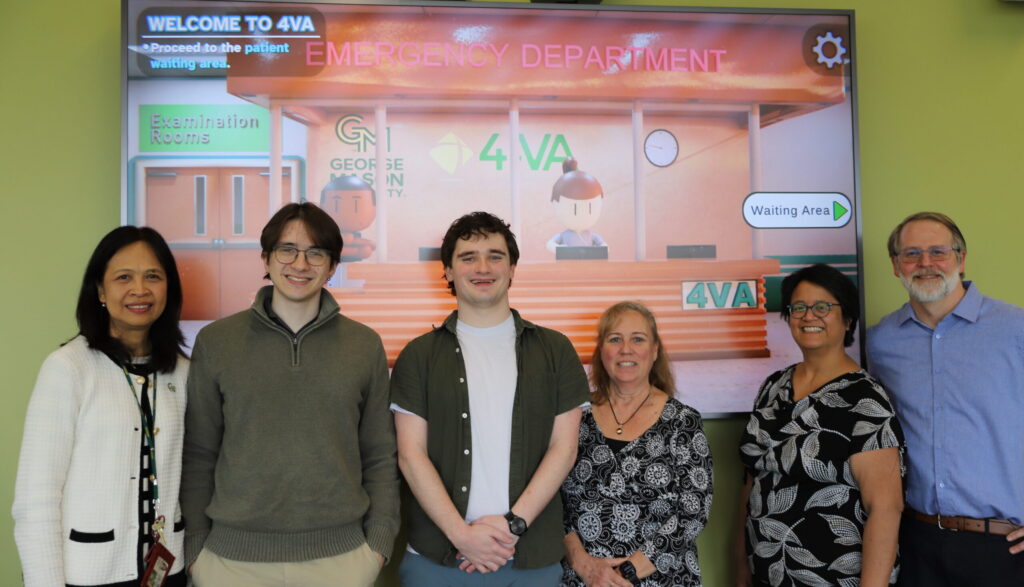
The 4-VA Team: (l to r) Kowitlawakul, Scrivner, James, Brooks, Guingab, Enfield |
Kowitlawakul was focused on ensuring the games created a real difference in students’ understanding of protocols, supported by data and results. She notes, “Limited evidence exists regarding how variations in game complexity might influence students’ learning experiences and outcomes. Our study was designed to specifically compare two digital escape room games — one on acute myocardial infarction (AMI) and the other on increased intracranial pressure (ICP) and closely examine students’ experiential and perceived learning outcomes as well as factors associated with problem-solving confidence.”
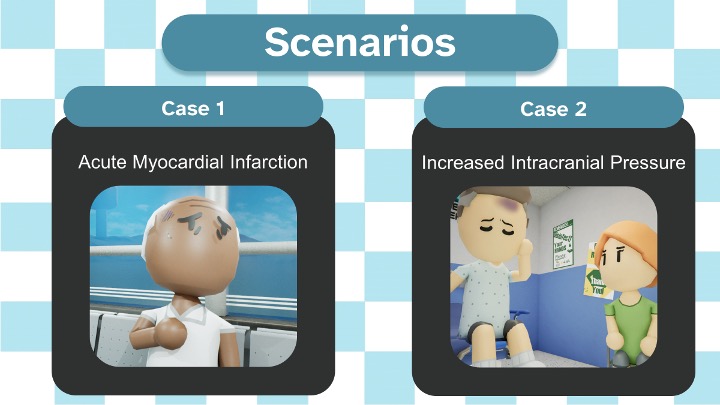
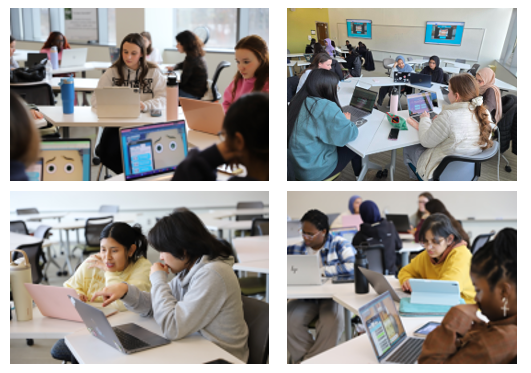
Both games were integrated into a 15-week medical-surgical nursing course in spring 2026. Seventy-five students participated in the AMI game and 52 in the ICP game.
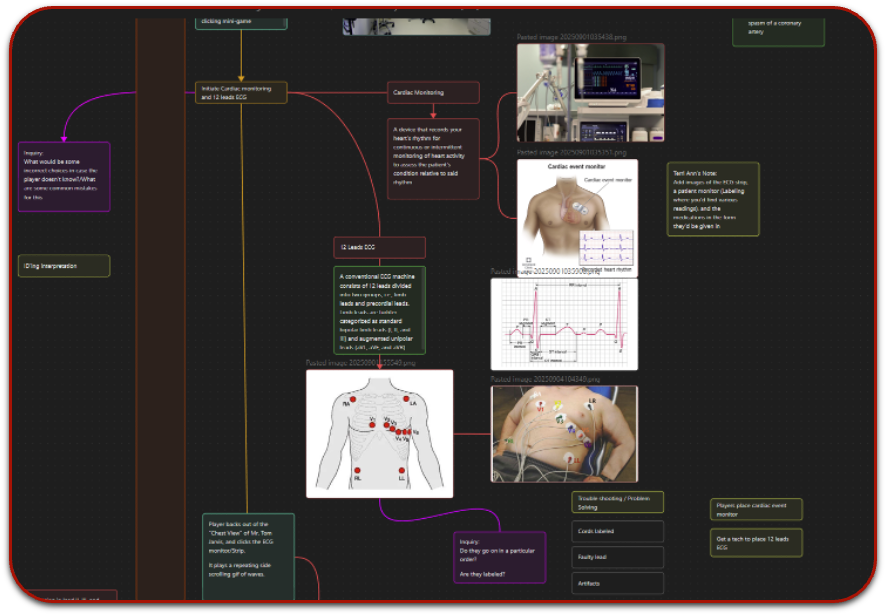
Following that, a cross‑sectional design was employed, incorporating pre‑ and post‑quiz assessments and validated questionnaires. The results indicated that students spent more time and made more incorrect attempts in the ICP game, reflecting its higher complexity. Both groups demonstrated improved post‑quiz scores, indicating successful knowledge acquisition. Stress levels were higher during the AMI game, which was introduced earlier in the semester. Strong positive correlations were observed among problem‑solving confidence, collaboration, satisfaction, enjoyment, and creativity, particularly in the ICP game, suggesting that increased complexity may further enhance learning outcomes.
The findings of this study have several important implications for nursing education, particularly in medical–surgical courses. First, the results support the integration of DERGs as effective and engaging instructional strategies. Both the AMI and ICP scenarios promoted learning and engagement, suggesting that game-based approaches can enhance students’ active participation and knowledge acquisition in complex clinical topics commonly taught in medical-surgical curricula. Second, the influence of task complexity on performance outcomes highlights the need for careful instructional design. More complex scenarios, such as the ICP DERG, may increase cognitive demand and stress, which can negatively affect learning and confidence. Third, the findings emphasize the importance of collaborative learning and peer interaction, particularly in early learning experiences. Incorporating structured teamwork and opportunities for discussion can help students build confidence in problem-solving, especially when first introduced to game-based learning strategies. Finally, given the negative impact of stress, especially in more complex scenarios, educators should consider strategies to monitor and manage student stress, such as providing clear instructions, debriefing sessions, and supportive learning environments. This is particularly important in medical-surgical education, where students must develop confidence in managing high-acuity clinical situations.
With the hard work completed, the team is now sharing their findings through a variety of journals and conferences. The response has been very positive and the team has already received requests from nursing schools around the country, as well as China, who have an interest in obtaining the games, creating their own similar games, or want to collaborate in additional work. The group is now preparing proposals for external funding to expand the project.
“This grant not only allowed us to explore scalable, game-based learning strategies that can be shared nationally and internationally, but also strengthened my personal teaching approach,” concluded Kowitlawakul. “Connecting with Gretchen, Michelle, the folks at VSGI, and nursing students was an inspiring experience that brought so many great ideas to the collective table for this project. It was energizing to collaborate with such a diverse and talented group working toward an important goal.”
Links to games below:
Case 1 (AMI): https://medscape.itch.io/medscape-case-1
Case 1 password: 4VA@Mason
Case 2 (ICP): https://medscape.itch.io/medscape-case-2
Case 2 password: 4VA@Mason