
Student activism is credited with bringing positive change for political, environmental, economic, and social causes on college campuses. It is recognized, however, that students’ time devoted to organizing and engaging for their cause while balancing coursework and college life can result in burnout. Long overlooked, Mason’s School of Integrative Studies Professor Cher Weixia Chen saw the need to identify and address the stress facing student activists.
Chen wanted to explore the conceptualizations, symptoms, and remedies associated with activists and identify intervention tools for improving their well-being. To attend to the needs of these community members, Chen applied for and received a 4-VA@Mason Collaborative Research Grant “Understanding & Supporting the Well-Being of College-Level Social Justice & Human Rights Advocates/Activists in the State of Virginia.” Chen’s colleagues included Graziella Pagliarulo McCarron, Assistant Professor, School of Integrative Studies, at Mason; Steve Grande, Director of the Office of Community Service-Learning at James Madison University (JMU); and Melody Porter, Director of Office of Community Engagement at the College of William & Mary (WM). They worked together to develop a multi-pronged approach to tackling this issue. Volunteering their work on the project were Taimi Castle, Professor of Justice Studies and director of the JMU Mahatma Gandhi Center for Global Nonviolence, and Lisa Porter, Associate Professor of Sociology at JMU.
After intensive training, the student researchers were able to recruit student activists, conduct interviews, analyze data, and begin preparing a manuscript under the guidance of the faculty team. Student researchers on the project included Kendall Cage, Mireya Campuzano, and Rafaela Lucioni at Mason, Cristal Badu from WM, and Brenda Goodson from JMU.
The team’s initial task was to learn what college student activists face through in-depth personal interviews. Explains Chen, “We found that burnout is prevalent among student activists. They experienced anxiety, panic, depression, hopelessness, or guilt – feeling physically and mentally exhausted. They felt pressure to keep laboring, advocating, organizing, and marching despite their own needs or limits. The difficulty in balancing school, family, and activism and the lack of perceived support for activist work and/or training to do the work at the institutional level all contributed to their burnout.”
 With the preliminary findings, faculty and student researchers then designed and organized a Fall 2022 workshop titled “Renewal and Resilience: A Community of Student Activists,” which featured student activists fighting for food security, prison reform, racial justice, voting rights, LGBTQ rights, and gun control at Mason, Virginia Tech, and Virginia Commonwealth University. Following the student activist panel, Castle presented “Regenerating the Self,” encouraging participants to assess their well-being with the help of a self-care workbook. Participants were also encouraged to create their own maintenance plans to help in times of stress. Lisa Porter concluded the program by sharing an interview with Crimson Solano, a community leader of Harrisonburg-based Comité Salvadoreño Paisanos Unidos, a pro-immigrant policy advocate group.
Now, the team is in dissemination mode. The project was featured at https://integrative.gmu.edu/articles/18135. They are developing a virtual community with the Human Rights and Global Justice Initiative for student activists, which is under construction in conjunction with Mason’s Institute for a Sustainable Earth. They have also submitted a book proposal on the well-being of student activists and are in the process of identifying external grants to expand this research further.
“This 4-VA@Mason grant helped us take a big step forward to take care of student leaders on our college campuses in Virginia. Without them, positive steps toward change are in peril,” says Chen. “It helped us take a critical look at where we can go from here. There is much more to be done.”
 Next, the team created

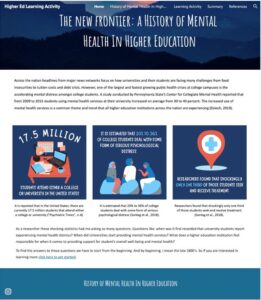 project on teaching and learning the history of higher education. Thirty-five students agreed to share their work for analysis and 24 were interviewed after completing the course. The survey and interview data made clear that students appreciated the value and relevance of studying the history of higher education for both their curricular and professional goals. One student explained, “We were able to take what we learned in the course and apply it to the project in a way that was very effortless, and that really helped me think about history in a different way.”
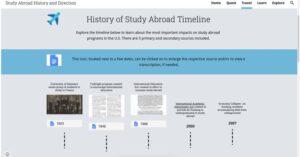 Each school contributed OER materials for the website. In addition to primary and secondary sources, the website now contains a database of institutional archives with digitized content, including yearbooks. Thanks to the two undergraduate research assistants, Azamy and Tcheo, over 700 institutional archives were cataloged on the site, including 48 Hispanic-serving institutions (HSIs), 24 historically black colleges and universities (HBCUs), and 15 women’s colleges. Additionally, the list includes 63 community colleges which is especially important given the lack of attention to these institutions historically.
 “This 4-VA project fostered meaningful and lasting collaboration across five Virginia institutions. While each university approached the history of higher education course from its own perspective, we were able to work together on a shared assignment that allowed for a rich learning experience among faculty and students across campuses. The results speak for themselves!” – Kelly Schrum, Professor, Higher Education Program, Affiliated Faculty, History and Art History, Mason
 “I sincerely appreciated having an opportunity to collaborate with colleagues across the state for this 4-VA project. Through our conversations and research, I developed new pedagogical approaches that benefited students and deepened my thinking about the history of higher education.”
 “We really enjoyed being part of this effort to expand student research on the history of higher education. Everyone came away from this project with a deeper understanding of how important it is to develop critical thinking skills and to look beyond our own institutions.”
 “The website, which holds a treasure trove of student research and engagement from a wide range of institutions, will be invaluable as we move ahead in studying the complex and influential histories of American higher education.”
 “When this asynchronous learning project was first introduced to the students, they were thrilled at the thought of not having to write a 20-page paper, however in the end, they did more work doing research on their chosen subject. They enjoyed this project because it allowed them a space for research and reflection, and it taught them how to create an interactive learning environment in an asynchronous environment. Being able to evaluate and participate in the projects created by other students in other universities across Virginia also taught them about their peers’ projects, too.”


 Researched and written over a 12-year period by Rosenthal, Where the Lilacs Bloom Once Again is based on her family’s genealogical papers as well as exhaustive document examination from around the world. It follows the story of Rosenthal’s grandmother’s cousin Friddie Stoleru, who was falsely charged with treason and spent the 1930s in prison and forced labor camps. The book recounts the lives of her family members during a time in Europe when discrimination and the persecution of Jewish people was at its peak.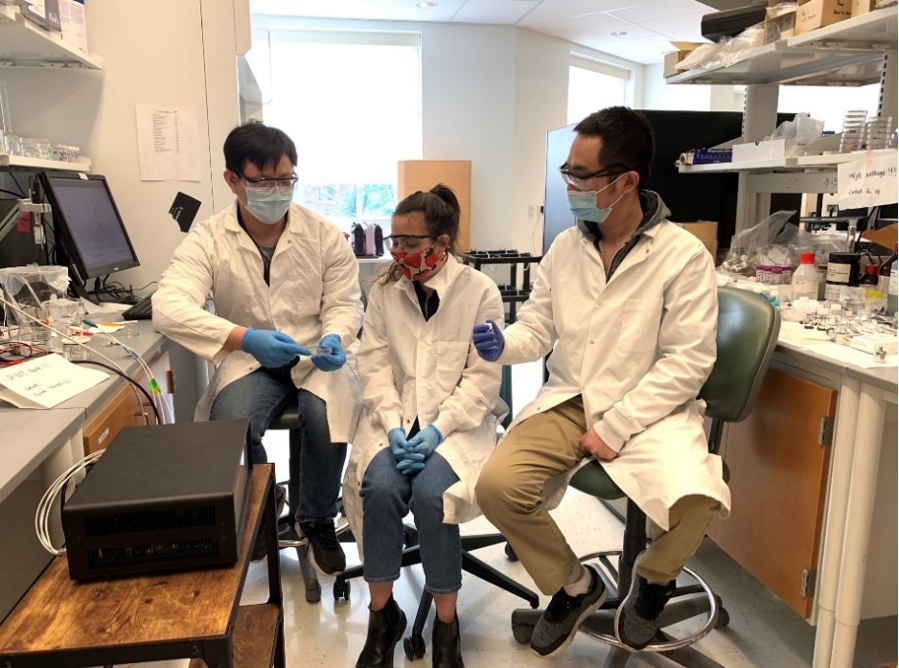
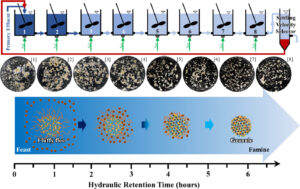 Essentially, the team identified the changes associated with aerobic granulation. This provided the ability to predict the functionality of bacteria in the new reactor system that facilitated the aerobic granulation process. “There is a time where the bacteria received the hard water, that’s the feast conditions, where it receives a lot of nutrients. And we also studied the water when there is not much nutrient available — the famine phase,” says Van Aken. “We were able to predict when we can reduce the retention time, that means the time it needs for the particle to settle down at the bottom of the tank. That’s a big advantage.”
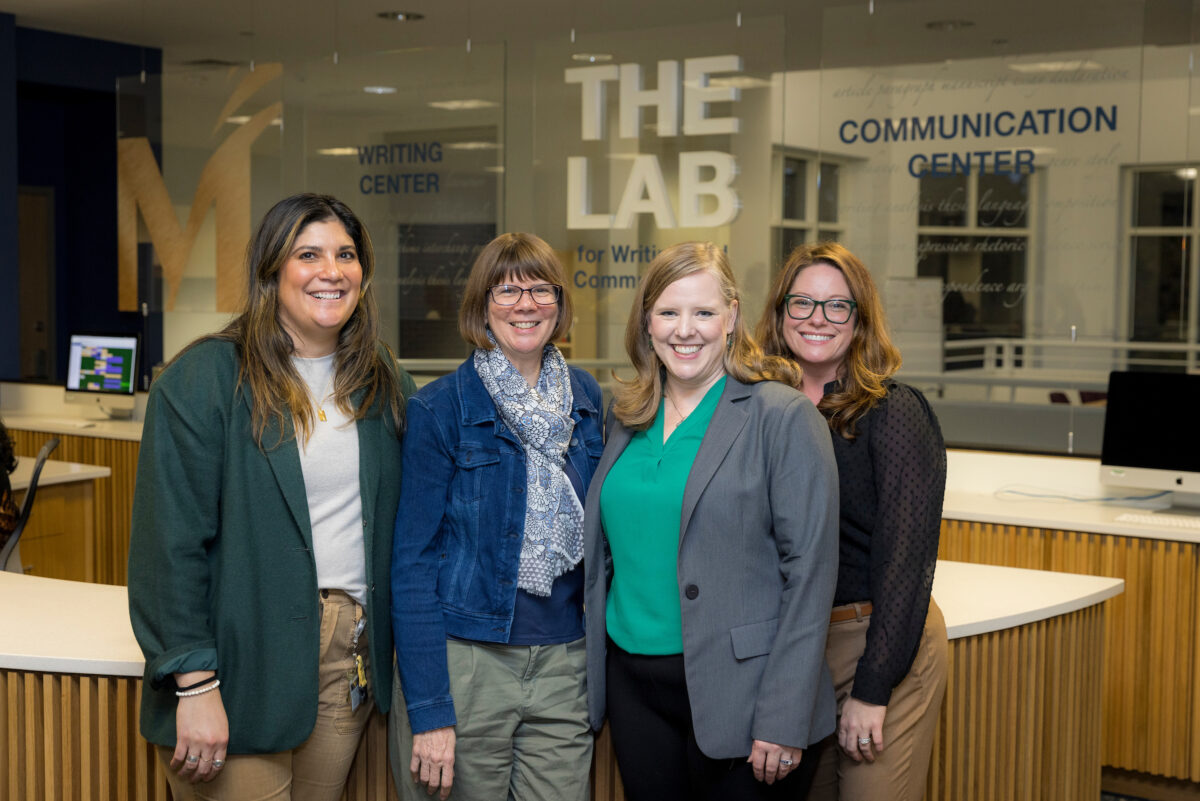
 The Lab has been six years in the making — built with the thought of combining what was the previously separate Comm Center and Writing Center. The Communication Center primarily focuses on helping students with speeches and oral presentations and the Writing Center focuses on written projects.