4-VA

Developing a Blood Test to Support Treatment of Surgically Induced Type I Diabetes

Starting Small.  Finishing Big.

Happenstance brought Dr. Robin Couch’s Lab and research into the 4-VA network.  Although he was aware of 4-VA@Mason’s Collaborative Research Grants, Couch hadn’t thought much about the program until he received a request from Dr. Mazhar Kanak of VCU.  Kanak approached the Couch Lab and the Mason Metabolomics Facility, asking if it was possible to identify biomarkers in blood serum which will determine a patient’s suitability for an islet cell auto transplantation, a procedure applicable to patients that suffer from chronic pancreatitis, requiring the removal of the pancreas. Couch concluded that the 4-VA program could offer an opportunity to answer VCU’s call.  Thus, he applied for, and subsequently received, a 4-VA@Mason grant.

Today, with his 4-VA project complete and yielding very promising results, Couch has emerged as an unabashedly enthusiastic cheerleader for the possibilities of collaborative research across the Commonwealth.  “Here in Virginia, we’re doing some very cutting-edge research, between UVA, Virginia Tech, JMU, VCU and all the other schools,” says Couch, “the state has really invested a lot of money at these institutions; but we’re all doing something a little bit different.  Therefore, it’s imperative that we support collaborations between the institutions to maximize our dollars so we’re not duplicating efforts.”

Couch, an Associate Professor in Mason’s Chemistry and Biochemistry Department reflects on why he believed it was possible to develop a test to meet VCU’s needs.  Couch details the comprehensive testing done in the Mason Metabolomics Facility, noting, “Unlike most bloodwork — where you just are looking at a targeted analysis of say a single glucose test – in our lab, we can look at thousands of different features and do a comparison.”

Specifically, Kanak — whose position titles include Assistant Professor; VCU School of Medicine, Department of Surgery, Division of Transplant Surgery; and Director of the Pancreatic Islet Cell Transplant Lab – wanted some insight into predicting which patients would be good candidates for an islet cell auto transplantation. 

When the pancreas is removed, so is the body’s ability to produce insulin.  Through islet cell transplantation however, the body can generate insulin and avoid surgically induced Type I diabetes. Yet this procedure is only effective in 25-50 percent of patients who have a pancreatotomy. Kanak postured, could a blood test serve as a predictor of successful surgery? Couch thought it was possible. 

Challenges Ahead.

Islet cell auto transplantation is conducted during the surgery to remove the pancreas.  The patient’s specific pancreatic cells that normally produce insulin (Islet cells) are extracted, cleansed, and returned into the patient.  The islets then embed themselves onto the liver and resume their function releasing insulin.  Because the islets are the patient’s own, there is no auto rejection. 

Kanak carefully collected bloodwork from nine different pancreatotomy patients at various time points — before the patient underwent surgery, at several stages during the surgery, and then after the surgery – and sent them to Couch for analysis.

Then the pandemic hit.  The analysis Couch envisioned possible looked possibly impossible.  Labs were shut down.  Students were sent home. Faculty couldn’t conduct research.  The blood samples sat frozen in the lab.  For months and months. 

Then, when labs began to open back up, there were explicit restrictions on who could be in the lab and how many people could be in the lab.  Several students originally designated to work on the project moved on to other life choices with the long break.  Fortunately, Couch had a more than suitable fallback plan.  He was able to rely on Mason Metabolomics Facility Lab Co-Director Dr. Allyson Dailey, who stepped in to handle the research.  “I was able to run all the samples and then assisted with data analysis,” says Dailey.
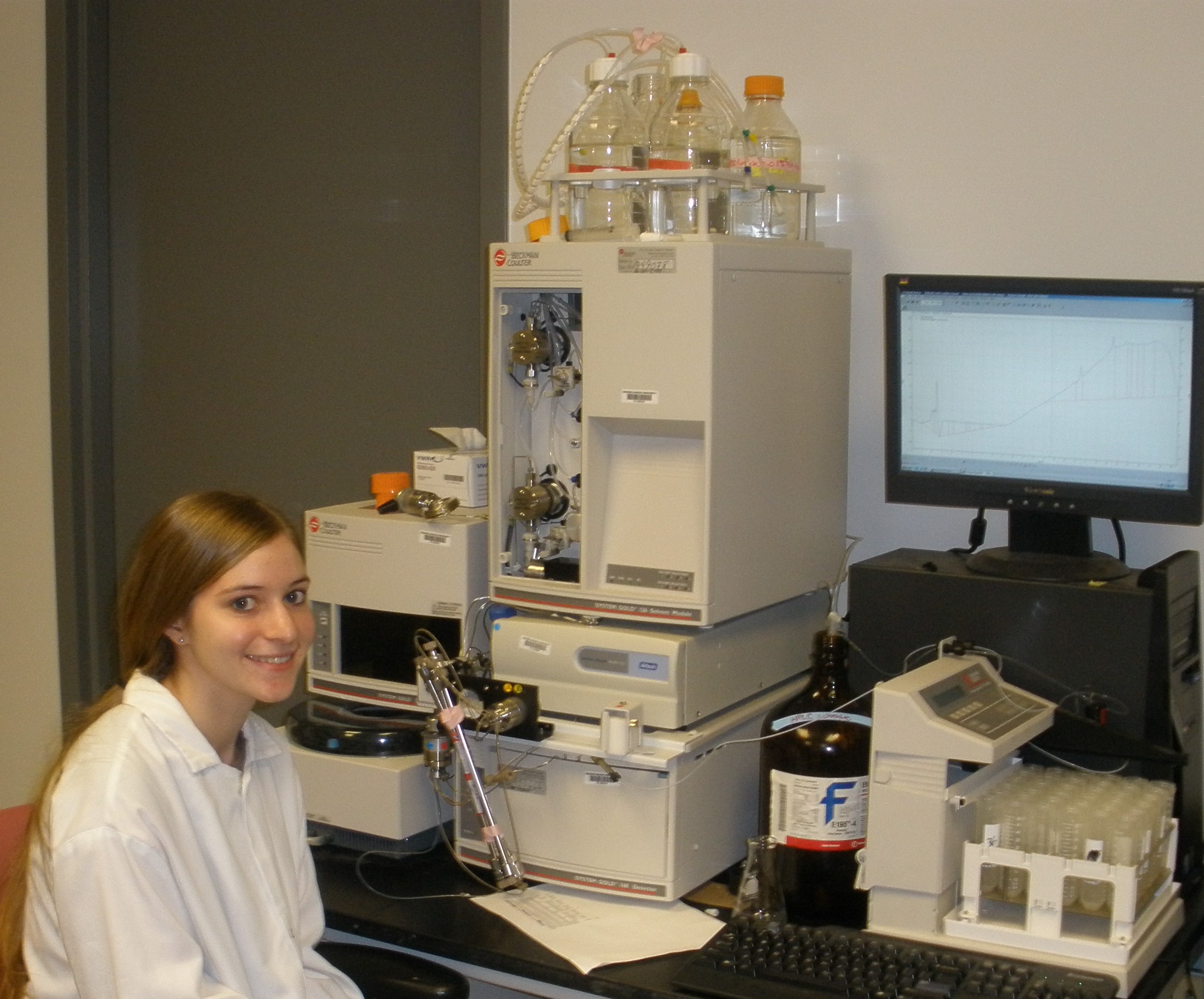
Dr. Allyson Dailey in the lab

Sample processing is quicker than data analysis, notes Couch. So, when the lab got back to work following the shutdown, considerable time was spent doing an exhaustive analysis of what features in the bloodwork most correlated with surgical outcomes.  Dailey concluded that of the 2,500 features found, there were only six metabolites identified as predictors of outcome.  A big breakthrough for the team.

“Now we don’t need to look at 2,500 metabolites, we only need to look at six — and we can ignore all of the other ones,” Couch points out.  “Going forward, we can focus our study and our attention only on those six and it makes it much easier to process the data. Now, it won’t be so time consuming.”

With the important groundwork done, Couch believes they can take this research to the next level.  “This is a great pilot scale investigation,” says Couch.  Next stop?  Getting a grant application into the National Institutes of Health, to seek funding for a clinical study with hundreds of participants — ensuring the biomarkers are validated.

Importantly, Couch thinks there actually could be much more to the research.  He wonders, if it is possible to identify the successful candidates for islet cell auto transplantation; is there a future where this procedure could be valuable for all Type I diabetes patients?  “Is it feasible to engineer out the problems and then make it successful for everybody?” Couch asks. “Hopefully,” he answers.
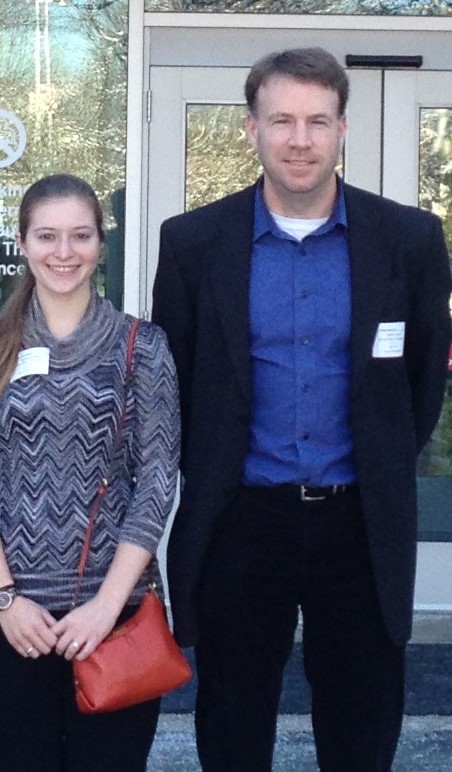
Drs. Allyson Dailey and Robin Couch

Couch and Dailey reflect on the research and its outcome.  Concludes Couch, “None of this would have happened if it wasn’t for the 4-VA funds.  We would have never had access to those samples, and we would never have done the research if it wasn’t for this program that fosters that collaborative environment.  We’ll get further faster with this type of collaboration. It’s one thing to fund individual islands (schools) with equipment and personnel, but to make a bridge between the islands, it really makes a big difference.”
Providing Balance, Injecting Energy, Creating Student Savings – Redesigning:  HIST 121

After spending almost one full year redesigning HIST 121:  Formation of the American Republic, Dr. Cynthia Kierner rolled out the new course and awaited student response:  Judging from the feedback, the new HIST 121 is a great success.

Here’s a sampling of students’ comments:

  • The Civil War letters assignment “crafted my skills as a writer & document analysis . . . It should be like this for all classes!”
  • “It was a great experience. I was able to get the info I needed on Monday and work collaboratively on Wednesday.”
  • “Really appreciated the opportunities for discussion in lectures. It helps cement the material.”
  • Modules were “a good way to shift focus from memorizing information to interpreting information.”
  • The Civil War letters assignment “allowed me to really dive into primary sources to learn about history.”

Beginning the redesign, Kierner recognized her challenge.  The course, a sweeping overview beginning with the Native Americans and moving through Reconstruction, covers a lot of ground.  Moreover, the introductory class is primarily taken by non-history majors who do not necessarily harbor a passion for the subject.

“I sought to use the 4-VA@Mason grant to redesign HIST121 to emphasize skills and active learning while simultaneously lowering student costs,” explains Kierner. “Specifically, I planned to replace expensive textbooks and document readers with free online sources–including the acclaimed opensource U.S. history text, AMERICAN YAWP–and also to create a series of new module assignments that give students the guidance they need to use online databases encouraging the development of research questions, to find and interpret primary sources (words and images), and ultimately produce their own small-scale research projects. In other words, to let them act like real historians.”

Although quite familiar with many sources available to create the modules, as a researcher in the field who has taught this course often, Kierner conducted some further investigation to identify new informational sources, including digitized Civil War letters.  Kierner credits Mason’s History Librarian, Dr. George Oberle, for his assistance in finding information and making it accessible.

Concludes Kierner, “This was a desirable opportunity to retool a lecture class to emphasize active learning. It re-invigorated my teaching in lecture-style classes, while providing students with a better experience at a more affordable cost – reducing books and materials costs from $100-$150 for to $0!”

Mason Turns 50 and 4-VA Celebrates a Dozen Years at the Intersection of Innovation and Education

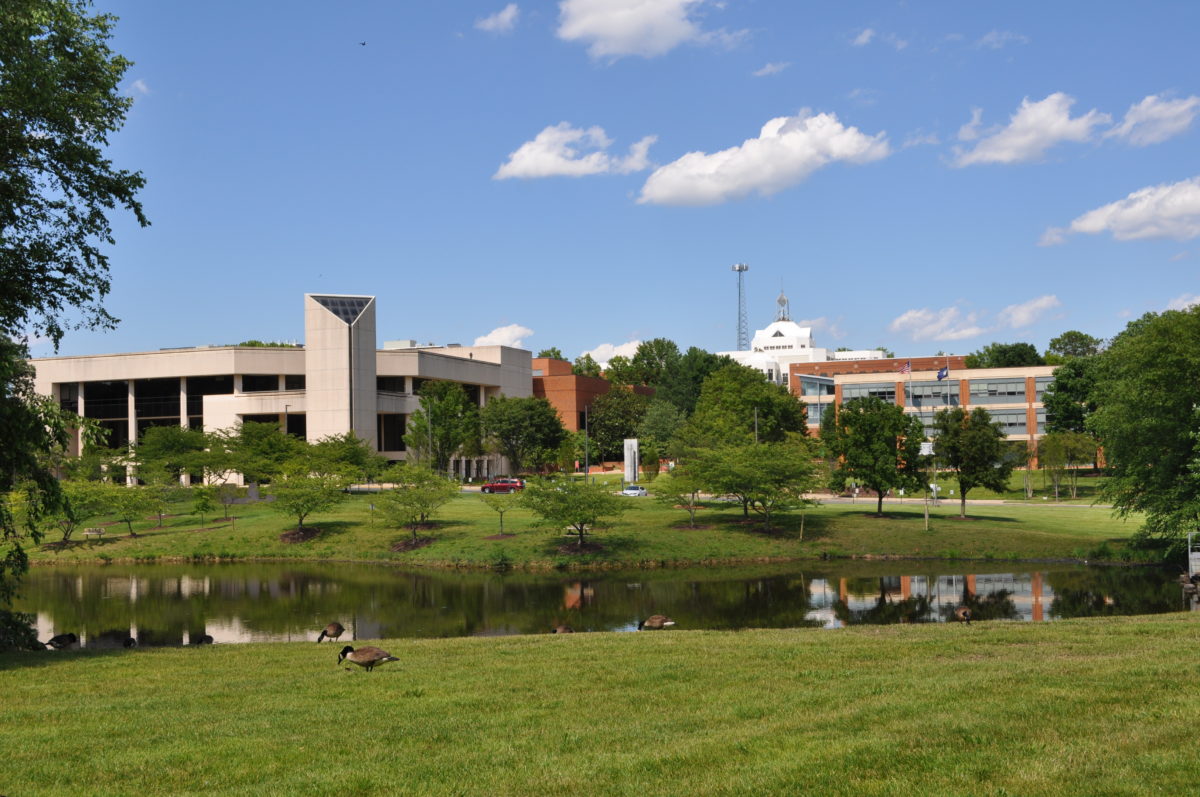
This year, George Mason University is celebrating 50 years as an independent university, separating from the University of Virginia in April of 1972. A lot has happened in those 50 years. Since our humble beginnings holding classes in the old Fairfax High School, Mason has grown into the largest public university in Virginia operating four campuses in the commonwealth – Fairfax, Arlington, Front Royal, and Prince William, and one in Incheon, Korea.

That’s a lot of education innovation.  But that’s always been the George Mason University way.

Since 4-VA@Mason launched a dozen years ago, we have followed in those same footprints. Moving from humble beginnings in 2010, when we were established upon the recommendation of the Governor’s Higher Education Commission and the Governor’s Commission on Economic Development and Job Creation, we’ve grown from four founding schools — Mason, James Madison University, Virginia Tech, and the University of Virginia – to eight, including The College of William and Mary, Virginia Military Institute, Old Dominion University and Virginia Commonwealth University. Our growth has reaped rewards for students, education, and Virginia.

4-VA Growth Marked with Collaboration and Efficiency

In 2010, we began by offering unique niche classes between the partner schools, via then state-of-the-art Telepresence Rooms, providing more options for students at the schools, while saving other universities the cost of developing and delivering classes with smaller enrollments.  From there, we’ve never stopped innovating.

The core purpose of 4-VA is to find ways to improve efficiencies in higher education institutions, promote cross-institution research and build collaborations that leverage the strengths of each partner university. We know that by working together we can grow that spark of a great idea into bright results and reduce the redundancy that sometimes results from working in separate silos. Our programs support four program areas – Collaborative Research Grants, Course Sharing, Course Redesign, and Degree Completion.  Importantly, 4-VA represents the breadth of higher education backgrounds; monitoring trends in education and learning; and allowing each of our endeavors to evolve and change as necessary.  One overarching tenant of the 4-VA foundation remains constant, however, to embrace emerging technology to achieve our goals.

Happy Big 5-0 George Mason University and here’s to another dozen years of 4-VA@Mason success stories!

Collaborative Research Grants: 4-VA@Mason Calls for Proposals

Calls for proposals are now open for Mason faculty interested in launching pilot research projects in conjunction with colleagues at one or more of the universities within 4-VA system in Virginia which includes William and Mary, James Madison, Old Dominion, Virginia Commonwealth, Virginia Military Institute, Virginia Tech, and the University of Virginia. 

The 4-VA Collaborative Research Grants (CRG) are designed to facilitate and support alliances which leverage the strengths of each partner university to improve efficiencies in research and higher education; reduce working in silos; and provide hands-on experiential opportunities for students. These grants encourage the development of baseline research projects in the sciences and humanities which could help fuel future research and funding.

“The 4-VA Collaborative Research Grant program provides our Mason faculty an important first step to bring to life a research endeavor that will benefit our students, higher education, citizens statewide, and the wider world beyond,” explains 4-VA@Mason Campus Coordinator Janette Muir.  “Since 2013, 4-VA@Mason has funded more than 65 CRG projects, covering a wide range of topics — from food sustainability throughout the commonwealth, to testing the antibacterial activity of computationally designed antimicrobial peptides; from redesigning a core course on the history of higher education to accelerating the discovery of novel polar thermoelectric materials.  We always have our eye out for bright ideas that can make a big difference.”

Successful proposals will incorporate collaborations with faculty from at least one other 4-VA partner school; provide opportunities to engage undergraduate and graduate student researchers in real-world experience and growth; and include plans for the dissemination of research findings statewide or nationally.

The Collaborative Research Grants are just one segment of a greater 4-VA mission to identify and boost efficiencies in educational design and research.  The 4-VA program also supports Course Redesign, Shared Courses, and Degree Completion.

The portal to accept proposals is open February 2 through March 31, 2022, with funding available July 1 through the 2022-2023 academic year. Interested faculty can view the application, review associated policies and procedures, as well as read previous successful proposals by visiting the 4-VA@Mason CRG Grants page.

4-VA@Mason Awards Collaborative Research Grants to 11 Faculty Members Across Disciplines

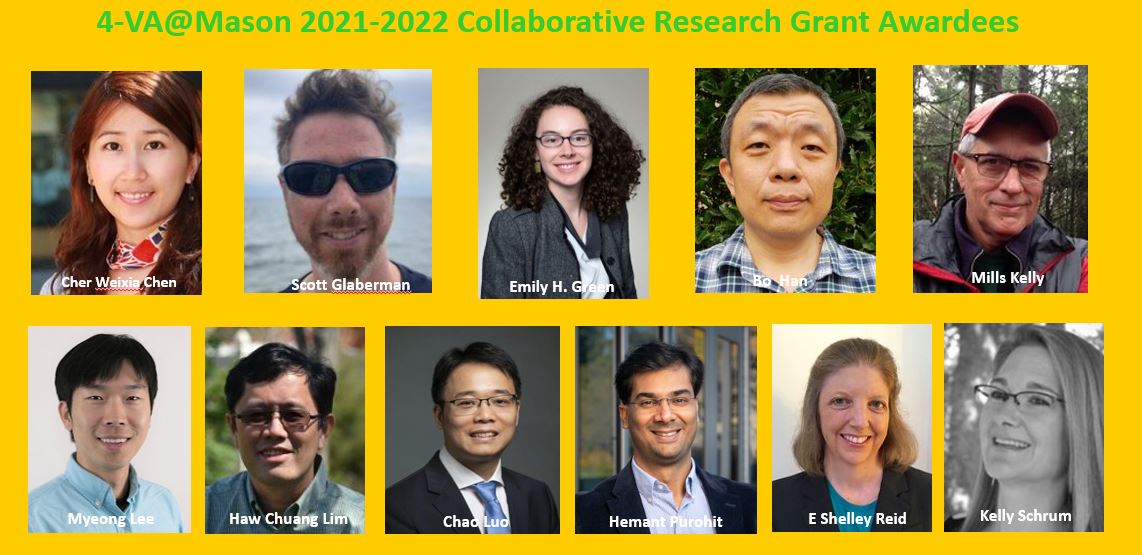
Backed by a statewide initiative, 4-VA@Mason has awarded 11 grants to Mason faculty for the 2021-2022 academic year — providing seed funding to launch innovations in education and original research.  The grants support studies to be conducted across various schools and departments from fine arts to computing to biology. Nine grants were awarded for new research, while two additional grants will fund extensions and expansions of projects initiated during the 2020-2021 year.

The 4-VA@Mason Collaborative Research Grants are specifically designed to encourage the development of partnerships with the seven other schools in the 4-VA system – James Madison, Old Dominion, Virginia Commonwealth, the University of Virginia, Virginia Tech, Virginia Military Institute and William and Mary — capitalizing on each school’s strength to create a stronger final product and discourage working in “silos.” Additionally, undergraduate and graduate students are involved in the projects, providing critical experiential learning and research skills.

“Each year, we continue to be impressed by the serious and thoughtful research undertaken by our award winners,” explains 4-VA@Mason Campus Coordinator and Vice Provost, Academic Affairs Janette Muir.  “Our Advisory Board saw the value and importance of these proposals which we concur will make a difference for our faculty, students, and citizens in Virginia.”

Although 4-VA supports a broad variety of forward-thinking trends in education including shared courses, course redesign, and pathways to degree completion, the Collaborative Research Grant program is the centerpiece of the program.  Through these grants, faculty have the opportunity to investigate a new area of research — bringing light to a unique subject of study – many of which go on to receive substantive funding from outside organizations.

The nine new 4-VA@Mason research projects for the 2021-2022 year will be led by following faculty members (with partner schools listed in parens):

– Chen, Cher Weixia; College of Humanities and Social Sciences, School of Integrative Studies-Understanding & Supporting the Well-Being of College-Level Social Justice & Human Rights Advocates/Activists in the State of Virginia (JMU, CWM)

– Glaberman, Scott; College of Science, Department of Environmental Science and Policy-Are Toxic Cyanobacteria an Emerging Health Threat in Virginia? (ODU) 

– Green, Emily H.; College of Visual and Performing Arts, School of Music-Music of Enslaved Virginians: History, Performance, Place (UVA)

– Han, Bo; College of Engineering and Computing, Department of Computer Science -Innovating Point Cloud Processing for Networked Systems (UVA)             

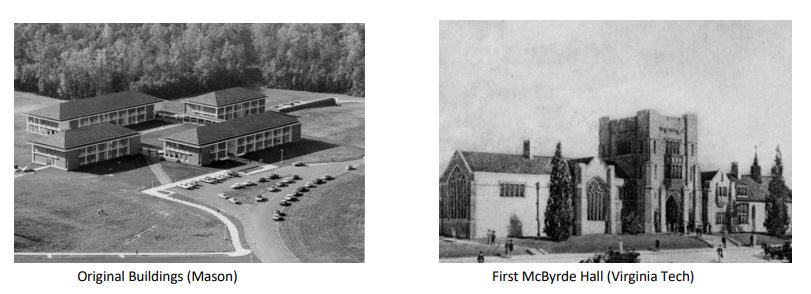
– Kelly, Mills; College of Humanities and Social Sciences, Roy Rosenzweig Center for History and New Media, Department of History and Art History-Mapping the University: A Digital Resource for Studying Virginia Campus Histories (ODU)

– Lee, Myeong; College of Engineering and Computing, Department of Information Sciences and Technology-AI for AI: Toward Community-level Human-AI Collaborations in Local Meetups (VT)

– Lim, Haw Chuan; College of Science, Department of Biology-Development of a novel genotyping panel for powerful and cost-effective evaluations of population structure and kinship in the critically endangered Eastern Mountain bongo (UVA)        

– Luo, Chao; College of Science, Department of Chemistry and Biochemistry-Metal sulfide-based nanomaterials for high-performance multivalent metal batteries (UVA)            

– Purohit, Hemant; College of Engineering and Computing, Department of Information Sciences & Technology-Assessing Tobacco Prevention Policies Using a Hybrid Approach of Nontraditional Social Media and Traditional Simulation Modeling (VCU)  

Additionally, two previous projects were funded for continuation and expansion:

– Reid, E Shelley; Stearns Center for Teaching and Learning-Energizing Scholarship of Teaching and Learning (SoTL) Production in Virginia through the Development of a Regional Community of Practice for SoTL Faculty Developers (JMU, UVA, VT, along with University of Mary Washington)

– Schrum, Kelly; School of Higher Education-Reimagining the History of Higher Education in the Digital Age (CWM, JMU, ODU, VT)

4-VA was established in 2010 upon the recommendation of the Governor’s Higher Education Commission and the Governor’s Commission on Economic Development and Job Creation.

Bringing Technology to Public Good

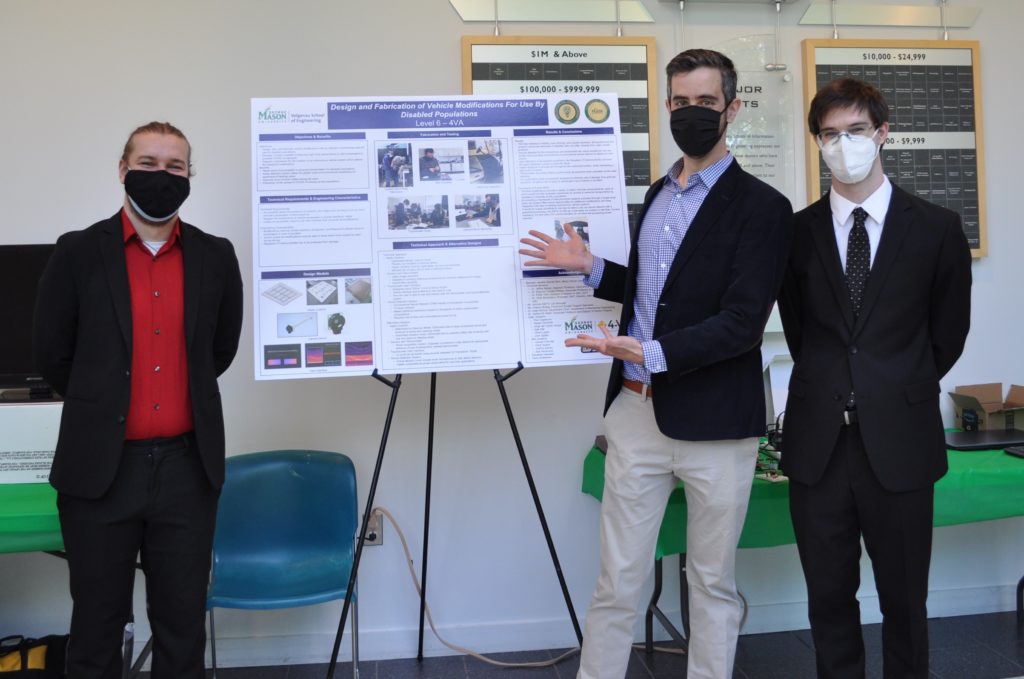
Mason and JMU “Engineers” Project for Hard-of-Hearing Community

When a proposal to fund a project entitled “Toward T-Shaped Graduates: A Joint Capstone Program at the Nexus of Mechanical Engineering and Science and Technology Policy” arrived at the 4-VA@Mason office, it was quickly apparent that it would check more than a few 4-VA boxes – creating an interdisciplinary, wholistic approach for education which utilizes technology for societal good.  As it turns out, the 4-VA Advisory Board agreed, and a grant for the research was extended.

This project asked students from James Madison University and Mason to consider how technology can be applied to solve challenges that include both technological and policy components.  Through trans-institutional partnerships, students were challenged to innovate outside of their disciplinary backgrounds by collaborating across programs.  They were guided by four faculty advisors from a range of fields — engineering, biotechnology, political science, and communications. As the lead PI Dr. Jeffrey Moran explains it, “T-shaped graduates are those that represent both a depth (the stem of the capital letter ‘T’) and breadth (top of ‘T’) of expertise.”

Moran sought to task students with the goal of addressing public needs; this often means tackling problems that straddle boundaries between disciplines. Moran noted that today’s environment calls for a new type of student and professional – an individual who is skilled in transcending disciplinary silos to address undertakings that do not fit into a single, specific category. 

Mason student and team lead Kyle Hall called the project assignment complex and challenging. “It was so broad and open, it was hard to know where to begin,” Hall says.  That, along with the shutdown brought on by the pandemic, the team (naming themselves ‘Level 6’ — see below) was prevented from meeting in person with the JMU students or with policymakers (as originally intended) to discuss the project.  Nevertheless, they forged ahead armed with research confirming that the deaf and hard-of-hearing community were often hampered by their disability when driving. 

Looking toward the future of autonomous vehicles (AV), the team settled on creating an alert system for an AV to support hard-of-hearing adults as they rode in an AV.

Their first assignment would be to learn more about the specific needs of the population. Fortunately, Hall notes, the JMU group had experience in theory and research reports and were able to provide the necessary foundation to begin project development. Additionally, because the JMU team also had experience in research involving human subjects, they were able to obtain permission from an institutional review board to start the study almost immediately.

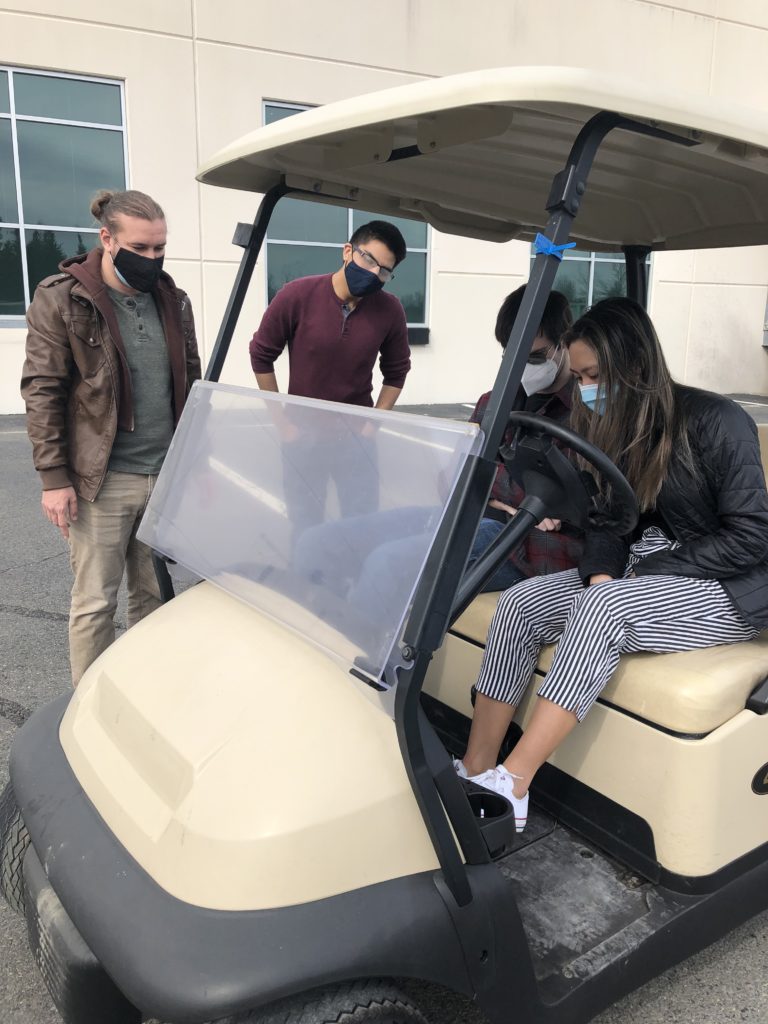
Following the JMU start, the Mason team procured a golf cart to function as the prototype vehicle for the project, and they launched on a series of technological modifications to alert the ‘driver’ to activities around the vehicle.

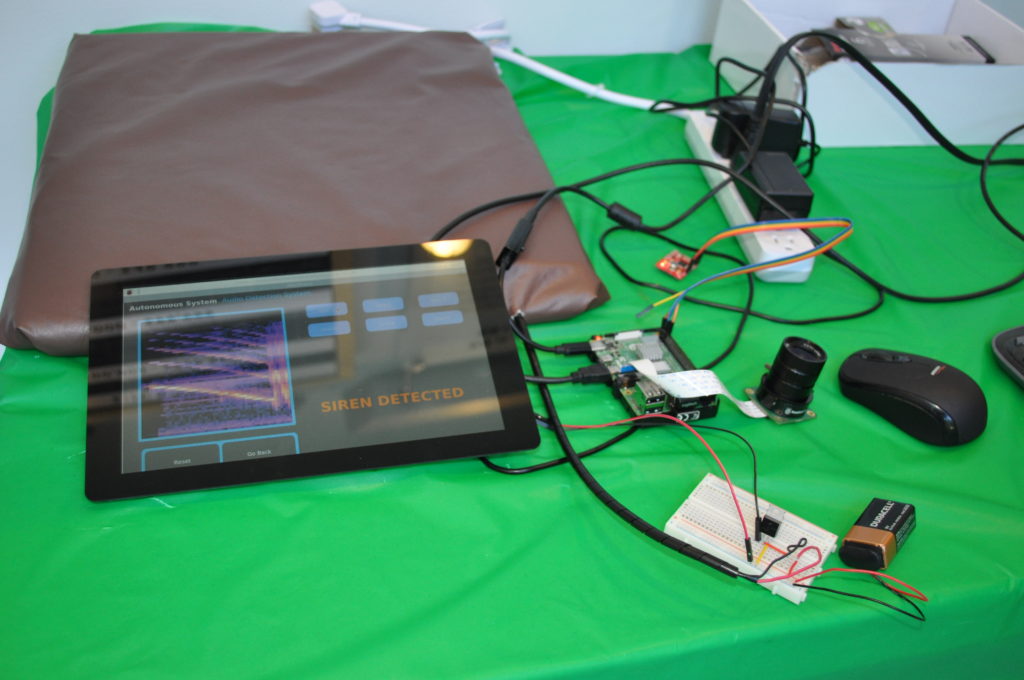
First, the students created an alert system using a 360-degree microphone mounted in the cart.  The microphone, linked to a Raspberry Pi (a small onboard computer), reads sounds in the immediate area. Using machine learning approaches, the system detects 10 different sounds that signal the need for increased caution, including an ambulance, fire engine and police siren, honking horn, construction work, people yelling, children playing, and dogs barking. The process was sometimes time-consuming – as is typical for machine learning, the system had to be “trained” to recognize these sounds, sometimes taking up to 100 hours for the network to learn one sound. When one of the 10 noises is detected, a seat cushion outfitted with a haptic sensor vibrates to let the driver know that a hazard is nearby.  The driver is then prompted to read a tablet screen on the dashboard which identifies the noise.

One additional piece of instrumentation outfitted in the vehicle is a camera installed on the ceiling, which is pointed at the driver’s forehead and can read body temperature.  Although not solely relevant to deaf users, the team anticipated that body temperature checks will be widely considered the norm for ridesharing in the post-COVID-19 era.

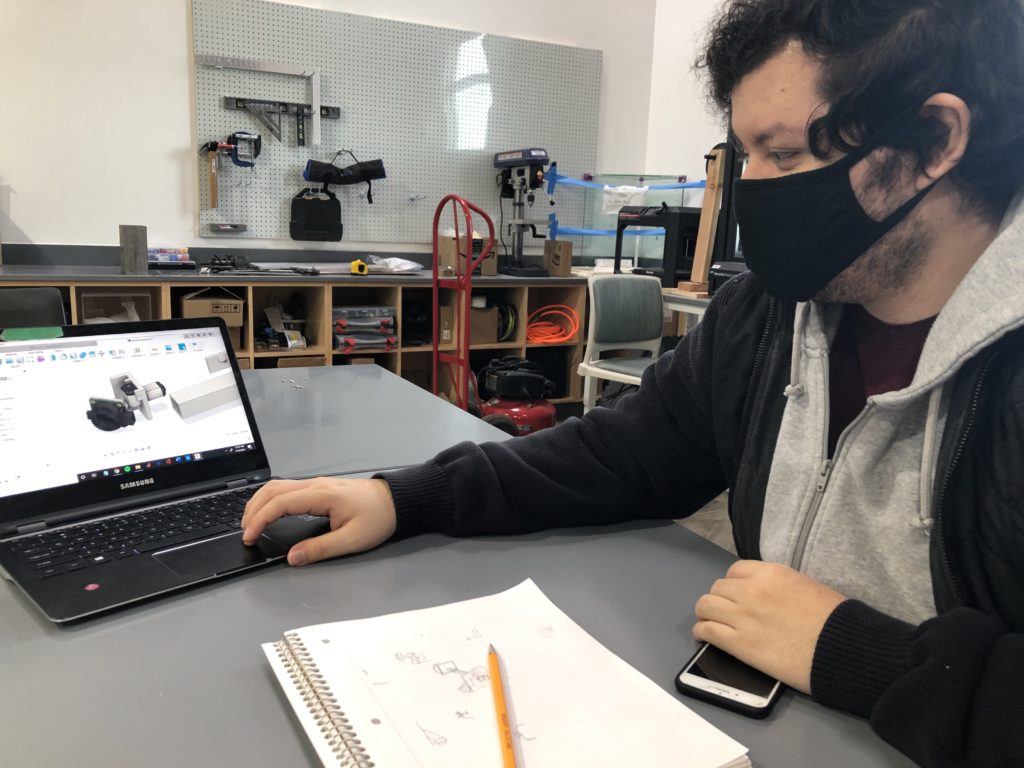
This labor-intensive systems creation and testing was undertaken in a workshop located on the Science and Technology campus in Manassas, where the group met most Friday afternoons during the spring semester. There, Hall says, they each focused on specific elements of the technology, but worked together to ensure a seamless final product.  (In one positive outcome of the general switch to virtual learning due to the pandemic; a JMU student on the team, who was living at home in Northern Virginia taking online classes, was able to join the Mason team in person in Manassas.)    

“This project allowed the advisors and students to tackle complex, multifaceted problems for the public good while building a great relationship with our colleagues at James Madison, which will continue in the future,” says Moran.  “And the students far exceeded our expectations for finding creative solutions to difficult problems, especially during this complicated year and with such an open-ended project.”

Nathan M. Kathir, Associate Professor & Director of Senior Projects in the Department of Mechanical Engineering Projects agrees, “A primary objective of the mechanical engineering program’s senior design course, also known as the capstone program, is to enrich the educational experience of senior-level students with a real-world engineering experience.  Mason’s six students on the Team level-6 experienced much more than that.”  Kathir continues, “In the program’s five-year history, they were the first team to collaborate with those outside of Mason and they did that despite restrictions due to Covid-19 throughout the year.  In a T-shaped graduate manner, not only they used their technical expertise, but they also excelled on other areas such as collaboration, communication, partnering with external stakeholders, managing risks, and planning for unknowns.”

Hall and Moran foresee that this project could be the beginning of a true legacy project, augmented by students in the future, adding modifications for communities with vision or mobility issues.  “I can see that this project could continue to build great things,” notes Moran.


Meet the Level 6* Team

Although each member of the team focused on specific and separate modifications for the vehicle, it was a group effort to bring the total technology to fruition.

Josh Ogden — devised the technology for the camera.

Paul Cipparone — formulated the haptic cushion.

Jeorge del Carpio Arispe — focused on the touch screen.

Oliver Lopez — worked on CAD modeling.

Raizel Clemente — handled all communications, purchases for items and materials.

Kyle Hall — organized the project and insured deadlines were met and wrote all the reports.

*The Level 6 name is a nod to the ratings of AVs – as a Tesla is considered Level 3, highly autonomous cars are Level 5 — this team’s development of technical modifications is Level 6.

Putting the History of Higher Education Under a Microscope

While the Council for the Advancement of Higher Education Programs (CAHEP) considers the history of higher education a required knowledge area, and it is often a core course in higher education programs nationally, Mason’s Kelly Schrum, PhD, recognized that the class is rarely taught by historians and often lacks a focus on the critical thinking, research, and digital literacy skills essential for success in the rapidly changing higher education workplace.

When Schrum, a historian and associate professor of higher education, discussed this disconnect with colleague Chase Catalano, PhD, at Virginia Tech (VT), they saw that within this challenge there was an interesting opportunity:  Create a history of higher education course at Mason and VT that is founded on historical thinking and research skills. Students could work collaboratively on digital research projects that draw on university archives locally and nationally.  Moreover, they could build on this work to create an open educational resource (OER) on the history of higher education.

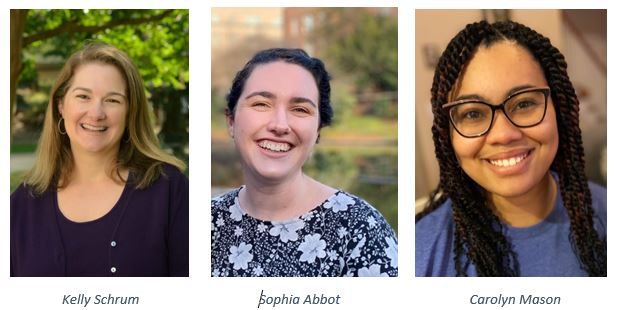
Schrum developed a plan, and then turned to 4-VA@Mason to seek a Collaborate Research Grant for her project entitled, “Reimagining the History of Higher Education in the Digital Age.”  Subsequently, Schrum and Catalano received 4-VA funding to help get the project off the ground and, joined by Sophia Abbot, a doctoral student at Mason, they got to work. 

Abbot, who has previously been involved with faculty development and has studied student-faculty partnerships in teaching, plays several integral roles in the project. The first is determining the current teaching landscape in higher education.  To that end, Abbot and Mason sophomore, Kelly Tcheou, sent out surveys to instructors involved in teaching the history of higher education around the country to determine the specific subject areas included in their courses.

Along with Schrum and Catalano, Abbot implemented a new primary source learning activity for their courses this past fall. While Schrum and Catalano supported students in the selection of their research topics and their analysis of primary historical sources, Abbot helped students translate their research to the digital space as they developed online learning activities for their peers. Abbot shares the example of one student’s research which looked at the history and the language of the Pell Grant.  The student gained a deeper understanding of how the language used in the original legislation resulted in who was able to gain access to the grants over the years; and who was not.  “Their research is doing exactly what we’d hoped… students are empowered to take historical thinking into their work,” says Abbot. “When students create historical narratives — learning the context and history of the sources — they can look back at sources and understand the impact of the history of higher education on colleges and universities today.”

Additionally, Abbot introduces students to the opportunity to share their work on the primary source website the team is building. Here, Abbot acts as a liaison between the Mason and VT students and faculty.  “Because I am not in an evaluation role, I am able to make sure that students understand that sharing – or not sharing — their work is completely optional and will not affect their grade.  I’m there to communicate the importance of consent,” she notes. 

Assisting Abbot with the website is Carolyn Mason who graduated from Mason in December with BA in anthropology and plans to begin a PhD program in anthropology in the fall. Mason identifies primary sources related to higher education including a university’s founding, student life, academics, and campus culture and uploads them to the website. She is also collecting a list of university archives that house historical documents related to their institution.

At the conclusion of the history courses, Abbot returns to interview students on both campuses to determine their thoughts about the class and their decision regarding sharing their work on the website.  She has interviewed 12 students and collected 19 student projects from both campuses.

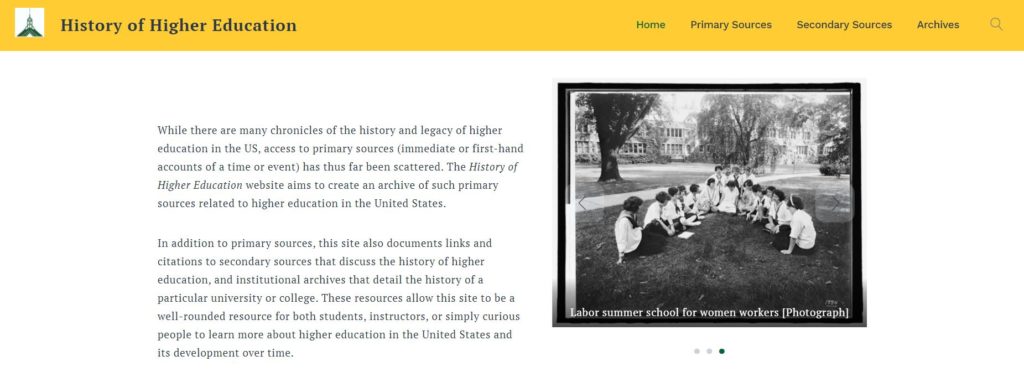
While the project is still in its infancy, it has already generated a lot of attention. The prototype website https://higheredhistory.gmu.edu/ presents more than 100 primary sources. Over 60 history of higher education instructors have responded to the invitation to share their teaching practices. And the team has piloted their primary source learning activity in two different higher education graduate courses (Fall 2020) and recruited a third course to pilot the activity (Spring 2021).

“We were delighted to have the ability to enrich the study of higher education, offer our students the opportunity to develop asynchronous online learning activities, and promote collaboration across institutions,” explains Schrum.  “Already, we have had great results.”

Abbot, Schrum, and Catalano presented initial findings at the Conference on Higher Education Pedagogy in February.

“This project has been a wonderful exercise in collaboration and research,” concludes Schrum.  “In fact, it has caught the eye of our colleagues at several additional 4-VA schools who are interested in partnering with us on this in the future.  We are also looking at the development of a workshop on this for instructors in the history of higher education. There may be more to come!”

Virginia Food Systems Leadership Institute: From Concept to Course

     4-VA@Mason takes great pride in being the catalyst for hundreds of impactful research projects and innovations in higher education.  This is achieved via micro grant seed funding for Collaborative Research Grants; supporting projects that encourage cooperation between partner schools within the state and capitalize on the strengths of each school.

     However, a new milestone was reached in this effort this spring — as one such grant team partnership morphed from a multi-year, thoughtful, wholistic, statewide Collaborative Research project to another of 4-VA’s foundational endeavors, Shared Courses.  The Shared Course concept has its roots in the 4-VA commitment to identify and deliver top tier courses between partner schools, thus saving the costs involved in bringing unique classes to fruition on each campus.

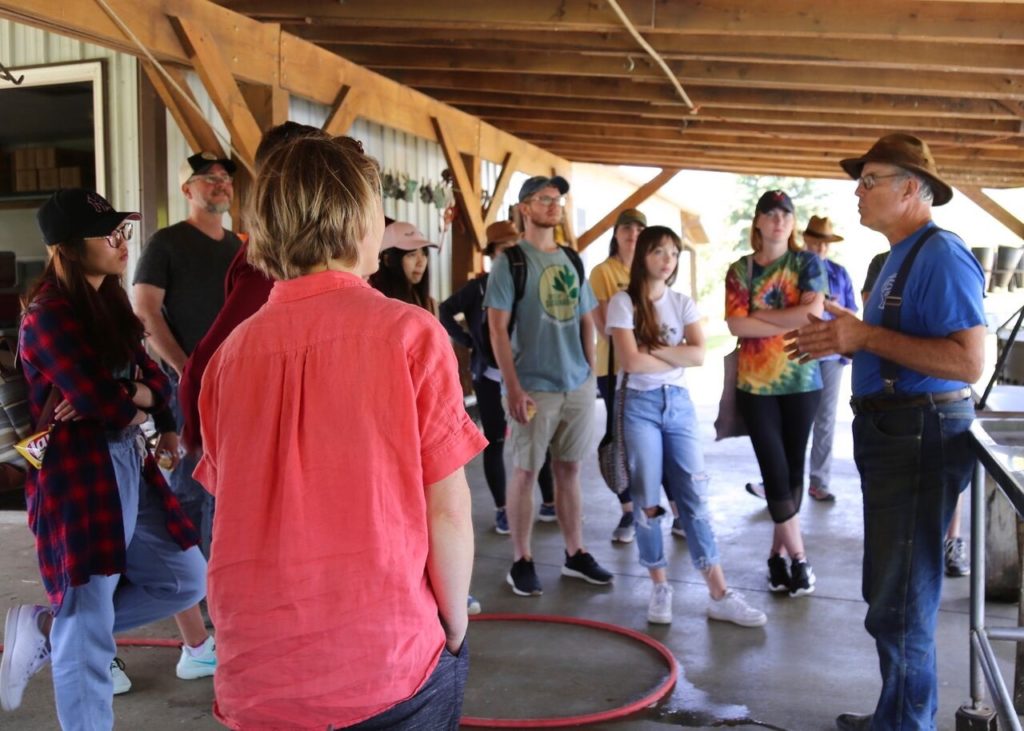
     The project crossing this boundary is the Virginia Food System Leadership Institute (VFSLI), which found its footings at a 4VA-funded symposium in 2015 at the Smithsonian-Mason School of Conservation in Front Royal.  There, interested faculty were brought together from Virginia Tech, University of Virginia, James Madison University and George Mason University.  Also attending the symposium were campus dining services personnel and sustainability managers. They discussed avenues to harness the intellectual, human, and economic capital of colleges and universities to foster the emerging food economy in Virginia.

   “Immediately, we saw a lot of synergy.  We had a passionate group of folks involved in all areas of food — producers, delivery partners, and consumers.” says Kerri LaCharite, PhD, Assistant Professor in Mason’s Department of Nutrition and Food Studies. “What’s more, we also recognized the need to support small-to medium-sized growers by helping them access institutional markets — a real boost for Virginia’s rural economy.”

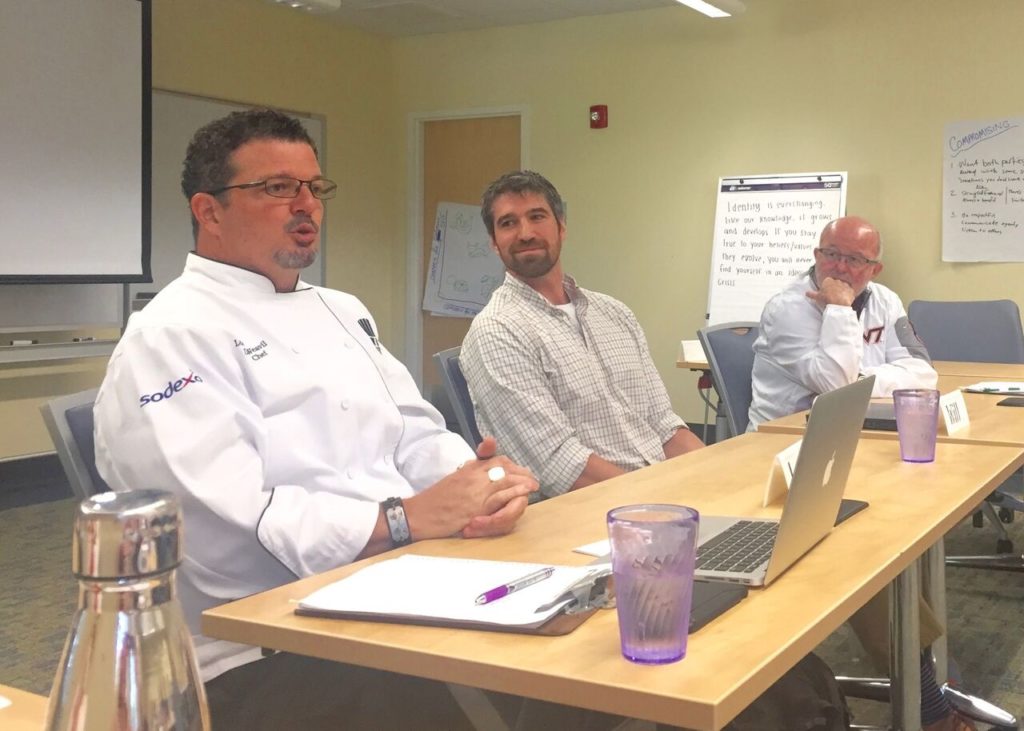
     In April of 2016, again under the 4-VA banner, a second symposium convened more than 40 Virginia food system stakeholders including farmers and processors; distributors and Aramark and Sodexo representatives (food service vendors at Virginia colleges); and faculty from the four schools.  Their focus was to increase university sourcing of Virginia-grown food.

     In 2018, the leaders of this effort from the four 4-VA schools developed an intensive four-week class which was piloted at the Smithsonian-Mason School of Conservation.  It was an instant success. 

     Mason Nutrition and Food Studies graduate student Kelly Kogan attended the course.  “This course was a fantastic chance to really immerse myself in the complex and changing chain of food delivery systems in Virginia,” Kogan said.  “I also loved the mix of students who attended.  We were graduates and undergraduates representing five schools.”

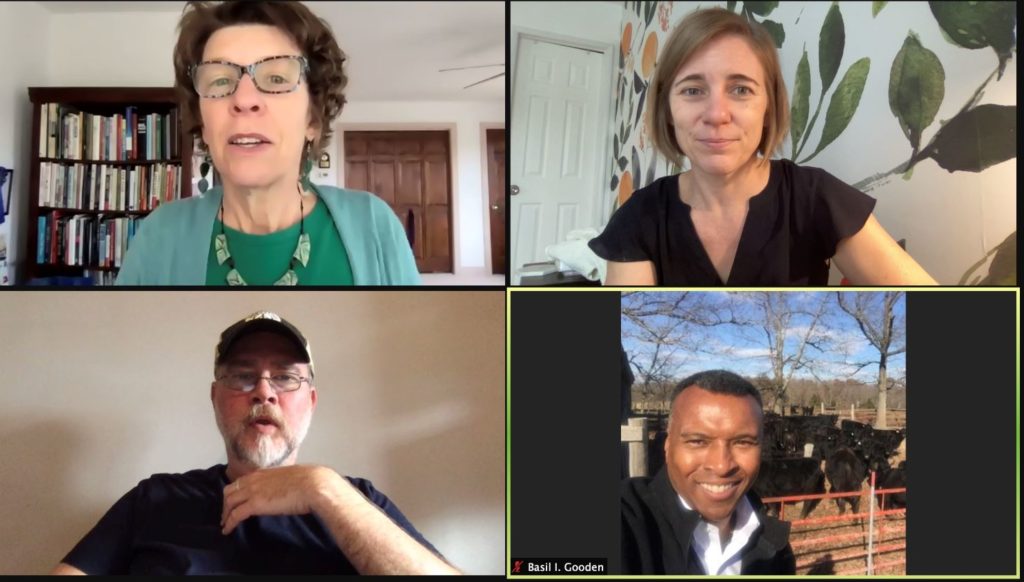
     This year, the latest breakthrough is the course: NUTR 626 Food Systems — a fully online, asynchronous, and synchronous, class offered through 4-VA Shared Courses program.  It will run Monday through Friday May 24 through June 17 with synchronous sessions 12-1 pm and 5-6:30 pm. Although Mason’s LaCharite and UVA’s Tanya Deckla Cobb will take the lead, the teaching will be divided between all the schools – including Tech’s Kim Niewolny and Michael Broderick from JMU. This year, this top team is joined by former Virginia Secretary of Agriculture Basil Gooden, currently a visiting scholar at VCU.


(Part of the VFSLI team on a recent call:  Clockwise from top right:  Kerri LaCharite, Basil Gooden, Michael Broderick and Tanya Deckla Cobb.)   

     “This is a one-of-a-kind class which could only have been developed through a true collaborative effort,” explains LaCharite.  “Each school contributed something vital to the project, and we are the better for it.  But, without the 4-VA funding, this would never have happened.  We’ve gone from a concept to a reality which will benefit students – and, subsequently, food system sustainability, farmers, schools, and businesses throughout Virginia.”

Collaborative Research Grant Calls for Proposals Now Open

4-VA@Mason has opened calls for Collaborative Research Grant (CRG) proposals for the 2021-2022 academic year.  Proposals will be accepted from March 1 through April 15, 2021. Proposal information can be found here. The grants are designed to facilitate and support alliances which leverage the strengths of each partner university to improve efficiencies in research and higher education.

“The 4-VA Collaborative Research Grant program provides our Mason faculty an opportunity to bring to life a research endeavor that will benefit our students, higher education, citizens statewide, and audiences beyond,” explains 4-VA@Mason Campus Coordinator Janette Muir.  “This CRG program provides faculty with seed money to develop proposals and hypotheses with an eye toward improving research competitiveness in the state and winning subsequent major, federal grants for the projects.”

Since the premiere of the Collaborative Research Grant program at Mason in 2013, more than 65 4-VA CRG projects have been funded, covering a range of topics throughout schools from humanities to the sciences.  Previous grant subjects have included increasing food sustainability in the state; testing the antibacterial activity of computationally designed antimicrobial peptides; redesigning a core course on the history of higher education; and accelerating the discovery of novel polar thermoelectric materials.

Successful proposals will incorporate collaborations with faculty from at least one other 4-VA partner school; opportunities to engage undergraduate and graduate student researchers for real-world experience and growth; and plans for the dissemination of research findings statewide or nationally.

The Collaborative Research Grants are just one segment of a greater 4-VA mission to identify and boost efficiencies in educational design and research.  Now in its 10th year at Mason, the 4-VA program also supports Course Redesign, Shared Courses, and Degree Completion.

4-VA@Mason Offers Online Academic Assessment Grants

4-VA@Mason is offering ten $4,000 grants to support faculty interested in developing and piloting alternative assessment strategies for online learning.  The goal of the effort is to examine student evaluation practices and help bolster student engagement, encourage academic integrity, and reduce tendencies toward academic outsourcing.  To ensure broad representation from all disciplines, proposals for the grants are encouraged from all ten colleges within the university. 

The grants are being offered under the direction of The Stearns Center, which will provide 1:1 instructional design support for the accepted proposals.

“When we pivoted to remote learning in March, through the Instructional Continuity Working Group, we quickly heard that faculty were struggling with academic outsourcing and other integrity challenges,” said Charles Kreitzer, Executive Director of Online Operations.  “Through these grants, we want to work together to develop strong, tested models for assessment.”

The proposals are due November 20. The planned timeline builds out the assessments in the spring, with pilot programs running in the summer and fall.  From there, each program will go through data analysis to closely examine impact before they are introduced for use. 

“One of the pillars of our mission at 4-VA@Mason is to identify and grow innovative ideas in teaching and learning,” explains 4-VA Campus Coordinator and Associate Provost Janette Muir.  “This effort to reimagine online assessment practices clearly supports that goal.”

For more information, contact your school’s Instructional Continuity Working Group representative.