4-VA

Secreted Proteins of Francisella: Critical Research Continues with a 4-VA Grant


Since 2005, Professor Monique van Hoek of Mason’s School of Systems Biology (SSB), has studied the bacteria Francisella, which can cause tularensis, a serious disease. Francisella, found in animals — especially rodents, rabbits, and hares — is also considered a class “A” biothreat agent.  In 2017-2018, van Hoek extended her Francisella study when she was awarded a 4-VA grant “Critical post-translational modifications of the Francisella proteome.” This research brought her together with Dr. Kristina Nelson, Director, Chemical Mass Spectrometry Resource (CMSR) at the Chemical and Proteomic Mass Spectrometry Core Facility at Virginia Commonwealth University.  Nelson received 4-VA Complementary Funding to assist in van Hoek’s study and a scientific match was made.

Recognizing the benefits of the SSB and the CMSR collaboration, this relationship has endured.  As van Hoek recognized, there is much more to be learned about this unusual bacterium, so in 2019 she applied and received a second 4-VA grant for a continuation of the study to research “Secreted proteins of Francisella.”
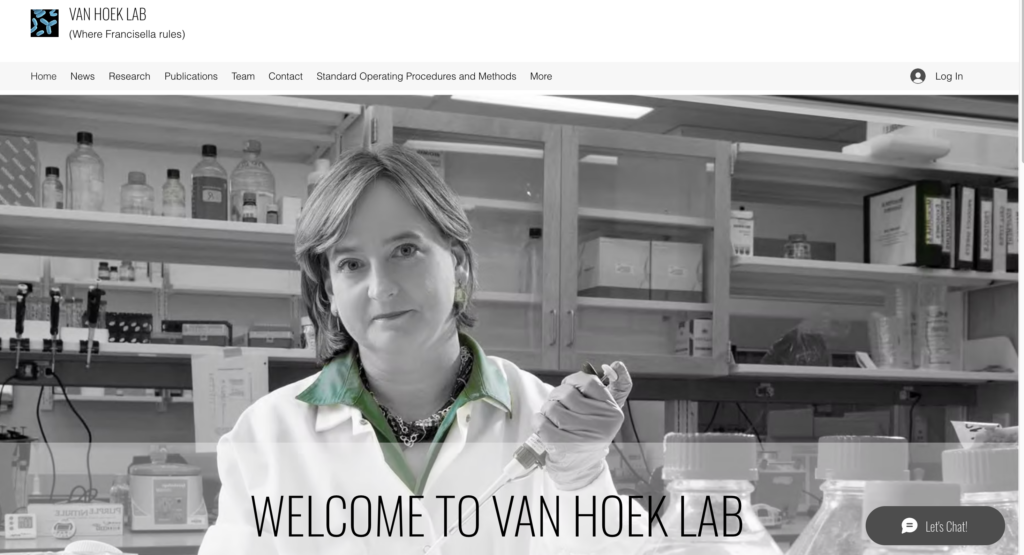
The Mason-VCU collaboration resulted in another success story.  Together, van Hoek and Nelson performed experiments and proteomics to identify the secreted proteins of Francisella novicida, a model bacterium used to safely study the more dangerous form that causes human infections.  Explains van Hoek, “We examined the proteins for signal peptides encoded in the proteome of Francisella and we identified 129 proteins of F. novicida that were predicted to have secretory signal peptides. These secreted proteins will advance our understanding of the pathogenicity of Francisella.”

Joining van Hoek and Nelson in the research was WeiDong Zhou, Research Associate Professor, Center for Applied Proteomics and Molecular Medicine, and volunteer graduate student Fasial Madkhali.

Now, they are sharing the results of their research; first through an abstract accepted for the Virginia Academy of Sciences in 2020. van Hoek is working on a manuscript on the topic and hopes to apply for a NIH grant to do further research.

“This 4-VA@Mason grant allowed us another valuable opportunity to share resources and accomplish much more together as we could have done alone,” van Hoek concludes.
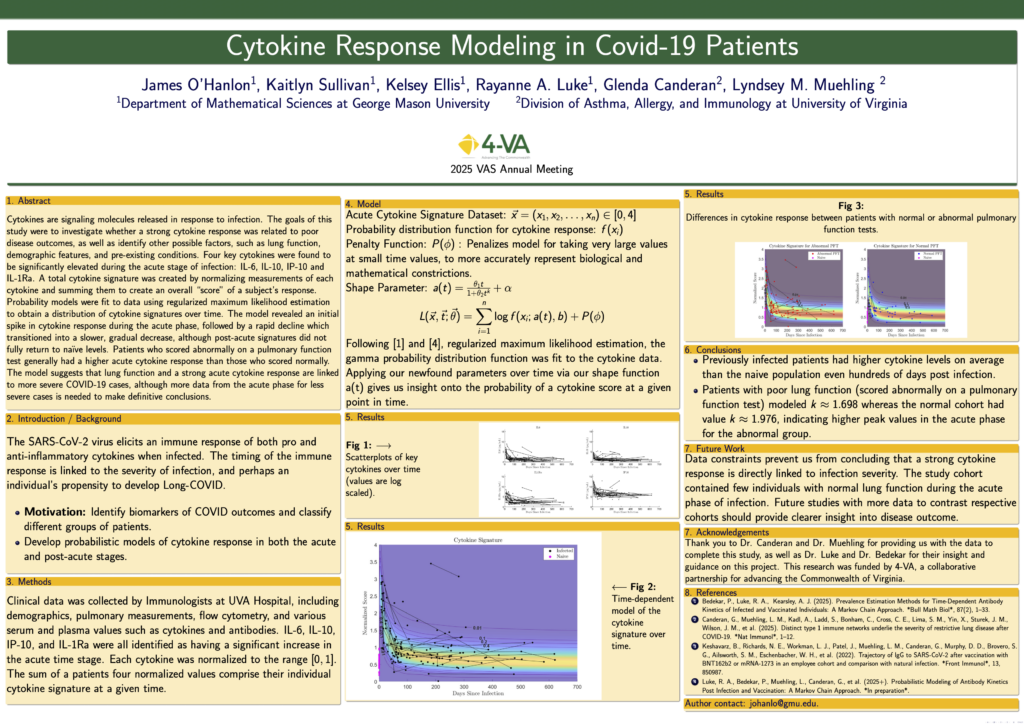
Personalizing Immune Response Through Mathematical Modeling


One size does not fit all in the world of antibody reactions.  That is, a patient’s response to infection and vaccination differs based on when antibodies bind to and dissociate from antigens.  Because each antibody reaction is unique, understanding and predicting an individual’s response is critical for ‘personalizing’ and optimizing therapeutic strategies.

Probability distributions can be used to solve this puzzle; accounting for uncertainty in data, rather than a single definitive outcome. Predictions with a level of confidence are preferable. This is achieved using probabilistic modeling, a concept that resides at the junction of medicine and math.  And, that intersection is exactly where you’ll find Rayanne Luke, George Mason University assistant professor in the Department of Mathematical Sciences within the College of Science.

Luke has a strong background in the field. However, she was interested in taking one step further.  She wanted to investigate, through a probability distribution modeling lens, demographic differences in antibody responses using datasets collected from severe acute respiratory syndrome coronavirus 2  (SARS-CoV-2) infection and vaccination.  Further, she wanted to account for differences between those with and without pulmonary symptoms post-acute coronavirus disease of 2019 (COVID-19) infection.  Luke recognized that this information could provide a useful framework for a comprehensive understanding of antibody kinetics for infectious diseases — and lead to an effective way of analyzing the protective power of natural immunity or vaccination, predict missed immune events at an individual level, and inform booster timing recommendations.

Taking that step required just the right mixture of math and science knowledge, datasets, communication skills, time, and patience.  Luke saw that was possible by joining together with colleagues at UVA — Lyndsey Muehling and Glenda Canderan, using the 4-VA system.  Importantly, working with Muehling and Canderan,  she could access a database of measurements related to SARS-CoV-2 immune responses in different populations.

After receiving the 4-VA award, Luke brought in George Mason University graduate student Kelsey Ellis and undergraduate students James O’Hanlon and Kaitlyn Sullivan. International postdoctoral associate Prajakta Bedekar, then at the National Institute of Standards and Technology, also assisted on the project.

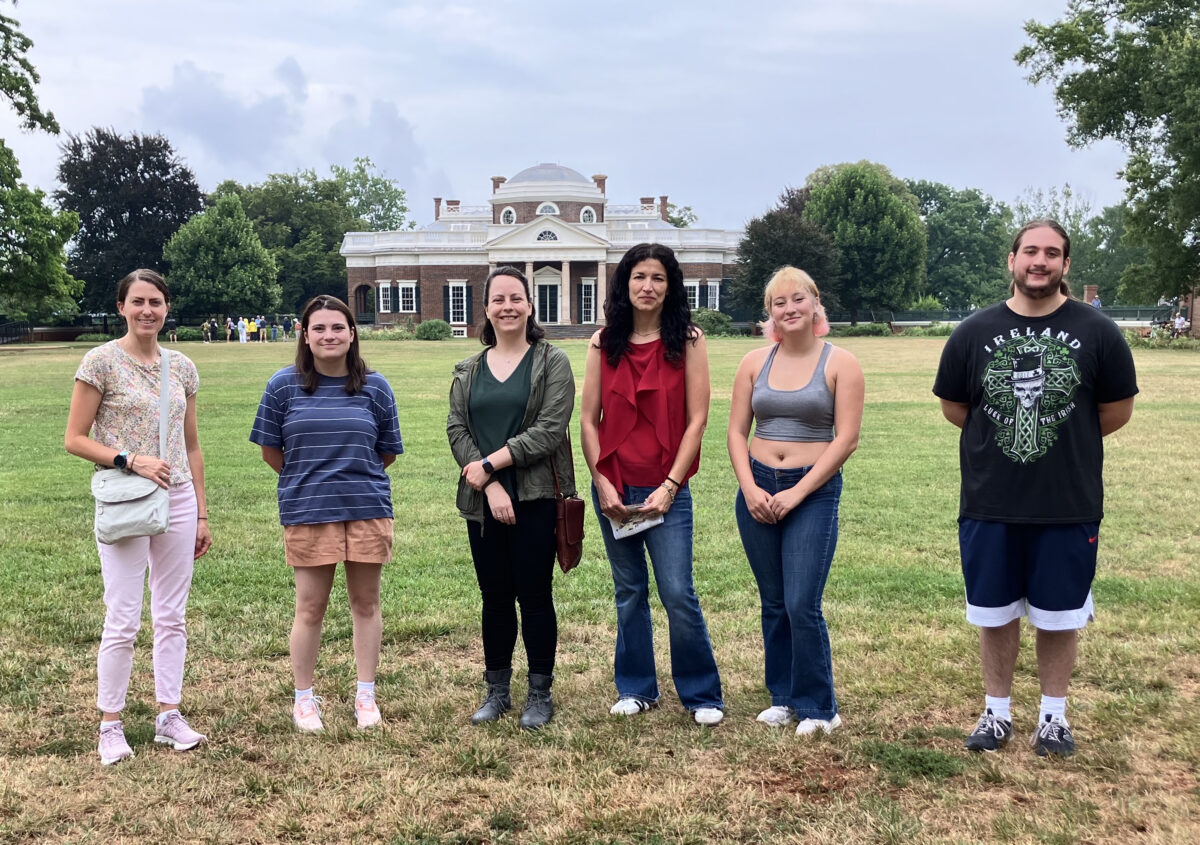
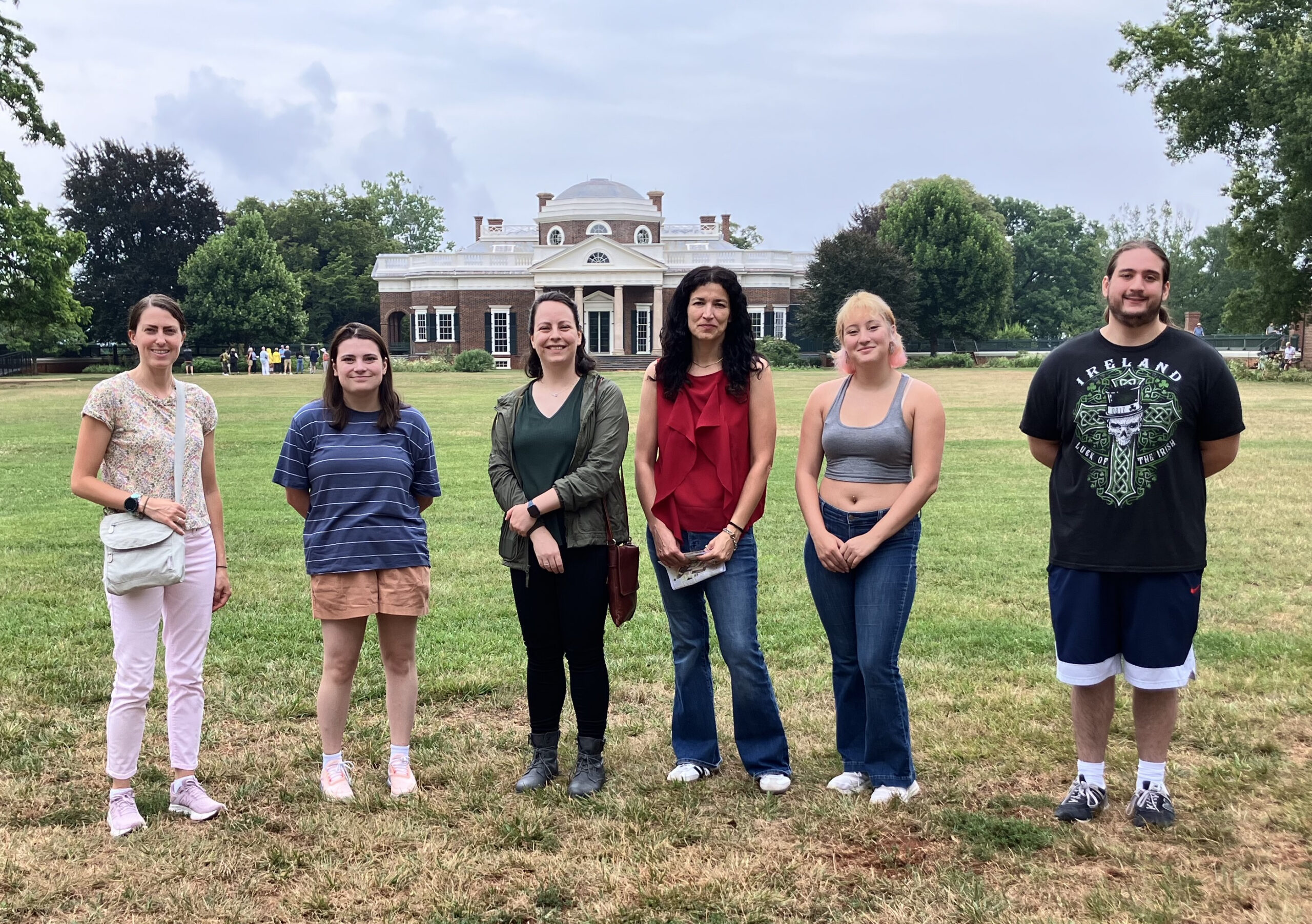
The 4-VA Team: (L to R) Rayanne Luke, Kelsey Ellis, Lyndsey Muehling, Glenda Canderan,
Kaitlyn Sullivan, and James O’Hanlon meet at UVA.

With the pieces in place, the work began. Explains Luke, “We fit time-dependent probability distribution models to the SARS-CoV-2 data to obtain distributions of longitudinal antibody response and cytokine values. We assessed differences between the modeled response curves of the groups using an overlap metric.”

The results were striking.  Explains Luke, “Our antibody models suggest significant differences between male and female populations and demonstrate deficient antibody responses of less-healthy groups such as smokers. Our cytokine models suggest that those with pulmonary symptoms post-acute infection have elevated responses over time. Further, we found that the cytokine response increases and then decays more rapidly than the antibody response.”  All are important permutations for consideration in treating patients with personalized medicine.

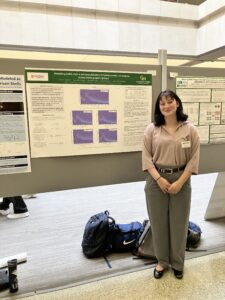
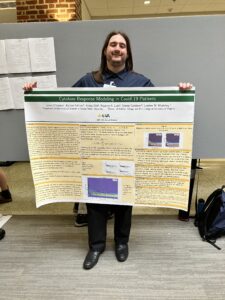
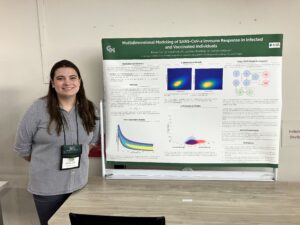
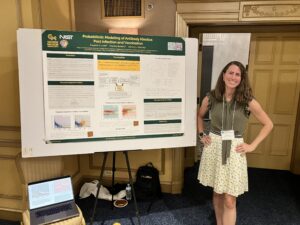
This part of the project, driven by O’Hanlon and Sullivan, led to a recently-published paper in Spora: A Journal of Biomathematics. Additionally, O’Hanlon and Sullivan presented their work through posters at the Virginia Academy of Science Annual Meeting. Ellis presented related research at the Association for Women in Mathematics Research Symposium.

The 4-VA@Mason support partly funded a larger project in which, for the first time, Luke and colleagues designed conditional probability density models for population antibody response that simultaneously address the interplay of antibody levels; prevalence; multiple classes; time-dependence; and multiple immune events. The UVA dataset and collaboration were critical for validating  this effort.

“Our work is an important step towards a comprehensive understanding of antibody kinetics for infectious diseases that could lead to an effective way to analyze the protective power of natural immunity or vaccination, predict missed immune events at an individual level, and inform booster timing recommendations,” continues Luke. “Further, this approach is fully generalizable to other diseases that exhibit waning immunity, such as influenza, RSV, and pertussis.” Further dissemination of their research is currently under review by a mathematics journal; the review is now available on arXiv, a mathematical pre-print repository.


L – Sullivan

R – O’Hanlon


L – Ellis

R – Luke


Luke also shared findings at the National Institute for Theory and Mathematics in Biology MathBio Convergence Conference, the Joint Mathematics Meetings, and as a keynote speaker at The Society for Industrial and Applied Mathematics DMV Conference.

The team is now planning to submit a proposal jointly to the National Science Foundation Division of Mathematical Sciences and National Institutes of Health National Institute of General Medical Sciences to further the research.

Luke concludes, “The 4-VA@Mason funding served as a catalyst to bring this project up to speed. It facilitated invaluable in-person collaboration with immunologists at UVA, disseminating our findings, and importantly, training students in mathematical biology research and science communication.”


4-VA Researchers Help Define the Role of Diabatic Heating in Determining Atlantic Storm Paths

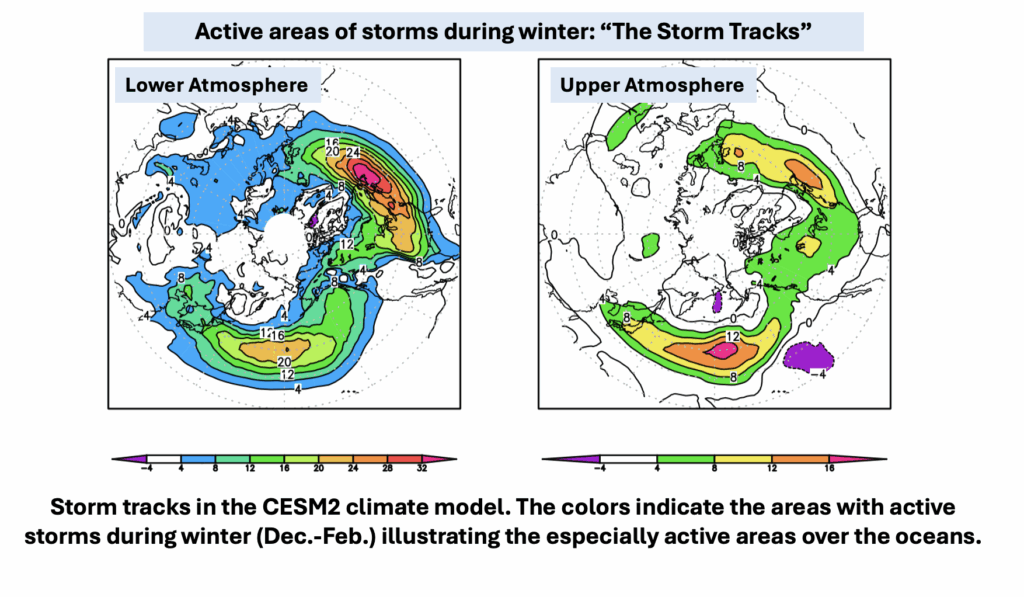
Sometimes, in science and technology, studying and incorporating the past can offer insight into the future. Two longtime researchers in the area of climate variability, George Mason University’s David Straus and University of Virginia’s Kevin Grise, saw a specific opportunity to conduct a number of experiments to utilize historical weather data and the latest version of the Community Earth System Model (CESM2) to better understand the development and movement of mid-latitude storms in the Atlantic. CESM2 is a state-of-the art weather and climate model developed and maintained by the National Center for Atmospheric Research (NCAR).

Straus
Grise

Straus and Grise were interested in better understanding the paths of extratropical cyclones — large rotating weather systems that occur in the extra-tropics (between 30° and 60° latitude) that are responsible for much of the variations in weather across midlatitudes. Their focus is the Atlantic storm track, which extends from the east coast of North America toward Europe and has an important influence on the weather in Virginia. For this project, the not-well-understood role of diabatic heating in shaping the evolution of the cyclones was of particular interest.

Diabatic heating is the heating or cooling of the atmosphere due to processes that involve the transfer of heat between the system and its surroundings, including heat released or absorbed during phase changes of water (“latent heating”), radiative heating and heat transfer through contact.  This is a specialty of both researchers.

Straus explains, “Global climate models commonly struggle with representing key aspects of the extratropical Atlantic storm track, including its intensity and orientation. One hypothesis that has gotten recent attention is that diabatic heating generated as part of weather systems plays an important role. Within the warm air sector of a typical cyclone, ahead of the cold front, lies the warm conveyor belt where warm, moist air is transported poleward and upward. This results in a broad region of latent heating from condensation.”

Swenson

Straus and Grise recognized that collecting and integrating the data would be a tall order, requiring a healthy dose of scientific elbow grease. They believed that with the help from George Mason University research faculty member Erik Swenson — an expert in the configuring and running of state-of-the-art climate models — much of the heavy lifting could be done successfully and cost efficiently using graduate students. The additional benefit of this approach would be affording the students a unique opportunity for hands-on experiential research in the field.

Straus proposed to 4-VA that the study would deliver important insights for weather prediction in Virginia – and beyond. (Straus, Grise and Swenson volunteered their time on the project.) The 4-VA Advisory Board supported the proposal, and the project was funded.

With that, Straus, in George Mason’s Atmospheric, Oceanic & Earth Sciences Department and Grise, in UVA’s Department of Environmental Sciences, put their team to work.  They began by running intervention experiments for 20 winter seasons — 2000/2001 through 2019/2020. For each season, the CESM model was initialized using the observed state of the atmosphere and ocean on November 1 and integrated until the end of March with the model configured to save detailed information every six hours of simulated time. Analysis of the output of the runs focused specifically on the overall strength and paths of the storms and on details of the diabatic heating not normally analyzed.

To accomplish this feat, it was up to Swenson and George Mason graduate students — Noah Blanco-Alcala, who set up the control CESM climate simulations at NCAR, and Heidi Nsiah, who ran CESM forecasts from climate simulation initial conditions at NCAR — to get it done.

Nsiah reflects on her role in the project, “Being introduced to this research on storm tracks has truly broadened and sharpened my skills. I’ve learned not only how to write and edit scripts, but also how to set up and run control experiments, specifically CESM, which has strengthened my confidence in handling computational work. I’ve also learned how storm tracks are diagnosed, and moving forward, I hope to carry out meaningful analyses that will help generate hypotheses for future research.”

The team will present their research at the January 2026 American Meteorological Annual Meeting.  Additionally, their future plans also include expanding their study with external grants. “We believe that this data will be very helpful for CESM moving forward, and will improve our fundamental knowledge of how storm tracks work,” notes Straus. “We recognize that there is a lot of room for more work in this area of science.”


Using Virtual Realty to Prevent Falls in Older Adults


Annually, one in four senior citizens seek emergency care from a fall-related injury.  To help combat this statistic and prevent falls — which are often the result of poor balance — conventional physical therapy rehabilitation approaches have traditionally been utilized.  However, many in the physical therapy field now view immersive virtual reality (VR) technology as an intriguing option for older adults. While laboratory-based experiments provide promising findings, to date this technology has yet to be scaled-up and translated into clinical settings.

Two scholars at 4-VA schools with multidisciplinary backgrounds in related fields envisioned a future where clinicians could use affordable VR technology to outperform traditional diagnostics, therapeutics, and pharmaceutical approaches in fall prevention.  They saw an opportunity to develop effective uses of VR technology to detect cognitive-motor function in older adults, and identify fall-risk factors for this population.

Raffegeau
Rhea

The two scholars, Tiphanie Raffegeau, in George Mason’s School of Kinesiology, College of Education and Human Development, and Christopher Rhea, Old Dominion University’s Associate Dean for Research and Innovation, Ellmer College of Health Sciences, developed this project.  Raffegeau’s prior research focused on inducing anxiety during walking to study the fear of falling with an elevated height VR paradigm, while Rhea has primarily concentrated on examining how people adapt their steps to avoid obstacles in virtual environments. Through a 4-VA partnership, they wanted to increase accessibility to rehabilitative VR technology for interventions focused on reducing older adult fall-risk, while developing a framework for future scalable and fundable research.

Following 4-VA approval, Raffegeau hired three student programmers, Trevor Hsu, Chara Canfield, and Micah D Williams from the Virginia Serious Gaming Institute (VGSI), a Mason affiliated entity. The student programmers were supervised by VSGI research faculty member Jacob Enfield.

Raffegeau enlisted two of her graduate students to volunteer on the project — Kelly Poretti and Mackenzie Barrowman.

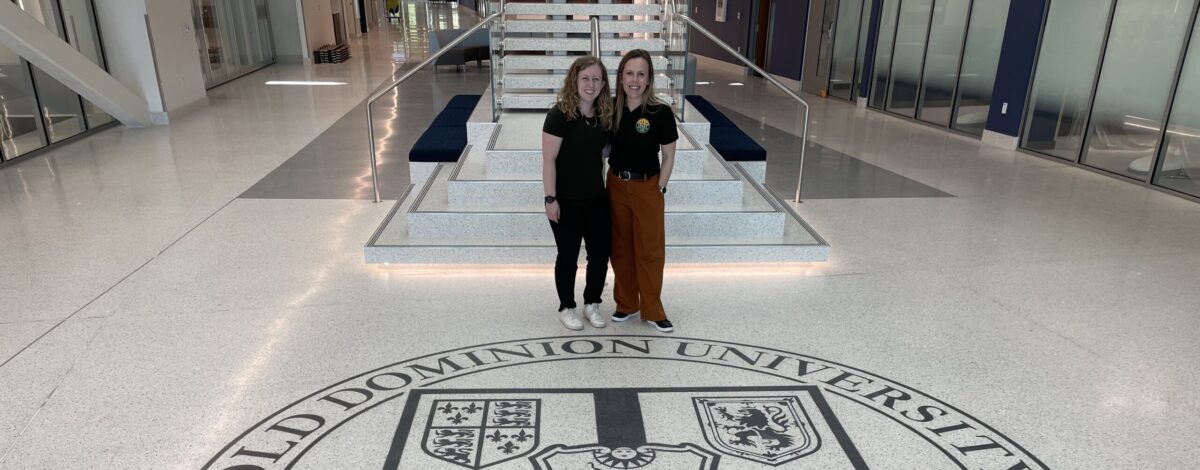
Raffegeau, Barrowman and Poretti


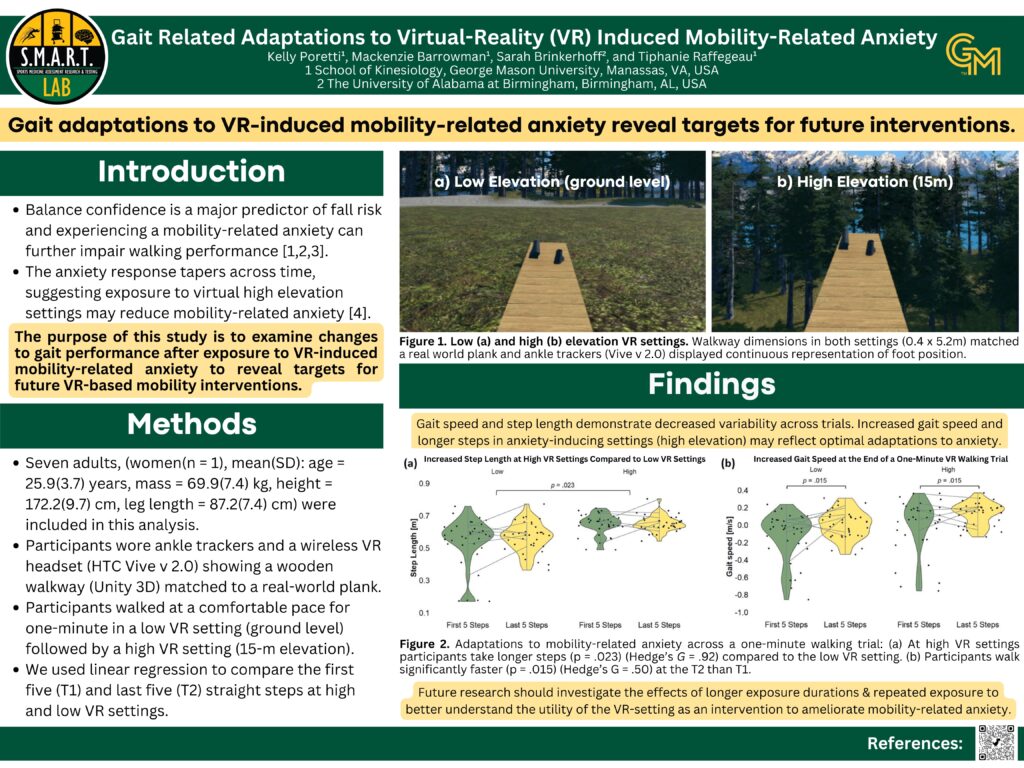
After a year of research Raffegeau notes, “Our testing proved fruitful and we identified a number of important results.” First, they found that experiencing fall-related anxiety in immersive VR can further impair walking performance.  Interestingly, they also found that the anxiety response tapers over time, suggesting that experiencing virtual high elevation settings may reduce fall-related anxiety. They also saw that anxiety-provoking VR settings could promote stability-related adaptations during overground walking in impaired populations, suggesting that the VR experience could serve as a clinical intervention to improve walking.

Their findings were enthusiastically shared at the Gait and Clinical Movement Analysis Society Annual Meeting, the American Society of Biomechanics Annual Meeting, and the College of Education and Human Development Research symposium.

Using preliminary data from the VR project, Poretti was awarded the Switzer Research Fellowship for Doctoral Dissertation Research by the Administration for Community Living for her dissertation project ‘Using Virtual Reality to Reduce Mobility-Related Anxiety in Lower-Limb Prosthetic Users’ which will support her dissertation work. Raffegeau and Rhea recently submitted an NIH R21 proposal to the National Institutes on Aging entitled, ‘Investigating Biobehavioral Responses to Mobility-Specific Anxiety Across the Menopause Transition and the Effects on Mobility and Fall-Risk’ focusing on the effect of VR-induced fall-related anxiety on walking in pre-and post-menopausal older women.

Concludes Raffegeau, “This 4-VA funding provided crucial funds to support my work as an early investigator and it has made my future grant applications stronger as evidence of institutional support for my career trajectory.”

View two videos produced during the research which illustrate the Low VR and High VR findings.


4-VA Funds Public Writing Collaborative to Support Virginia Educators and Students


4-VA was designed to encourage partnerships and resource sharing to advance higher education in Virginia. Bringing together researchers and thought leaders from around the commonwealth to work in concert has been key to the success of the program since its launch in 2010.

One area of higher education which has lacked comprehensive study is the pedagogy of public writing.  Public writing is generally defined as writing that is intended for a general audience with the goal of informing, persuading, or creating change. While courses in this focus have increased in number and scope, they have received relatively little support and scaffolding. Consequently, when Michelle LaFrance’s proposal The Virginia Community and Public Writing Collaborative was received by 4-VA@Mason, it won approvalLaFrance, who focuses on Writing and Rhetoric in George Mason’s English Department, saw the need to connect faculty and students in this growing educational community to pool knowledge and address opportunities for professional development and student success.

LaFrance

LaFrance explains, “Classes in community literacy, community writing, and public writing have all seen an emergence amongst Virginia-based writing studies researchers in the last five years.”  However, LaFrance recognized that few formalized lines of communication existed between the faculty who design, develop, and carry out research and deliver curricula at different institutions.  Working in silos, she reasoned, was no way to advance the implementation of successful writing programs at this level.

Thanks to 4-VA, LaFrance brought together Sweta Baniya and Sherri Craig at VT, Jen Almjeld at JMU, David Coogan at VCU; and Steve Parks and Kate Stevenson at UVA to begin the work of collecting information and developing relationships.  LaFrance then hired Emily Sok, a PhD student in Mason’s Writing and Rhetoric department, to coordinate the project and assist with the planning of the collaborative’s efforts and the creation of the website.

LaFrance also involved four Mason PhD candidates in Writing and Rhetoric as volunteers in the program: Tyler Martinez, Kelby Martinez, Kerry Smith, and Rosemary Pinney.

Fast forward one year from the grant award… Today, a variety of strategic outreach and communication efforts have come to fruition… The Virginia Community and Public Writing Collaborative has:

  • Constructed an archive of shared online resources,
  • Built a website (https://vacommunitywriting.org/) to foster the growing community,
  • Established a conversation to implement both formal and informal mentoring mechanisms,
  • Developed stronger relationships with off-campus communities and stakeholders and,
  • Created an email list of Virginia faculty and graduate students to carry on collaborative work.

The researchers began by looking closer at the widespread and wide-ranging growth of public writing programs in the state:  At George Mason, ENGH 302: Advanced Composition, a required course for all undergraduate majors, includes a public writing assignment.  Within VT’s Center for Rhetoric in Society, a community and corporate writing project explored how to better serve local nonprofits via workshops about writing email, mission statements, and other storytelling.  At JMU, WRTG 486: Writing in the Community is offered, as well as WRTG 484: Writing for Nonprofits, which teaches writing as a tool for socio-political engagement in local communities. In doing so, many JMU faculty members have developed partnerships with local public schools, hospitals, refugee resettlement agencies, public history programs, and other community agencies. At UVA, faculty and students created a “Community Writing Collective,” that includes partnerships with local nonprofit and civic organizations and seeks to make visible opportunities in teaching, studying, and understanding writing in community contexts.

The team facilitated several video-based meetings to discuss the shared goals, needs, and interests of those carrying out community writing and community literacy research and curriculum development in Virginia. These meetings allowed members of the collaborative to discuss shared research interests, identify additional funding sources, highlight ongoing research undertakings, and consider the mentoring needs of graduate students.   Additionally, they reviewed potential opportunities for the team at the national Conference on Community Writing — which nine of the team members subsequently attended.

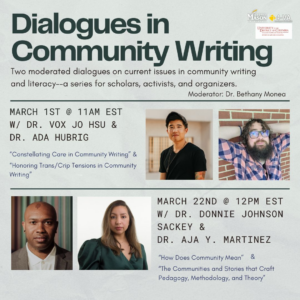
Next, they funded a speaker series for faculty and graduate students which featured scholars of community writing including Aja Martinez, Donnie Johnson Sackey, Ada Hubrig, and Jo Hsu.

The work continues. Recently, the team hosted Annabel Park, a nationally recognized community organizer, documentary filmmaker, and founder of The Coffee Party, as well as author Ryan Skinell.

Although much has already been accomplished, LaFrance sees an expanded future for the work.  She envisions building on the groundswell of interest by establishing a research and pedagogical collaborative of faculty and graduate students from public universities and faculty at two-year colleges in Virginia, targeting emerging issues for the writing and rhetoric program.

“It was truly terrific to support graduate students and faculty with this grant—these achievements are important and energizing, as well as a key part of professional development,” says LaFrance.  “Through this, we have shared information about the projects, partnerships, campus initiatives, and strategies for community engagement that have been our most successful undertakings within the state.”

Taking Out the Trash Takes on New Meaning for Geoenvironmental Engineering Team


A growing concern among jurisdictions across the U.S. is the increasing amount of municipal solid waste entering treatment plants — generally comprised of and categorized as food, green, dry, and recycling.  One simple option to reduce the stress on waste treatment facilities is to pre-sort the materials, which also reduces the amount of waste going to landfills.  Although inexpensive and effective, this route critically depends on residents’ participation — an element that can be difficult to assure in order to achieve a successful outcome.

George Mason’s Kuo Tian and Ran Ji wanted to tackle this challenge.  Tian specializes in geoenvironmental engineering and Ji’s expertise is in system engineering. Their proposal to 4-VA@Mason focused on developing a decision support framework integrating the residential waste sorting process and real-time collection demand information.

Tian
Ji


The project team aimed to incorporate a range of interdisciplinary knowledge in civil engineering, data analytics, and operations research.  Their first objective was to build a database including publicly-available socio-demographic and economic information from the Environmental Protection Agency and the U.S. Census Bureau, which would provide logistical support to put the system into action. Secondly, they were interested in creating a learning-and-simulation framework to accurately predict waste generation and community participation rates in waste sorting and recycling programs. To do so, it would be necessary to consider the range of elements effecting the entire waste transfer system.

As 50–80% of total waste management expenditures are based on collection and transportation, Ji and Tian proposed the development of an optimization model to incorporate a myriad of important statistics.  The model would include: staff and shift scheduling, vehicle routing and weight, truck capacity assignment, fleet size, service time windows considering traffic patterns, facility operation hours, and school/restaurant collection time requirements.  The model also examined emissions released by the transportation sector. Finally under Tian’s microscope was the composition and weight variabilities associated with population density, waste generation rates, and local regulations; combined with family incomes, habits and customs, and seasonal changes.  It was a tall order, but the team saw that the seed funding provided by 4-VA could provide the means to collect and capture this important information.

After receiving the grant approval, their next move was to set the theory into a real-world application.  Tian and Ji connected with 4-VA colleague Weijun Xie, then in the Industrial & Systems Engineering Department at Virginia Tech. Tian selected graduate students Seyed Omid Hashemiamiri and Hanrui Zhao and undgrads Thu Le, and Kyle R Lowther to round out the research team.

Next, they worked with the Prince William County (Va.) Solid Waste Division to build the data-driven models to validate the results of the proposed decision support framework with practical data.  Taking more than one year, the work was methodical and painstaking, but garnered important findings.

“Our research has achieved significant results in enhancing municipal solid waste management using a multidisciplinary approach,” says Tian. “This body of work represents a pivotal step toward smarter, more efficient, and sustainable waste management practices.”

The model has led to a publication in the Sustainability journal titled “An Integrated Location–Scheduling–Routing Framework for a Smart Municipal Solid Waste System” https://www.mdpi.com/2071-1050/15/10/7774. Upon the proposed model and approach, Hashemiamiri has further developed it into multi-layper multi-objective optimization framework for waste management, leading to a joiurnal manuscript “Multi-Objective Optimization for Sustainable Municipal Solid Waste Management Using Genetic Algorithms” (currently under review). This research also constituted a vital component for Hashemiamiri’s PhD dissertation.

Tian concludes, “Further and more complex development of this model is now underway, with the aim of submitting another paper to Waste Management, a top tier journal. Based on the proposed modeling and solution framework, the team has developed and submitted one proposal to USDA and now is working on another NSF proposal.”


George Mason and Virginia Tech 4-VA Team Studies Wastewater Treatment Systems


One of the most pressing issues in human and ecological health is the abundance of poly and perfluoroalkyl substances (PFAS) and phthalate esters (PAEs) in our ecosystem — two classes of synthetic chemicals known as ‘forever chemicals.’  In addition to their destructive nature affecting wildlife, soil, and agriculture, they are also responsible for causing human health problems such as liver damage, thyroid disease, obesity, fertility issues, and cancer.

Furst

While scientists worldwide are racing to learn more about how to combat PFAS and PAEs in a variety of settings, Kirin Emlet Furst*, who was previously an Assistant Professor in George Mason’s Civil, Environmental and Infrastructure Engineering Department, was focused on PFAS AND PAEs in water treatment and wastewater reuse. (Furst has since moved on to join the faculty at 4-VA partner school Virginia Tech.)

Furst reasoned that wastewater treatment facilities are a major avenue through which PFAS and PAEs can contaminate drinking water and air, as many of these compounds are insufficiently removed by common treatment processes. Furst specifically wanted to explore the air-water interface. PFAS have a high surface activity which results in their attraction to the air-water interface. And while PAEs have a lower surface activity, they might be attracted to other materials that accumulate at the air-water interface. Research in full-scale treatment systems was needed to understand these interactions.

The 4-VA@George Mason Advisory Board recognized the importance of this research and awarded Furst’s 4-VA proposal, “The role of the air-water interface in breakthrough of PFAS and phthalate esters during wastewater treatment.”

Joining Furst in the research was 4-VA partner Zhiwu (Drew) Wang, a specialist in wastewater treatment and biological processes at Virginia Tech.  Furst also tapped Mason graduate student Meghana Kuppa who was already developing analytical methods to measure PFAS and PAEs. Ethan Gasper, an undergraduate in the Department of Chemistry and Biochemistry, assisted Kuppa with much of the bench work on the project.

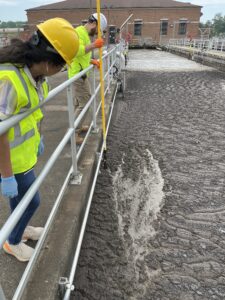
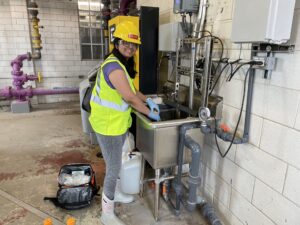
Kuppa collected water samples and scum, which is the material that accumulates at the air-water interface, from process unit tanks at a wastewater treatment plant to measure the target contaminants and water quality parameters known to impact partitioning behavior. Their goal? Quantify the role of the air-water interface in enabling breakthrough of PFAS and PAEs in wastewater treatment facilities and identify potential engineering solutions.

Kuppa Selects Samples from Wastewater Treatment Facility

Although developing the complex methodologies for the project was a challenge, several important outcomes were realized. First, high levels of multiple PFAS were found in the scum from both the primary and secondary treatment processes. The team concluded that the PFAS levels in the primary scum samples, especially, were much higher than they could accurately measure due to interference from particulates and oily substances in the method. However, analysis of the secondary determined any PFAS present during secondary treatment is more likely to be found in the treated water and may also contaminate the facility air due to aeration in these tanks.

While fewer PAEs were found in the scum samples, Kuppa’s experiments show that phthalates can sorb to organic material in the scum. This sorption may contribute to the difficulty in removing phthalates during wastewater treatment.

Furst reflects on the research and the 4-VA funding noting, “The 4-VA award empowered my group to pursue this new line of research and helped to support Kuppa’s innovative thesis projects. Plus, now we have preliminary data to pursue NSF and other high-impact external funding.”

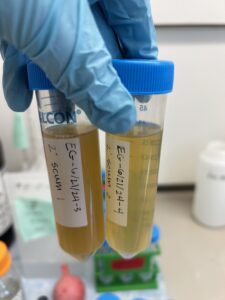
Gasper’s Benchwork Samples
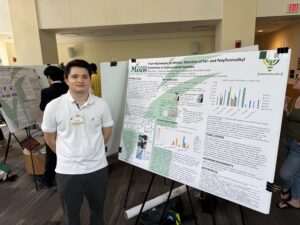
Gasper’s Poster Presentation


Examining the Consequences of Land Ownership in Rural Virginia


         Van Sant

Assistant Professor Levi Van Sant’s work in George Mason’s School of Integrative Studies focuses on environmental (in)justice surrounding food, agriculture, and land use. Previously, Van Sant has analyzed how land ownership affects the ways that racial and class dynamics of the past are reproduced in the present, focusing on the coastal United States South.  More recently, however, he was interested in the ramifications of land ownership closer to home — in “the backyard” of two 4-VA partner universities, George Mason and James Madison.

Van Sant wanted to apply an existing model which suggests that higher rates of absentee and corporate-owned timberland in rural Alabama are associated with lower quality-of-life indicators such as income and education.  It has also been observed that large landowners hold disproportionate political and economic power in rural communities.

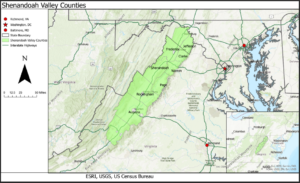
Van Sant wanted to examine land use and ownership in the Shenandoah Valley and Middlesex County in Virginia. He also saw an opportunity to provide students at both schools a chance to hone their analytical skills — as a first reading of land use and ownership records often only tell part of the story.  He wanted the students to research the differences in data management between municipalities, recognize the difficulties in accessing information in rural counties, and understand how land ownership has repercussions for low-income and minoritized communities.

Van Sant applied for and received a 4-VA@Mason grant for this research and set his team to work. Jeremy Campbell, the Associate Director for Strategic Engagement at George Mason’s Institute for a Sustainable Earth; and Case Watkins, Assistant Professor in the Department of Justice Studies at James Madison agreed to volunteer their time to help coordinate the project.

The project centered on two partnerships with communities for whom patterns of land use and ownership are crucially important: small farmers in the Shenandoah Valley, which was overseen by Watkins, and the Indigenous Tribal Nations of the Middle Peninsula Region, which was facilitated by Campbell.

“We produced a large database of land ownership records for the two study regions in rural Virginia. From this database we created a series of maps that represent trends in land ownership across both study regions. We also compiled a set of maps to contextualize and present this work. The datasets and maps are significant resources for further analysis,” noted Van Sant. “This grant provided invaluable support for further developing our research methods; creating a solid dataset for on-going research; and, most importantly, building analysis and tools for future community engagement.”

Several students were involved with the project. George Mason graduate student Tyler Grant received funding for his work handling Geographic Information System analysis and data organization. Undergraduate students Yonna Angeles, Erin MacMonigle, and Jacquelyn Batchelor received funding as mapping assistants, as well as Tamar Gorgadze, who acted as a research assistant.

At JMU, three students also worked on the project — Gina Bigo analyzed land ownership trends, Madelynn Warren looked at county land use, and Ally Windham considered the historical overview and analysis.

George Mason and Virginia Tech Team Up to Improve Online Searches


Although algorithms can make online searches faster and easier, they can also be fraught with dangerous biases. Research has shown that image search engines can exhibit discrimination against females or people of color, and bias is also found in online searches in employment recruiting and the healthcare field.

While efforts have been made to unveil and tackle fairness and bias glitches in search and recommendation systems, two key issues have been largely overlooked: Existing research treats different types of bias in isolation, resulting in specialized methods that are difficult to generalize; and, they focus on bias in the static environment leaving the dynamic nature of the search and recommendation process unexplored.

Zhu

Ziwei Zhu, Assistant Professor in George Mason University’s College of Engineering and Computing, wanted to demystify the underlying correlation of different types of bias and develop new multi-task and graph learning algorithms to support fair and unbiased searches and recommendations.  Using this information, he wanted to create and release open-source software on this subject for the research community, significantly advancing trustworthiness of AI techniques. Finally, Zhu was intent on ensuring the debias system would be sustained long term.


Zhu enlisted the help of 4-VA partner Dawei Zhou in Virginia Tech’s Department of Computer Science.  Together, they responded to the 4-VA call for proposals, and, “Towards Consolidated and Dynamic Debiasing for Online Search and Recommendation” was approved for funding.

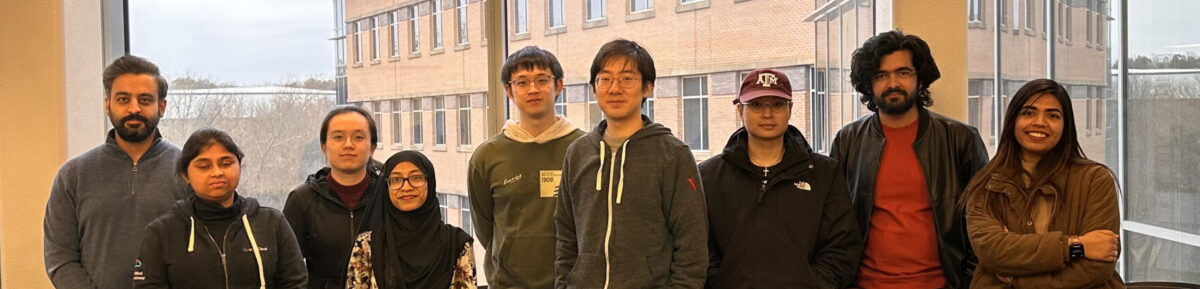
Joining the effort at George Mason was graduate student Jinhao Pan, who handled algorithm implementation and paper writing.  Pan was supported by a team of Zhu’s student researchers (pictured below).The group began by developing an end-to-end adaptive local learning framework to provide recommendations to both mainstream and niche users.

Zhu sees the audience as other researchers focusing on fair and unbiased recommendations and searches, or practitioners — software developers and AI engineers — in the industry who want to improve the fairness and trust of their systems. To that end, Zhu’s group created a boosting-based framework designed to decrease a broad spectrum of biases. This framework employs a series of sub-models, each tailored for different users and item subgroups.


Zhu’s Student Researchers

The results were impressive, with experiments demonstrating superior debiasing capabilities against state-of-the-art methods across four model bias types.

However, Zhu knew that their new framework for recognizing and removing biases would only be effective if implemented.  To that end, the group made the algorithm implementation open source through various options — https://github.com/JP-25/end-To-end-Adaptive-Local-Leanring-TALL- and https://github.com/JP-25/CFBoost.

They also presented and published Combating Heterogeneous Model Biases in Recommendations via Boosting at the Association for Computing Machinery International Conference on Web Search and Data Mining. End-to-End Adaptive Local Learning for Alleviating Mainstream Bias in Collaborative Filtering was also presented and published at the European Conference on Information Retrieval.

In addition to the framework developed, the project increased collaboration between George Mason and Virginia Tech through coursework.  The new algorithms have been integrated into materials of Mason’s undergraduate and graduate level Data Mining courses CS584 and CS484.

Zhu has used the outcome of this project as the foundation for a proposal submitted to the National Science Foundation Computer and Information Science and Engineering Core program.

Concludes Zhu, “This 4-VA grant helped me set up some computational resources so that I can conduct further research and supported travel to academic conferences to disseminate our research and learn from others.  We believe this provided the groundwork for some very important first steps in this field.”


Bringing Context and Focus to the Music of Early Black Virginians


             Green

In higher education, “You don’t know what you don’t know” is often the axiom that spurs research to shine a light on a subject not thoroughly illuminated. For Emily Green, music historian and faculty member in George Mason University’s College of Visual and Performing Arts, this maxim served as a motivator to launch a 4-VA@Mason research project titled Music of Early Black Virginians.  Green, whose previous research focused on music publishing and marketing in eighteenth- and nineteenth-century western Europe and America, became especially interested in the backstory of this area of music history while teaching Nineteenth-Century African American Music, a graduate course at Mason

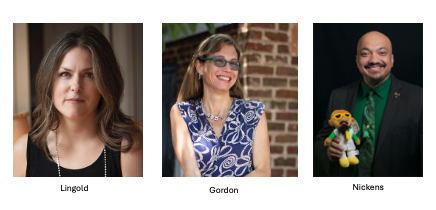
Green recognized that much of this important music history needed to be cataloged and made publicly available.  “It was a long-standing wish of mine to create a resource for educators to help them understand the variety of genres in Black-American music,” she explained.  “K-12 music educators do not always have access to library databases or peer-reviewed journals. I wanted to create an open-access landing point to help teachers navigate the rich resources they can use to learn and quickly enhance their knowledge—and build lesson plans for students of a variety of ages.”To that end, Green sought the involvement of scholars in the field at several 4-VA partner schools to help her put the project into motion: Mary Caton Lingold at VCU and Bonnie Gordon at UVA. Both readily volunteered their time to bring this multi-level and multi-faceted research to fruition. Michael Nickens (a.k.a. Doc Nix — most recognized as the leader of George Mason University’s “Green Machine,”) also eagerly joined the team. Additionally, Maria Ryan, at Florida State University, came on to collaborate on the project.

4-VA funding provided UVA graduate students Laura Carrington OBrion and Sergio Manuel Silva and George Mason undergrads Crystal D. Williams and Jaelin Mitchell the time and space to build a website of nineteenth-century sources that reference Black-American music making: https://masonlibraries.gmu.edu/blackmusic/s/music-black-va/page/home.

From there, the team then published a wide-ranging website Early Black Music in Performance https://earlyblackmusic.4va.gmu.edu/.

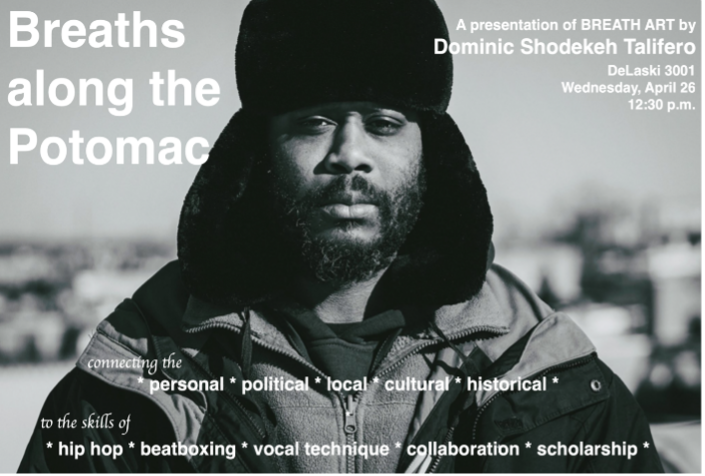
A zoom conference helped introduce and promote the site: Presenters included 4-VA cohort, Kayondra Reid, music educator at Oak Street Elementary School in Falls Church, VA, and Tyler Diaz, Hunter College, NY. Artist Shodekeh Talifero also gave a presentation for the Dewberry School of Music entitled “Breaths along the Potomac.”

As an added bonus resulting from the effort, Green, Lingold, and Ryan have been contracted to develop a related anthology for Oxford University Press, Sources in Early Black Atlantic Music, which is expected to be published in 2026.

“Most music educators are not taught much about the variety of Black American music in bachelor’s or master’s degrees in our field. Between the database and the web resource, and soon the anthology, our hope is that educators can learn more about reliable print and online resources to use in the future,” says Green.