4-VA

4-VA@Mason Awards Funding for 12 Promising Investigations Led by Mason Faculty plus Eight Additional Collaborations for Mason Co-PIs


4-VA@Mason, announces the Collaborative Research Awards for the 23-24 academic year — with 12 projects spearheaded by Mason faculty, and eight for Mason faculty acting as Co-PIs.  “These 4-VA@Mason Collaborative Research Grants are the core of what our state program is all about — providing seed funding to encourage faculty from our eight partner schools to launch novel research efforts and build critical relationships among the institutions,” said Janette Kenner Muir, Vice Provost, Academic Affairs and Campus Coordinator of 4-VA@Mason.

Approved proposals were from a range of colleges at Mason including the College of Visual and Performing Arts, Computer Game Design/Virginia Serious Game Institute; the College of Humanities and Social Sciences; the College of Engineering and Computing; and the College of Science.

One proposal funded this year is Dr. Chris Jones’ work, Using Taxonomic, Pigment, and Molecular Analysis to Characterize Algal Blooms in the Shenandoah River. Professor Jones, a member of the Environmental Science & Policy Department and Director of the Potomac Environmental Research and Education Center, has already seen the benefit of 4-VA support with growing research projects focused on harmful algal blooms that threaten Virginia’s Shenandoah River and also plague waters throughout the world. In the Shenandoah, these blooms originally consisted of green algae, which while troublesome for recreational activities, did not present a danger to humans and wildlife.  In the past two years, however, the blooms have included cyanobacteria that contain toxins.  Environmental engineers recognize that it is critical to identify the toxic bacteria quickly and definitively, but current methodologies are inadequate.  Jones’ team of Mason faculty and students, together with their partners at Old Dominion University, will tackle this important challenge.

The following are the 4-VA@Mason 2023-24 Collaborative Research Grant winners, with partner schools in parentheses.

  • Akerlof, Karen Bridging Science and Policy in the States: A Study of Emerging Mechanisms to Train Scientists and Engineers (VT)
  • Enfield, Jacob MySQL Murder Mystery (VMI)
  • Furst, Kirin Emlet The role of the air-water interface in breakthrough of PFAS and phthalate esters during wastewater treatment (VT)
  • Jones, R Christian Using Taxonomic, Pigment and Molecular Analysis to Characterize Algal Blooms in the Shenandoah River   (ODU)
  • Kang, Pilgyu Machine learning assisted laser manufacturing of alloy nanoparticle graphene hybrid materials for high performance hydrogen sensing (UVA)
  • LaFrance, Michelle The Virginia Community and Public Writing Collaborative (JMU, VCU, VT, UVA)
  • Lawrence, Heidi A Rhetorical Approach to Challenges in Blood Donation (VT)
  • Raffegeau, Tiphanie Using Virtual Reality to Study Cognitive and Affective Risk Factors for Falls in Older Adults (ODU)
  • Straus, David The Role of Diabatic Heating in Determining Atlantic Storm Paths (UVA)
  • Van Aken, Benoit Protection of RNA by Association with Macromolecules Implications for Wastewater Based Epidemiology (VT)
  • Yu, Yun Nanoscale Visualization of Electrocatalytic Carbon Dioxide Reduction Activity at Cu Nanocatalysts (UVA)
  • Zhu, Ziwei Towards Consolidated and Dynamic Debiasing for Online Search and Recommendation (VT)

The following Mason faculty received funding as Co-PIs collaborating with other 4-VA institutions in parentheses:

  • Chowdhury, Ahsan The Commonwealth Proofs Project Collaborative: Promoting Students’ Understanding of Logical Implications and their Transformations (VT)
  • Dromgold-Sermen, Michelle New American Resources: Partnerships and Initiatives at Virginia Higher Education Institutions to Strengthen Virginia’s Migration Support (VT)
  • Jing, Hao Acoustics-enabled Noncontact Manipulation, Patterning, and Assembly of Complex-shaped Micro/nanoparticles for Advance Manufacturing (VT)
  • LaToza, Thomas Visualizing Code Changes to Understand Students’ Mental Models in Programming Education at Scale (VT)
  • Stone, Victoria Increasing Mental Health Services in K-12 Settings by Helping Provisionally Licensed School Counselors Meet the Requirements for Full Licensure as Professional School Counselors in Virginia (JMU)
  • Stone, Victoria Supporting K-12 Students after Psychiatric Hospitalizations: Piloting Mixed Reality Simulation Training for School Mental Health Professionals (UVA)
  • Van Aken, Benoit Hyperspectral imaging for the real-time detection of microplastic particles in seafoods (VT)
  • Zhu, Ziwei Break the Dilemmas between Model Performance and Fairness: A Holistic Solution for Fairness Learning on Graphs (VT)

“We are looking forward to the new discoveries we will find with these 4-VA collaborative projects,” comments Vice Provost Muir, “Our faculty, students, and the Commonwealth of Virginia will benefit from these partnerships as the schools approach the work from their own perspectives and strengths, building solid partnerships for future initiatives.”


Best Practices for the Scholarship of Teaching and Learning Identified and Shared Statewide


Effective teaching is a cornerstone of Virginia higher education. To attain that critical bar, it is essential that successful teaching strategies are created and maintained, and that they meet students’ needs.  This necessitates classroom-based research — known as the Scholarship of Teaching and Learning (SoTL). Faculty-focused SoTL research achieves multiple objectives including identifying best practices in educational strategies for a specific field and promoting a university’s overall teaching excellence.

While SoTL is crucial to gain a greater understanding of what works and what doesn’t work in the classroom, very few faculty are prepared to conduct such research independently. Thus, support for SoTL frequently falls to campus Centers for Teaching and Learning (CTLs). CTLs are generally small and tasked with a wide range of faculty assistance, so identifying appropriate SoTL strategies presents a time and resource challenge.

This dilemma faced the Stearns Center at Mason as well as three other 4-VA schools — Virginia Commonwealth University, Virginia Tech, and the University of Virginia.  Each wanted to address the SoTL gap. The solution was recognized via a 4-VA Collaborative Research Grant, allowing the schools to work together to create sustainable SoTL programming.  The goal was to create or refine plans for engaging and supporting faculty in SoTL at their specific institutions, to develop and investigate the impact of cross-institutional support programming for faculty developers, and ultimately improve the research competitiveness of faculty at each institution. Although not part of the 4-VA partnership, the prospect of such work also attracted the attention of faculty at Mary Washington University who were interested in joining the effort.

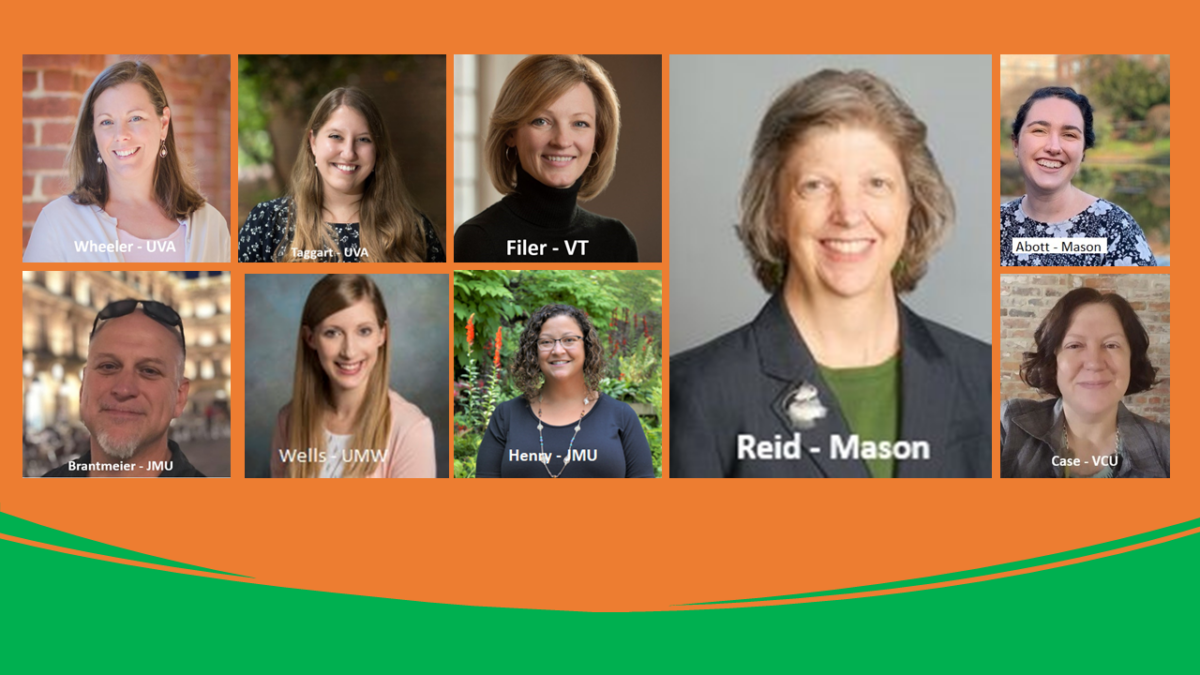
Led by the Stearns Center for Teaching and Learning Director, Shelley Reid, with key support from Mason graduate assistant Sophia Abbot, the team represented a state-wide effort, including Ed Brantmeier, Interim Executive Director/Assistant Director of the Center for Faculty Innovation (JMU); Dayna Henry Assistant Director of the Scholarship Area at the Center for Faculty Innovation (JMU); Kim Case, Director of Faculty Success (VCU); Kim Filer, Associate Vice Provost for Faculty Development/Director of the Center for Excellence in Teaching and Learning (VT); Lindsay Wheeler, Assistant Director of STEM Education Initiatives at the Center for Teaching Excellence and Jessica Taggart, Postdoctoral Research Associate (UVA);  and Melissa Wells, Assistant Professor/Faculty Fellow of the Center for Teaching (Mary Washington). “Through our 4-VA@Mason grant, as well as the Complementary Grants at our 4-VA partner schools, we saw an opportunity to help CTLs avoid ‘reinventing the wheel’ in a key area of faculty support,” explained Reid. “SoTL is a growth area for CTLs, and this grant provided an opportunity to design that growth intentionally and collaboratively—and then to share the model with other CTLs nationally.”

Together, the group researched and built effective support structures for SoTL training. As a “community of practice,” the group met regularly to exchange strategies already in use and constructed additional strategies and resources for both CTL leaders and faculty. Next, they developed and presented workshops for national and local audiences to guide other CTL leaders in building collaborative structures. At these workshops, attendees learned about evidence-based models, common SoTL support programming across institution types, and received peer feedback on their plans. Presentations were made at the Professional & Organizational Development in Higher Education Network Conference, the International Consortium for Educational Development, the Innovations in Teaching and Learning Conference (Mason), the International Society for the Scholarship of Teaching and Learning Conference on Higher Education Pedagogy (VT), and an online workshop for SCHEV (VCU).

Next, the team created online resources, an open access trove of tools for SoTL developers, including a Taxonomy of common language and organizational structure for understanding a variety of SoTL program models — organized by program type with a detailed description of each model. It also includes examples to further support readers’ envisioning of program possibilities. Further, visitors can access a strategic plan worksheet, which guides SoTL developers through the details of their aspirational and future plans in the context of their institution and provides a venue to receive peer feedback on specific aspects of their plan.

The group continues to spread the word about effective SoTL practices through the following publications:

  • International Journal of Academic Development Impact of a Regional Community of Practice for Academic Developers Engaged in Institution-Level Support for SoTL (Lukes, Abbot, Henry, Wells, Baum, Case, Brantmeier, & Wheeler)
  • To Improve the Academy Strategic Planning Tools for Educational Developers Supporting SoTL Cultures and Programs at their Institutions (Lukes, Abbot, Wheeler, Henry, Case, Wells, Brantmeier)
  • New Directions for Teaching and Learning Examining a Regional Educational Developer Community of Practice for Advancing Institutional Cultures of SoTL Engagement (Abbot, Lukes, Baum, Case, Henry, Brantmeier, Wheeler)

“Our team members have been particularly excited about the positive reception of the collaborative model through the well-attended national workshops. We’re looking forward to the conversations that are made possible through the multiple publications that will increase our audience and enable other CTLs to build their own collaborations.” concludes Reid.

Communication Across the Curriculum: Developing Faculty Resources to Enhance Student Success

Communication competency is recognized as one of the most important skills for a successful college and professional career. To support this outcome, writing courses have long been a requirement in higher education to bolster communication proficiency.  More recently, additional efforts have been developed to provide students with a larger framework, including the creation of Communication Centers on college campuses — rising from a grassroots movement in the 1980s to a more defined role in the early 2000s.

Today, colleges recognize the need for further multiple, scaffolded opportunities to practice language and presentation skills throughout a student’s academic lifespan. This includes learning oral and written skills found within their chosen career track. Such an approach, known as communication across the curriculum (CxC), enhances opportunities for students to both strengthen their communication abilities and to employ in-depth content area specifics.  Regrettably, however, many subject matter faculty feel ill-equipped and unsupported in their efforts to integrate communication into course curricula, expressing a need for more teaching assistance to provide student feedback on a range of communication skills — presentations, team projects, interpersonal skills — within the course framework.

Broeckelman-Post

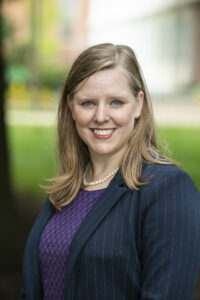
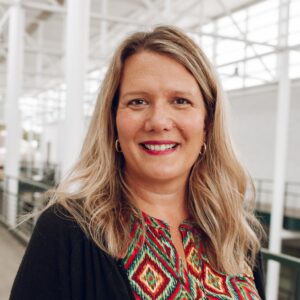
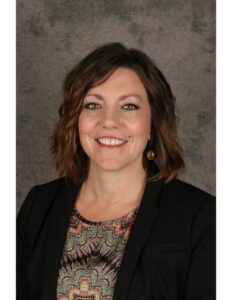
Mason’s Melissa Broeckelman-Post, Professor and the Basic Course Director in the Department of Communication saw a need to intervene.  This thinking was shared by Broeckelman-Post’s colleagues at two other 4-VA partner schools — Virginia Tech’s Director of Undergraduate Programs and Senior Instructor in the School of Communication Brandi Quesenberry, and JMU’s Associate Professor in the School of Communication Studies and Basic Course Director Timothy Ball. They had connected at previous conferences and were sharing ideas on CxC but saw a 4-VA grant as an opportunity to concretely collaborate on scholarship that would be helpful for all institutions.

Together, they wanted to look more closely at what would be needed to develop a CxC program at each of their schools.  It was the 4-VA Collaborative Research Grant that allowed them to begin this important work.

“We knew that faculty members would greatly benefit with tools and techniques to provide their students feedback on the range of communication skills within their disciplines, including oral, written, team building, intercultural, and leadership,” explains Broeckelman-Post. “The first step in our plan was to reach out to Stephanie Norander, Executive Director of one of the nation’s leading CxC programs at University of North Carolina at Charlotte, to ensure that we utilize the best practices in building resources that will be effective for faculty on our campuses.”

Norander

From there, Broeckelman-Post, Quesenberry and Ball, assembled a team of graduate students at Mason, (Adebanke Adebayo, Aayushi Hingle, Lane Schwager, Shannon Taylor Heflin, Briana Stewart, and Sammi Tuckerman Munson) Virginia Tech (Emma Baumgardner) and JMU (Selim Njeim).  Their goal was to create a robust set of flexible tools to support faculty and student learning, including online resources, individual and small group faculty curriculum consultations, and in-class workshops to help faculty embed communication skills development within their disciplinary courses that can be shared across the institutions.

Before they began, the CxC team needed a greater understanding of just what faculty in a variety of disciplines perceived as important communication skills and what they believed to be helpful for their courses.  Three research question were developed:

  • RQ1: How do faculty across disciplines perceive and value communication?
  • RQ2: What types of support do faculty across disciplines need to incorporate communication assignments in their classes?
  • RQ3: What are the most important communication skills employers across disciplines are seeking?
Quesenberry

Faculty at all three universities were invited to join in an online study, with 232 accepting the offer. Participants represented a wide range of departments, including the social sciences, engineering and computing, health and human services, business and interdisciplinary or unspecified areas. Through the survey, a greater insight as to what aspects of communication that were important to faculty and for student’s careers was established. Notes Quesenberry, “While the results pointed us to the development of concrete communications packages, we were struck by the fact that 93.2% of all faculty identified communication as “extremely important” or “very important” to their major’s discipline.”  The CxC team knew that their work was needed.

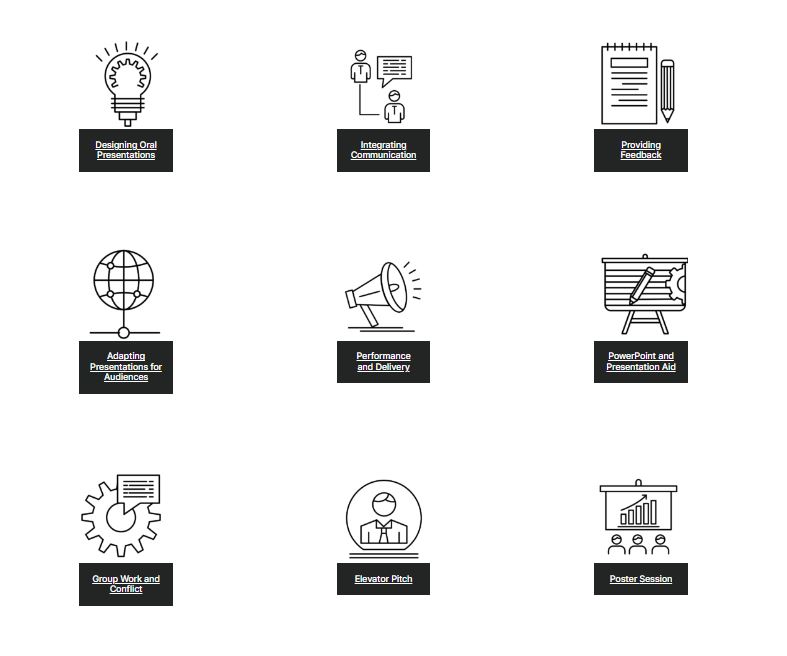
A comprehensive overview of the faculty research survey was recently published in Communication Education, with all team members who contributed to the research component of the project receiving authorship credit. Another goal of the project was to create a website with communication resources for faculty across disciplines.  This robust site is now populated with a broad variety of tools to assist faculty to aid students with a range of projects including designing oral presentations, presentation performance and delivery, adapting presentations for audiences, and interviews: https://4va.gmu.edu/communication-across-the-curriculum-resources/.

The findings were shared at two different presentations at the National Communication Association annual convention.  They now plan presentations at additional local conferences including Mason’s Innovations in Teaching and Learning.

Ball

“Thanks to this collaboration, we were able to develop some important tools to build effective CxC programs at all three of our universities,” notes Ball.  “That’s a win for Virginia’s faculty and students.”


Five 4-VA Schools Collaborate to Better Understand the History of Higher Education


The Council for the Advancement of Standards in Higher Education lists the History of Higher Education as an important core course that provides students the opportunity to bridge practice and theory. However, the class is rarely taught by historians and often lacks a focus on the historical thinking, research, and digital literacy skills necessary for a clear-eyed understanding of the higher education landscape.

This dilemma was on the mind of historian Kelly Schrum, Professor, Higher Education Program, and Affiliated Faculty in the Department of History and Art History at Mason.  It also concerned her colleague in the Higher Education Program at Virginia Tech, Assistant Professor, Chase Catalano. Together, via an initial 4-VA Collaborative Research Grant in 2020-2021, they wanted to integrate those missing skills into the class with the hope of increasing research opportunities and creating a valuable open educational resource (OER).

The project, launched during the pandemic, consisted of students at Mason and VT working together and in parallel to learn about the history of higher education while developing historical thinking and research skills.

The project was a great success. “The student-created asynchronous learning activity assignment worked very well, and fostered a true collaboration across our institutions,” said Schrum. In addition to the learning activity assignments, students and faculty contributed to a website, higheredhistory.gmu.edu; piloted a primary source learning activity in two different higher education graduate courses during Fall 2020; and expanded the project to a third course in Spring 2021.

Schrum, Catalano, and Sophia Abbot, a doctoral student at Mason, grew this work into a larger research project on teaching and learning the history of higher education. Thirty-five students agreed to share their work for analysis and 24 were interviewed after completing the course. The survey and interview data made clear that students appreciated the value and relevance of studying the history of higher education for both their curricular and professional goals. One student explained, “We were able to take what we learned in the course and apply it to the project in a way that was very effortless, and that really helped me think about history in a different way.”
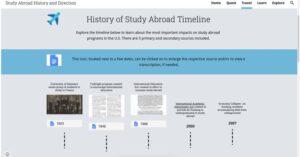
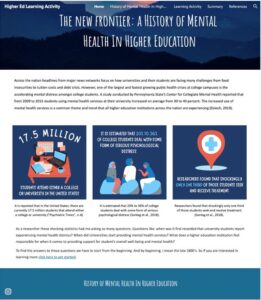
The group presented their initial findings at the Conference on Higher Education Pedagogy in February 2021 which were very well received. They then began talking with colleagues around the commonwealth at William & Mary, James Madison University, and Old Dominion University. Their shared interest in improving history of higher education courses prompted Schrum to apply for an extension and expansion of the Collaborative Research Grant. Schrum’s co-PIs at the partner schools requested 4-VA Complementary Grants at their institutions allowing continued work together with a wider lens.

The expansion grant enlarged the initial team to include Assistant Dean for Undergraduate Education Ben Boone of W&M; Art Dean, Executive Director for Access and Inclusion, JMU; Kim Bullington, ODU’s Adjunct Assistant Professor, Educational Foundations and Leadership; and ODU’s Director of Community Outreach & Engagement, Bill Nuckols.

In addition to Abbot, key Mason student scholars on the project included graduate students Allison Loughry and Alicia Ellis, and undergrads Sodaba Azamy and Kelly Tcheou. These students contributed to research, website development, and publications.

The 4-VA extension grant had four key components: 1) collaborate with 4-VA institutions to improve teaching and learning about the history of higher education, and to teach a shared digital assignment;2) expand OER resources on the history of higher education in the United States to provide primary sources, secondary sources, and a database of college and university archives; 3) conduct research on how the history of higher education is taught nationally; and 4) conduct Scholarship of Teaching and Learning research on how students learn historical thinking skills and digital skills as they create asynchronous learning activities on this subject.

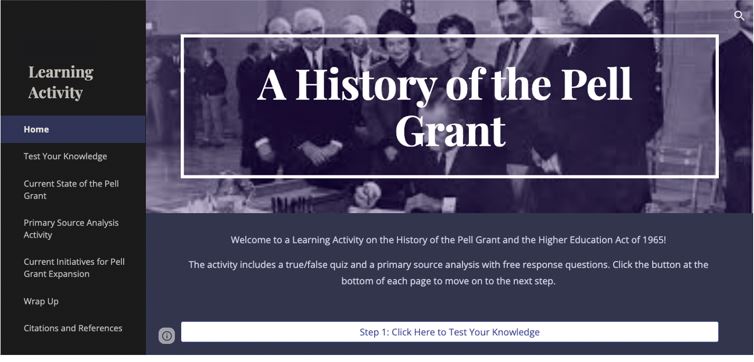
With the expansion grant in hand, the Mason, Tech, W&M, and JMU faculty members taught the shared assignment in Fall 2021. Students also explored asynchronous primary source learning activities created by students at all four institutions. ODU taught the shared assignment in Summer 2022. Students at ODU explored primary source learning activities created by students at the other institutions and then developed additional resources which will be shared across institutions in future semesters. Between the five institutions, more than 100 students built individual asynchronous primary source learning activities. Selected activities are publicly available at  https://sites.google.com/view/history-of-higher-ed/learning-activities-examples.

Sophia Abbot

Explains Abbot, “I developed countless skills while collaborating on this project: from deepening my own understanding of the history of higher education and the value of primary sources, to engaging students in authentic, student-driven, project-based assignments. I’ve been inspired by the historical research students have done through this cross-institutional assignment, especially on Virginia institutions—uncovering stories that are rarely told in commonly assigned texts and expanding their understanding of the colleges and universities within which they operate,”

Each school contributed OER materials for the website. In addition to primary and secondary sources, the website now contains a database of institutional archives with digitized content, including yearbooks. Thanks to the two undergraduate research assistants, Azamy and Tcheo, over 700 institutional archives were cataloged on the site, including 48 Hispanic-serving institutions (HSIs), 24 historically black colleges and universities (HBCUs), and 15 women’s colleges. Additionally, the list includes 63 community colleges which is especially important given the lack of attention to these institutions historically.
Azamy and Tcheo have also reviewed and analyzed 70 course syllabi submitted by History of Higher Education instructors across the U.S. They prepared a summary report of common readings and course topics. Their findings supported several academic articles now underway addressing how these courses are typically structured and taught. Their work, along with that of Loughry, also supported a grant proposal submitted to the National Endowment for the Humanities (NEH) Institute for Higher Education Faculty program.

The team credits the 4-VA grant for allowing members to do the diligent research necessary to create these important resources.

“This 4-VA project fostered meaningful and lasting collaboration across five Virginia institutions. While each university approached the history of higher education course from its own perspective, we were able to work together on a shared assignment that allowed for a rich learning experience among faculty and students across campuses. The results speak for themselves!” – Kelly Schrum, Professor, Higher Education Program, Affiliated Faculty, History and Art History, Mason


“I sincerely appreciated having an opportunity to collaborate with colleagues across the state for this 4-VA project. Through our conversations and research, I developed new pedagogical approaches that benefited students and deepened my thinking about the history of higher education.”

– Chase Catalano, Assistant Professor, Higher Education, VT


“We really enjoyed being part of this effort to expand student research on the history of higher education. Everyone came away from this project with a deeper understanding of how important it is to develop critical thinking skills and to look beyond our own institutions.”

– Ben Boone, Assistant Dean for Undergraduate Education, W&M


“The website, which holds a treasure trove of student research and engagement from a wide range of institutions, will be invaluable as we move ahead in studying the complex and influential histories of American higher education.”

– Art Dean, Executive Director for Access, and Inclusion, JMU


“When this asynchronous learning project was first introduced to the students, they were thrilled at the thought of not having to write a 20-page paper, however in the end, they did more work doing research on their chosen subject. They enjoyed this project because it allowed them a space for research and reflection, and it taught them how to create an interactive learning environment in an asynchronous environment. Being able to evaluate and participate in the projects created by other students in other universities across Virginia also taught them about their peers’ projects, too.”


– Kim Bullington, Adjunct Assistant Professor, Educational Foundations and Leadership, ODU


Outcomes:

Scholarly Conference Presentations

Catalano, C. & Hernandez, R. (2022, March). Why do we teach history? Instructor and student perspectives. ACPA-College Student Educators Conference, St. Louis, MO, United States.

Schrum, K., Abbot, S., & Catalano, C. (2022, January 6-9). History of Higher Education: Students Making Sense of Primary Sources by Designing Asynchronous Learning Activities [Poster]. American Historical Association, New Orleans, LA, United States.

Abbot, S., Schrum, K., & Catalano, C. (2021, November 13-15). Teaching Historical Thinking to Higher Education Graduate Students [Poster]. Southern Association for College Student Affairs, Norfolk, VA, United States.

Abbot, S., Schrum, K., Hernandez, R., Fong, W. L., & Loughry, A. (2021, October 26-29). Designing Digital Activities for Authentic Learning [Panel, Virtual]. International Society for the Scholarship of Teaching and Learning Conference.

Schrum, K. & Abbot, S. (2021, September 20-24). On-Demand: Engaging students online through a peer-to-peer asynchronous teaching assignment [On-Demand Presentation, Virtual]. Innovations in Teaching and Learning, Fairfax, VA, United States.

Abbot, S. (2021, September 20-24). SoTL Showcase [Panel, Virtual]. Innovations in Teaching and Learning, Fairfax, VA, United States.

Abbot, S., Schrum, K., & Catalano, C. (2021, February 3-5). Graduate Students Learning and Teaching History through Asynchronous Activities [Poster session, virtual]. Conference on Higher Education Pedagogy, Blacksburg, VA, United States.

Publications

Catalano, D., Schrum, K., Fay, E., & Abbot, S. (forthcoming, 2023). ‘I can learn from the past’: Making the history of higher education relevant through social justice education pedagogy. The History Teacher.

Loughry, A., Abbot, S., Schrum, K., & Catalano, D. (forthcoming 2023). Developing digital skills through a student-facilitated asynchronous learning activity. The Journal of Interactive Technology and Pedagogy.

Schrum, K., Abbot, S., Loughry, A., & Catalano, D. (forthcoming 2024). “I wanted to know!”: Engaging learners in the history of higher education through an authentic digital assessment. The History Teacher.

Schrum, K, Abbot, S., Fay, E., Loughry, A., & Catalano, C. (in process). Teaching historical thinking through the history of higher education.

External Funding

“Unpacking the History of Higher Education in the United States.”
National Endowment for the Humanities (NEH) Institute for Higher Education Faculty award.

Provost’s Graduate Student Travel Grant (January 2022)
American Historical Association Travel Grant (January 2022)
Southern Association of College Student Affairs Travel Grant (November 2021)


Mason’s Rosenthal Earns Acclaim for New Book


Dr. Aharona Rosenthal, an adjunct professor teaching Hebrew for 4-VA@Mason Shared Courses has recently released her third book and first historical fiction novel to much acclaim.  Where the Lilacs Bloom Once Again has been lauded by the Literary Titans for Best Memoir, earned the Penn Craft Best Historical Fiction Award, was recognized by the International Firebird as the best book on the Holocaust, awarded five stars by The Readers Favorite, and nominated for an Outstanding Creator Award. Rosenthal’s recent interview by Romanian radio show Universul la feminin with Serena Adler generated listener praise for the book detailing her Jewish Romanian family and their lives prior to World War II.

Researched and written over a 12-year period by Rosenthal, Where the Lilacs Bloom Once Again is based on her family’s genealogical papers as well as exhaustive document examination from around the world. It follows the story of Rosenthal’s grandmother’s cousin Friddie Stoleru, who was falsely charged with treason and spent the 1930s in prison and forced labor camps. The book recounts the lives of her family members during a time in Europe when discrimination and the persecution of Jewish people was at its peak.
For Rosenthal, the book was a response to her father’s hand-penned request for his daughter to ‘tell the truth’ about the lives of their ancestors. “The response to the book has been tremendous — it has opened a floodgate of people sharing their own family stories,” says Rosenthal.  “For years, these narratives were buried deep.  It was not uncommon that families did not speak of the abuse for generations due to listening devices which were monitored by the Communist Party. Many atrocities have remained a secret.  Where the Lilacs Bloom Once Again has prompted so many to reach out and tell their truth.  I’m honored to have given a voice to so many that were silenced.” Rosenthal expects that sentiment to be heightened following the upcoming publication of her interview with reporter Livius Denis Grigorescu in the leading Romanian newspaper Adevarul.


Calls for Proposals: 4-VA@Mason 2023-24 Collaborative Research Grants


Mason faculty interested in piloting a novel research project in conjunction with colleagues at one of the seven other 4-VA schools in Virginia are encouraged to respond to the annual 4-VA@Mason Collaborative Research Grants (CRG) calls for proposals.  These grants, of up to $20,000, are designed to facilitate and support alliances which leverage the strengths of each partner university to improve efficiencies in research and higher education, reduce working in silos, and provide hands-on experiential opportunities for students. The grants encourage the development of baseline research projects in the sciences and humanities which could help fuel future research and funding.

The application link for the proposals is posted on the 4-VA@Mason grants page, which includes associated policies and procedures, as well as examples previous successful proposals.  Applications will be accepted through February 28, 2023, with funding available July 1, 2023.

“Although the 4-VA mission to identify and boost efficiencies in educational design and research was launched in 2010, it is our Collaborative Research Grants — introduced in 2013 — that have really made a difference for Mason and our partner schools,” explains Janette Kenner Muir, Vice Provost, Academic Affairs and Campus Coordinator of 4-VA@Mason. “So many of our awarded pilot research projects have provided a springboard for subsequent, major federal and private grants and boosted research competitiveness at Mason and throughout the collaborative.” Those schools are the College of William and Mary, James Madison University, Old Dominion University, University of Virginia, Virginia Commonwealth University, Virginia Military Institute and Virginia Tech.  In some cases, additional modest funding is available to co-PIs at the partner schools.

“Through the hundreds of 4-VA Collaborative Research Grants awarded throughout the state in the last ten years, 4-VA has truly made a difference for faculty, students and citizens statewide and beyond,” adds Muir.


4-VA@Mason and BAS: Getting to the Finish Line

For some students who begin their college career at Northern Virginia Community College (NOVA) — especially adult learners, first generation students and veterans — taking the leap to a four-year degree requires much more than negotiating transfer credits, selecting a class schedule, attending class, and doing homework.  For these students, sometimes finding time in the day for education is itself a challenge.  Life gets in the way. However, thanks to 4-VA@Mason and the Bachelor of Applied Science (BAS) program, there is a path for a smooth transition from that two-year experience to a four-year diploma.

BAS offers a unique curriculum which has grown from two specializations to eight concentrations with four in technology-rich fields.  Many BAS concentrations can be completed entirely online, or via a hybrid format. Importantly, BAS ensures that all credits are transferred from NOVA to Mason.

Although the BAS program has experienced growth over the years, with its humble start of 1 student in 2012, the BAS program has ballooned to an expected 170 new students in Fall 2020.  While enrollment rates have accelerated as the program has grown in size and strength, the COVID – 19 pandemic is thought to be the reason for the explosion of registrations in the Fall class.

“Because of our extensive online offerings, BAS has attracted a surge of students since in-person learning was discontinued in March,” explains BAS Academic Program Coordinator and Adjunct Professor Krystal Dains. “We recently held a virtual transfer orientation for our Fall transfers which was an absolute success.”

What’s more, Dains says, those students already in the BAS program experienced a seamless shift to the virtual learning world.  “Overall, I would say that BAS students were perfectly positioned to adapt to the sudden changes in their education. Since many of our concentrations can be completed entirely online, the abrupt move to online classes in the Spring did not seem to have a huge impact on our students,” explains Dains. “Although some students have previously chosen in-person courses, all of them have had at least some experience with online learning, so it wasn’t totally new territory.”

Through 4-VA@Mason, the BAS program has changed exponentially, including removing various barriers — such as age restrictions — which allowed more students access to the opportunity.  Additionally, the program has expanded the degree pathways, and is now offering degree completion programs in the following areas:

  • Cloud Computing
  • Cyber Security
  • Technology & Innovation
  • Managerial Leadership
  • Legal Studies
  • Health, Wellness, and Social Services
  • Human Development and Family Sciences
  • Applied Conflict Analysis and Resolution

Dains also notes that the Mason BAS program is built on flexibility.  Even the approach to constructing the degree pathway is nimble. “The benefit of this model we’ve created is, it’s really quick. We get the correct people around the table.  We decide the learning outcomes and which classes support them.  We develop the curriculum and submit it to Undergraduate Council (UC).  For BAS, once UC approves it, we are good to go,” says Dains.  “We are perfectly positioned to put a new program in place quickly so we can be on the cutting edge.”

While Dains is enthusiastic about the future of BAS at Mason, she points to the already realized success of graduates who are flourishing in their careers (See “BAS Program Opens New Doors”).

“We have so much potential for future growth,” says Dains.  “For me, it’s an exciting program to work with and a great opportunity to be a part of something new and growing — and growing fast.   Our technology offerings are the right degrees at the right time.”


BAS Program Opens New Doors for Army Veteran

After seven years in the Army, including deployments to both Afghanistan and Iraq, Gavin Amy returned to Northern Virginia to begin the next chapter in his life.  Studying his options, he decided to take advantage of his GI benefits and enroll at Northern Virginia Community College (NOVA).

His time at NOVA moved quickly thanks to several Russian language classes he had under his belt which were applied to his general studies courses.  He then began classes specific to an Associate of Applied Science degree in Cybersecurity.  Soon after, Amy learned about Mason’s Bachelor of Applied Science program which could help him see that next goal – a four-year degree.  “When I looked at the cybersecurity option in the BAS program, it offered a more practical and focused group of classes that could lead me to a job,” he recalls.

At the BAS orientation at Mason, Amy met his future counselor, Krystal Dains.  “Krystal answered all my questions that day” and, as Amy also credits, from that day forward. “She was my first exposure to the BAS program.  The transition to BAS was seamless and painless.  But probably what helped more than anything was Krystal.”

In 2019 Amy graduated from Mason with an Applied Science degree with a concentration in Cybersecurity. “In my second to last semester of undergraduate, I applied to the graduate program to get a Master of Science in Digital Forensics.”  The graduate degree allowed Amy even more opportunities in the job market.

Reaching his goal has resulted in a successful outcome for Amy.  He is beginning a new job in Incidence Response, which combines his academic experience in cybersecurity and forensics.  “I’m happy with what my academic career has led me to.”

4-VA@Mason Awards 2022-2023 Collaborative Research Grants: Mason Faculty to Partner with Seven 4-VA Schools

Eleven pilot research projects, submitted from a wide range of departments across Mason, are set to launch July 1, 2022, thanks to funding from the state-sponsored 4-VA program. The 4-VA Collaborative Research Grants are designed to encourage new and innovative research conducted in conjunction with faculty at other 4-VA schools across the commonwealth.

“Our 4-VA@Mason Team as well as our Advisory Board were impressed by the depth and breadth of the proposals we received this year,” notes Janette Kenner Muir, Vice Provost, Academic Affairs and Campus Coordinator of 4-VA@Mason.  “From Athletic Training degrees for marginalized students to Green Infrastructure, from Rural Virginia Landownership Trends to Avian Window Collision, there’s going to be a terrific variety of research under our 4VA@Mason banner.”

In addition to promoting partnerships among the 4-VA schools, the Collaborative Research Grants provide seed money to prove out novel concepts which often go on to receive funding from public and private institutions based on the initial 4-VA catalyst funds.

For Dr. Kuo Tian, this grant will allow his team at Mason, with Dr. Ran Ji, and his colleague at Virginia Tech to closely analyze several critical factors in solid waste collection to develop a model for reducing the impact of waste.  As Dr. Tian illustrates in his proposal, the amount of municipal solid waste production is rapidly increasing in the U.S. due to population growth and urbanization, and can create ecological, economic, and societal challenges. With anaerobic digestion on the cusp of providing a promising technology to improve the sustainability of food waste, but which necessitates citizen participation, it is important to get a clear picture of real time garbage waste and the prospect and potential of community buy-in.  The team plans to partner with the Prince William County Solid Waste Division to conduct research, do community assessments, and provide a blueprint for implementation of the process.  “This grant is the first step to help us provide municipalities with a clear and success-oriented process of execution,” explains Dr. Tian.  “We are very hopeful that with our results, we can scale up the methodology with a subsequent larger research grant.  This subject is of great interest to public agencies.”

In addition to Mason, the 4-VA collective includes the College of William and Mary, James Madison University, Old Dominion University, University of Virginia, Virginia Commonwealth University, Virginia Military Institute and Virginia Tech.

“We look forward to telling the stories that develop from the excellent cross-institutional research that will soon be underway,” says Muir. “Congratulations to the Mason faculty receiving a 2022-2023 4-VA@Mason Collaborative Research Grant.”

The grant recipients are delineated below with the PI name, grant title, and co-collaborating schools:

Broberg, Shelby — Communication Center Tutor Training Needs Assessment and Open-Access Resource Development (VT, JMU)

Caswell, Amanda — Athletic Training JEDI Increasing Retention and Academic Performance of Athletic Training Students of Marginalized Students Through a Mentoring Program (JMU, ODU, UVA)

Doebel, Sabine — How Does Experience Support Working Memory Development in Early Childhood? (UVA)

Hanley, Daniel — Coordinated outreach across Virginia Universities and behavioral experiments to invent novel technology that reduces avian window collision mortality (WM)

Kim, Younsung — Assessing Green Infrastructure Potential Using Multi-Level Ecological and Economic Factors: The Northern Virginia Case (UVA)

Ranade, Nupoor — Ethical Data Analytics: Investigating Data Analytics as a Pedagogical Practice for the Humanities (ODU, JMU, VT)

Son, Byunghwan — Globalization in Reverse: The Diffusion of K-pop in the United States (UVA)

Tian, Kuo — Decision Support Tools for Smart Municipal Solid Waste Collection (VT)

Van Sant, Levi — Participatory Methods for Land Ownership Research in Rural Virginia (JMU)

Wang, Xuan — Data-driven Prediction and Regulation of Firing Rate Dynamics in the Brain (WM)

Weiss, Margaret — Co-teaching in Secondary Inclusive Classrooms: A Professional Learning Series  (VCU)

Established in 2010 upon the recommendation of the Governor’s Higher Education Commission and the Governor’s Commission on Economic Development and Job Creation, 4-VA is a partnership among eight universities in the commonwealth. 4-VA@Mason grants are offered in four broad areas—collaborative research, course redesign, shared courses, and degree completion.

Find a Need and Fill It. The Mason BAS Program.

One area where 4-VA@Mason has made a profound impact is in degree completion, specifically in the development of the Bachelors of Applied Science (BAS) degree program. Launched ten years ago with just one student and two available concentrations, it is now flourishing as a popular and effective education option with almost 300 students enrolled. 

The degree was designed to help shepherd students graduating with applied associate degrees at community colleges to concentrations that fulfill requirements for a four-year degree at Mason. Today the BAS program is open to several community colleges and has ballooned to nine concentrations across several colleges within the university. 

Together with the ADVANCE program which 4-VA@Mason also helped to build, students moving from a two year degree to Mason’s four-year programs now have a robust selection of pathways to get to the finish line.

“Although we had high hopes for the BAS effort when we began – carefully aligning courses and curricula, appointing student advisors, and building concentration tracks, we never imagined such remarkable outcomes.  The results have been very rewarding.” admits Janette Muir, Vice Provost Academic Affairs, and the Campus Director of 4-VA@Mason. 

Muir also credits the BAS success to the specific concentrations selected for the program, “We had an opportunity to look strategically at those jobs that will be in demand in the future for Metropolitan Washington DC, as well as all of Virginia, and build our degrees around them, integrating corresponding skill sets into the curriculum.  Thanks to our strong relationships with area business, industry, and government leaders, we have been able to create a pipeline of talent to fill those needs.”

The BAS program now offers these concentrations:

  • Applied Conflict Analysis and Resolution
  • Cyber Security
  • Cloud Computing
  • Data Analytics
  • Health, Wellness and Social Services
  • Human Development and Family Science
  • Legal Studies
  • Managerial Leadership
  • Technology and Innovation

One person to witness this growth from the ground level is Krystal Dains, who, in 2014, started with the Mason BAS program as an advisor and today serves as the program’s Director.  While Dains was working her way through her roles in the program, she watched the enrollment numbers rise.  She notes particularly the jump when the Cyber Security concentration was introduced in the 2014-15 academic year.  She also saw a boost during the pandemic.  “Because of our extensive online offerings, we attracted a surge of students when in-person learning was discontinued in March 2020,” she says.

Dains explains another reason for their success, “We’re built on flexibility — even the approach to constructing the degree pathway is nimble. We get the correct people around the table.  We decide the learning outcomes and which classes support them.  We develop the curriculum and submit it to Undergraduate Council (UC).  For BAS, once UC approves it, we are good to go.  We are perfectly positioned to put a new program in place quickly so we can be on the cutting edge.”

As BAS grew, especially in Cyber Security, Dains needed to grow the faculty. And she needed just the right match.

BAS Expansion. The ‘Right Place at the Right Time.’

Mason alum and adjunct professor, Jen Deavers was recommended as a perfect fit for the program. Deavers holds an undergraduate degree in Decision Science Management Information Systems, and two master’s degrees also from Mason.

While life, work, and a young family kept Deavers away from teaching for a few years, she jumped back in 2019 when Muir suggested she teach the BAS Cyber Security class and, specifically, address the two-semester research capstone project.  Muir wanted a hands-on approach for sections 492-493 allowing students to gain practical experience and build their resume.  

Deavers got to work.  “First off, we wanted the capstone project to be flexible, but to provide practical experience.  It could be an internship; it could be self-study; it could be to learn a programming language,” she says.  Also, Deavers wanted students ready for the work force, guiding them to create a resume. “We get them to The Writing Center and Career Services and start building a professional portfolio,” Deavers notes.

For Deavers, who describes herself as passionate about connecting people, ‘connecting’ is the cornerstone of the capstone project. She has a requirement that students attend networking events and ‘put themselves out there.’  However, she points out, “Networking can happen anytime, anywhere.  It doesn’t necessarily have to be in person – it can be on a Slack channel, on Discord, and through Meet Up groups — most have a digital format.”  Deavers does encourage her students to attend the two Mason Innovation Forums held each semester and target two or three professionals from industry to talk with about their career, job interests, and internship opportunities. “There are humans behind these computers,” Deavers explains.  “We just need to bring our students together with people in the workforce.”  (See “Connecting for a Dream Job.”)

After teaching the Cyber Security focused capstone class for eight semesters, it was time to grow the program again.  “I started out teaching 10 students per section and we’re up to 30 students per section,” Deavers explains.  Deavers enlisted one of her own former students, Hanna Westover, to take on teaching the second semester class.   “We are going to tag team,” Deavers says. “Cybersecurity interviews are tough. Hanna is taking it one step further and will really ‘drill’ our students for interview prep.” 

Deavers expects that the BAS Cyber Security concentration will continue to boom, “We’re in the right place at the right time.”  Adding, “We’re also going to see people coming through for Cloud Computing – that’s another hot program right now.”

Knocking Down Barriers and Adding Masters Programs. Two More Steps Forward.

With BAS concentrations filling the need for students and Virginia businesses and government, Dains has an eye toward expanding the reach of student population.  Her goal?  To remove the barriers for students matriculating into the BAS degree. As the program often assists traditionally underserved populations including veterans, adult learners, and first-generation college attendees, Dains wants to give students greater access to a great education.  Already enlarging the base, the BAS program now welcomes students from Laurel Ridge, Germanna, and Tidewater Community Colleges.  Dains hopes to expand that pool to more schools in the future.

Also on Dains ‘to-do’ list is adding to the growing number of accelerated master’s degrees aligned to the program.  Qualified students currently have access to an Applied Information Technology MS, Digital Forensics MS, and the Management MS programs if they are in the Applied Science, Cyber Security Concentration. Qualified students in the Data Analytics concentration have the option of obtaining an accelerated Applied Information Technology MS, or Data Analytics Engineering MS. Concludes Dains, “Our goal is to give our students the best options for success – in their education, their careers, and their lives.”

Connecting for a ‘Dream’ Job

Jen Deavers believes in connections and doesn’t give up a chance to bring her students together with anyone in the cyber industry.  Whether formal events or chance meetings, she takes full advantage of building relationships. 

She relates one experience when she had a potential student reach out and ask about what track to take in the BAS program.  After some back and forth, she learned that the potential student was currently in an internship with Disney in Cyber Security.  “I immediately asked, ‘Would you come in and talk to my class?’ What an opportunity to hear from someone in Disney cyber work!” she exclaims.

She concedes she often gets pushback from her students about the networking requirements in the capstone project.  She understands that it’s uncomfortable and ‘students feel vulnerable putting themselves out there.’  However, Deavers does not send them out without a good deal of preparation.  “I have them craft questions for the professionals they meet, and I go over the questions and their materials and approve them in advance,” she explains. “But I tell them: ‘Do not leave without getting a name and a number!’”

However, Deavers says the dividends are worth every bit of angst the students fear.  “When I read my students’ reflection papers, I realize that it’s making a difference,” says Deavers. Students have been thanking her for pushing them to go to the Innovation Forum, which is traditionally held at the Army Navy Country Club near Mason’s Fairfax Campus.  One student wrote about her experience, noting “I’ve never been to someplace so fancy!  I was nervous just showing up.  But when I sat down, I met a person from the industry.  They said they were fine with me calling them later in the semester for an interview!” 

Deavers recalls another former student, Mallorie Debarr, “She is exactly who I want to teach,” says Deavers.  “She has enthusiasm and was willing to do the tasks assigned in 492-3.”  DeBarr recently emailed Deavers with this exciting news:

I want to thank you for pushing me forward in my career; even though they were just assignments, they’ve been extraordinarily valuable in navigating the job-hunting process. This brings me to my fantastic news; I just landed my dream job! Well, the first of many steps in my career progression. I just accepted a position as an Information Assurance Analyst at a small but growing tech startup in Loudoun that starts on June 6th. Additionally, they want to put time into training me to be a Security Consultant and travel to meet clients. (AMAZING!)

Mason Turns 50 and 4-VA Celebrates a Dozen Years at the Intersection of Innovation and Education

This year, George Mason University is celebrating 50 years as an independent university, separating from the University of Virginia in April of 1972. A lot has happened in those 50 years. Since our humble beginnings holding classes in the old Fairfax High School, Mason has grown into the largest public university in Virginia operating four campuses in the commonwealth – Fairfax, Arlington, Front Royal, and Prince William, and one in Incheon, Korea.

That’s a lot of education innovation.  But that’s always been the George Mason University way.

Since 4-VA@Mason launched a dozen years ago, we have followed in those same footprints. Moving from humble beginnings in 2010, when we were established upon the recommendation of the Governor’s Higher Education Commission and the Governor’s Commission on Economic Development and Job Creation, we’ve grown from four founding schools — Mason, James Madison University, Virginia Tech, and the University of Virginia – to eight, including The College of William and Mary, Virginia Military Institute, Old Dominion University and Virginia Commonwealth University. Our growth has reaped rewards for students, education, and Virginia.

4-VA Growth Marked with Collaboration and Efficiency

In 2010, we began by offering unique niche classes between the partner schools, via then state-of-the-art Telepresence Rooms, providing more options for students at the schools, while saving other universities the cost of developing and delivering classes with smaller enrollments.  From there, we’ve never stopped innovating.

The core purpose of 4-VA is to find ways to improve efficiencies in higher education institutions, promote cross-institution research and build collaborations that leverage the strengths of each partner university. We know that by working together we can grow that spark of a great idea into bright results and reduce the redundancy that sometimes results from working in separate silos. Our programs support four program areas – Collaborative Research Grants, Course Sharing, Course Redesign, and Degree Completion.  Importantly, 4-VA represents the breadth of higher education backgrounds; monitoring trends in education and learning; and allowing each of our endeavors to evolve and change as necessary.  One overarching tenant of the 4-VA foundation remains constant, however, to embrace emerging technology to achieve our goals.

Happy Big 5-0 George Mason University and here’s to another dozen years of 4-VA@Mason success stories!