Due to the current Coronavirus health crisis, the deadline for calls for Collaborative Research Grants has been extended to April 24.
As 4-VA@Mason continues to steadfastly move forward in support the Mason community with the development of meaningful education and research projects, we do recognize the potential for future funding uncertainties. Consequently, while we are still accepting calls for proposals for 20-21 Collaborative Research Grants, we do want to note the possibility of budget cuts in the next fiscal year.
Faculty considering applying for a grant to develop research and design education projects with collaborators at Mason and at the 4-VA partner schools should contact 4-VA@Mason Faculty and Community Outreach Coordinator Elizabeth Gillooly for more information.
About the Grant:
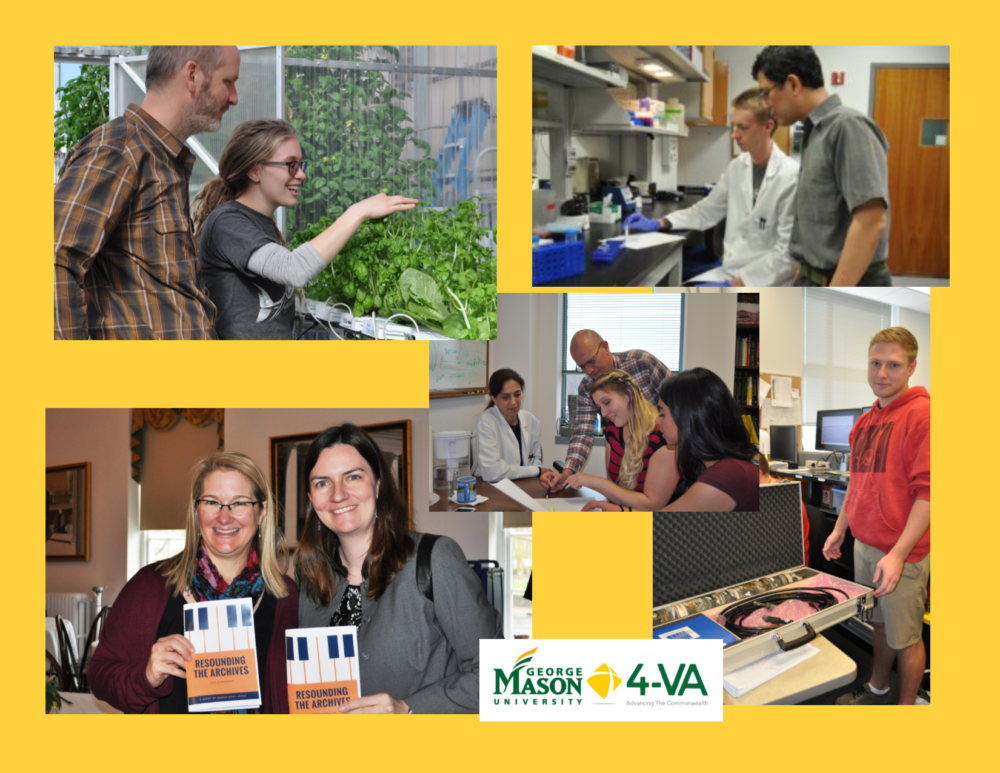
“The 4-VA program provides our Mason faculty the opportunity to bring a research idea to life that can benefit our students, higher education, and Virginia citizens statewide,” explains 4-VA@ Mason Campus Coordinator Janette Muir. “We are especially interested in research collaborations that leverage the strengths of each partner university and improve efficiencies in higher education.”
In addition to encouraging cross-collaboration between institutions, 4-VA seeks to engage undergraduate and graduate student researchers. “Our goal is to afford our students substantive and 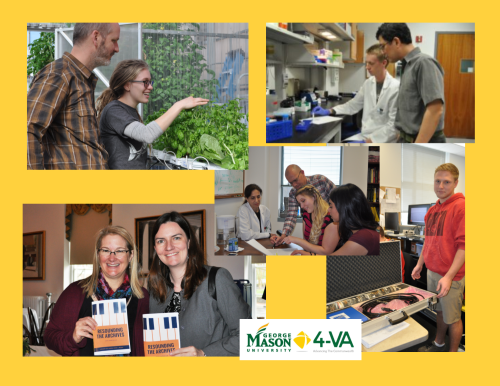 meaningful research opportunities,” continues Muir. “4-VA student researchers leave our schools with important and real-world experience that will help them transcend from ‘just’ a job applicant to a standout candidate.”
Now in its 10th year at Mason, the 4-VA program has grown to include William and Mary, James Madison, Old Dominion, Virginia Commonwealth, Virginia Military Institute, Virginia Tech, and the University of Virginia.
Currently, eight 2019-2020 grant awards are underway at Mason covering a range of topics including these collaborations with other institutions:
- “Communication Across the Curriculum: Creating Faculty Resources for Building Communication Skills in the Discipline” Partner Institutions: VT, JMU
- “Developing a Blood Test to Support Treatment of Surgically Induced Type I Diabetes” Partner Institution: VCU
- “Species Richness Resilience to Habitat Fragmentation and Restoration in Tropical Rainforests” Partner Institutions: JMU, UVA
Faculty interested in applying for a 2020 – 2021 grant can learn more by visiting the Research Grants tab on this website.
 “We are delighted to bring William and Mary and VMI into our 4-VA collaborative,” said 4-VA Mason Campus Coordinator Janette Muir. “The very strength of 4-VA is collaboration. With our additional partners, our students and faculty have more opportunities — that’s great for higher education in the Commonwealth.”
 of collaboration with our sister institutions.”
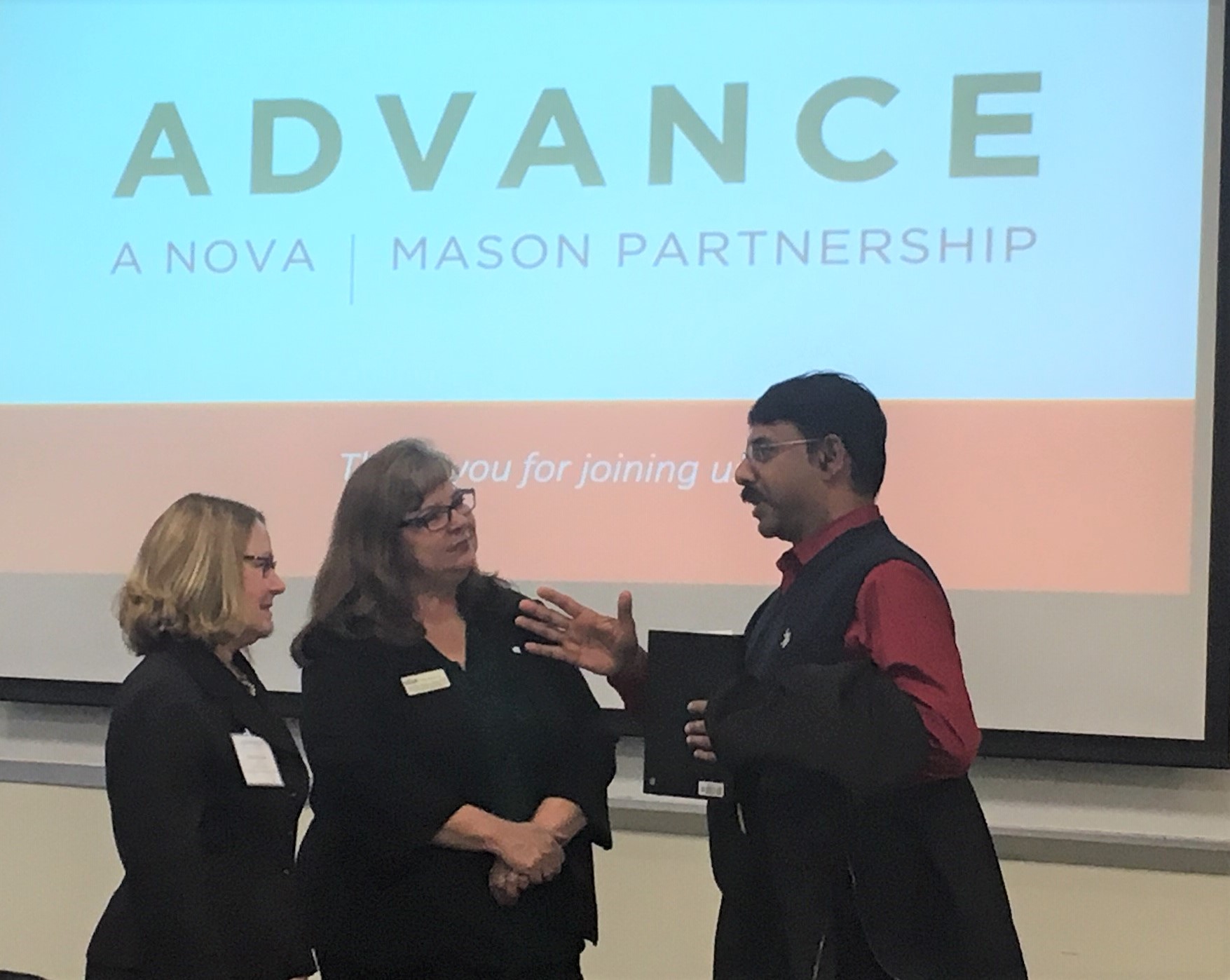
 While George Mason University produces hundreds of candidates each year in the field of education, academic leaders at Mason recognized the need to work closely with area educational institutions – both public and private – to ensure that those candidates meet and surpass the expectations in today’s educational environment.
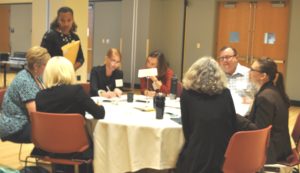
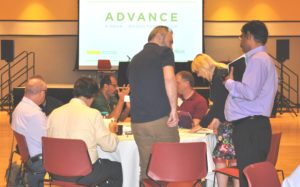
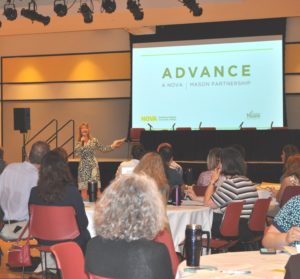
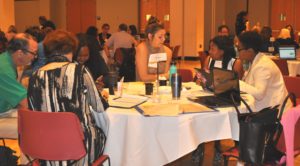
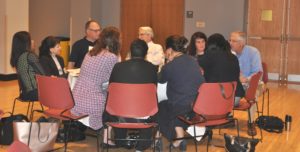
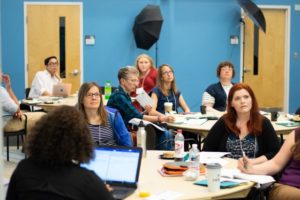
 To do so, armed with a grant from the Association of Public and Land Grant Universities (APLU), Mason recently held a roundtable of academic leaders as well as a host of representatives from private and public schools from the greater Washington, DC area to look closely at the needs of area teaching institutions. The event also prominently included educators and faculty from Northern Virginia Community College (NOVA), Mason’s community college partner in the ADVANCE program, a nationally recognized program which supports the seamless transfer of students from the two-year school to Mason.
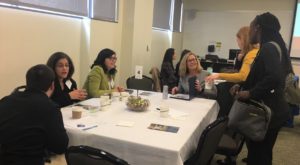 successful teachers. Not surprisingly, many groups arrived at the same conclusions, including the need for significant ‘ground level’ experience with groups of students, providing background for how to handle classroom situations; the ability to work in a team environment; and the ‘soft skills’ necessary to handle a variety of audiences — students, fellow teachers and parents.
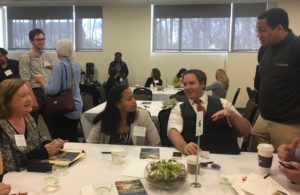 At the conclusion of the event, each table shared their findings with the room and a list of targeted skill sets were noted. Muir recalled the energy and environment throughout the day, “We were able to connect a group of passionate, motivated leaders in education – they were enthusiastic about the idea of building better teachers and I know we’ve begun to construct stronger pathways for our students from NOVA to Mason and beyond.”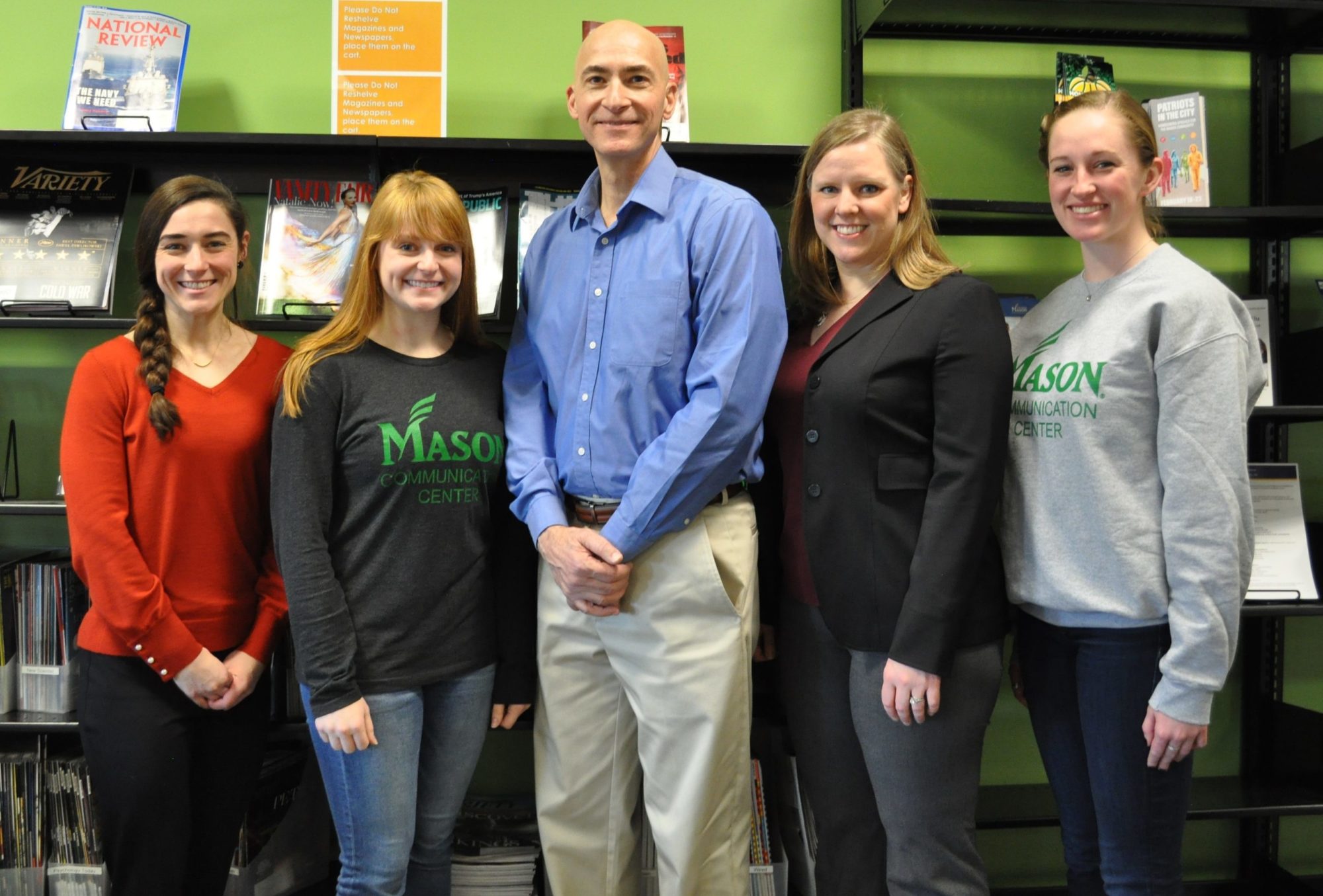
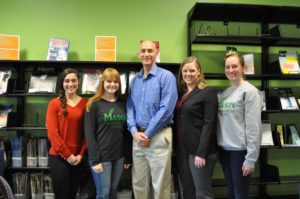
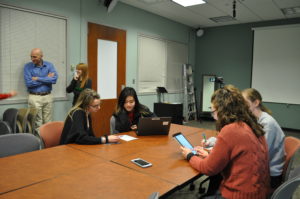 Communication Center for all students enrolled in the course. In the Communication Center, which is funded by the cost savings from moving the first hour of the course online, students meet with student Communication Coaches to get feedback on outlines, video record and practice presentations, practice interviews, work on developing group presentations, and more. Most of the Coaches are members of Mason’s nationally-renowned forensics and debate teams, graduate students who also teach the course, and students who have demonstrated outstanding communication and feedback skills, who are able to share their advanced training with students that are just getting started.
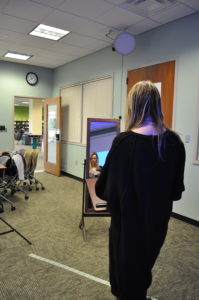 The Communication Center is a ‘one stop shop’ for valuable one-on-one coaching sessions for students as they prepare presentations. Currently, the Center is open every day between 10:00 AM and 5:00 PM and books more than 300
 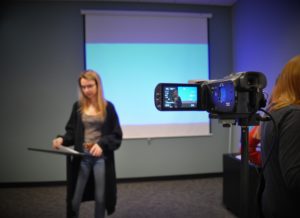 appointments a week. It is anticipated that number will balloon as more students recognize the benefit of the help.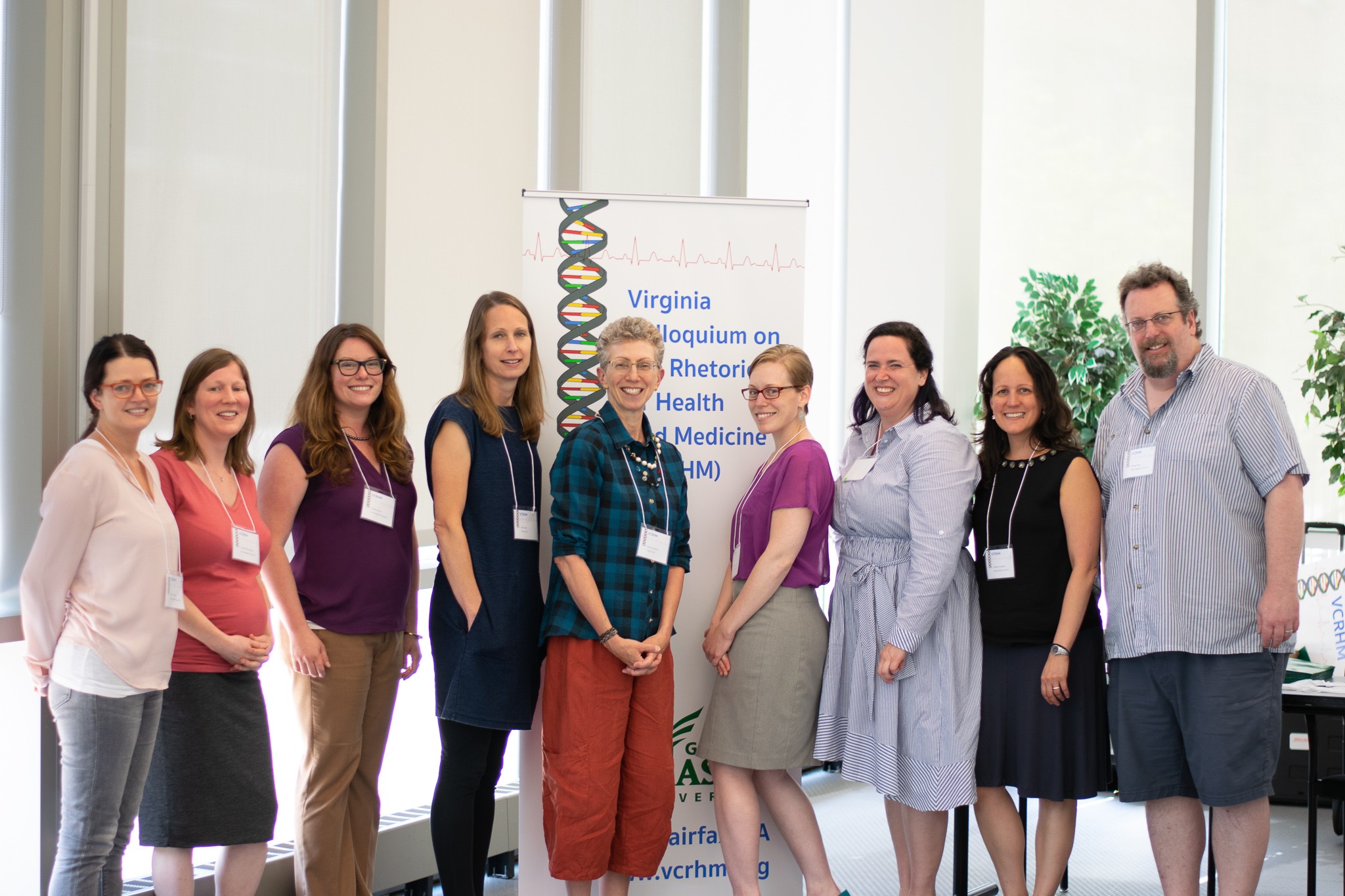
 The grant provided the funding for a first-of-its-kind statewide symposium “The Virginia Colloquium on the Rhetoric of Health and Medicine” (VCRHM).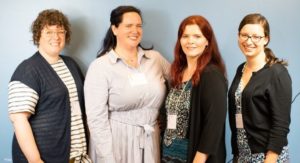
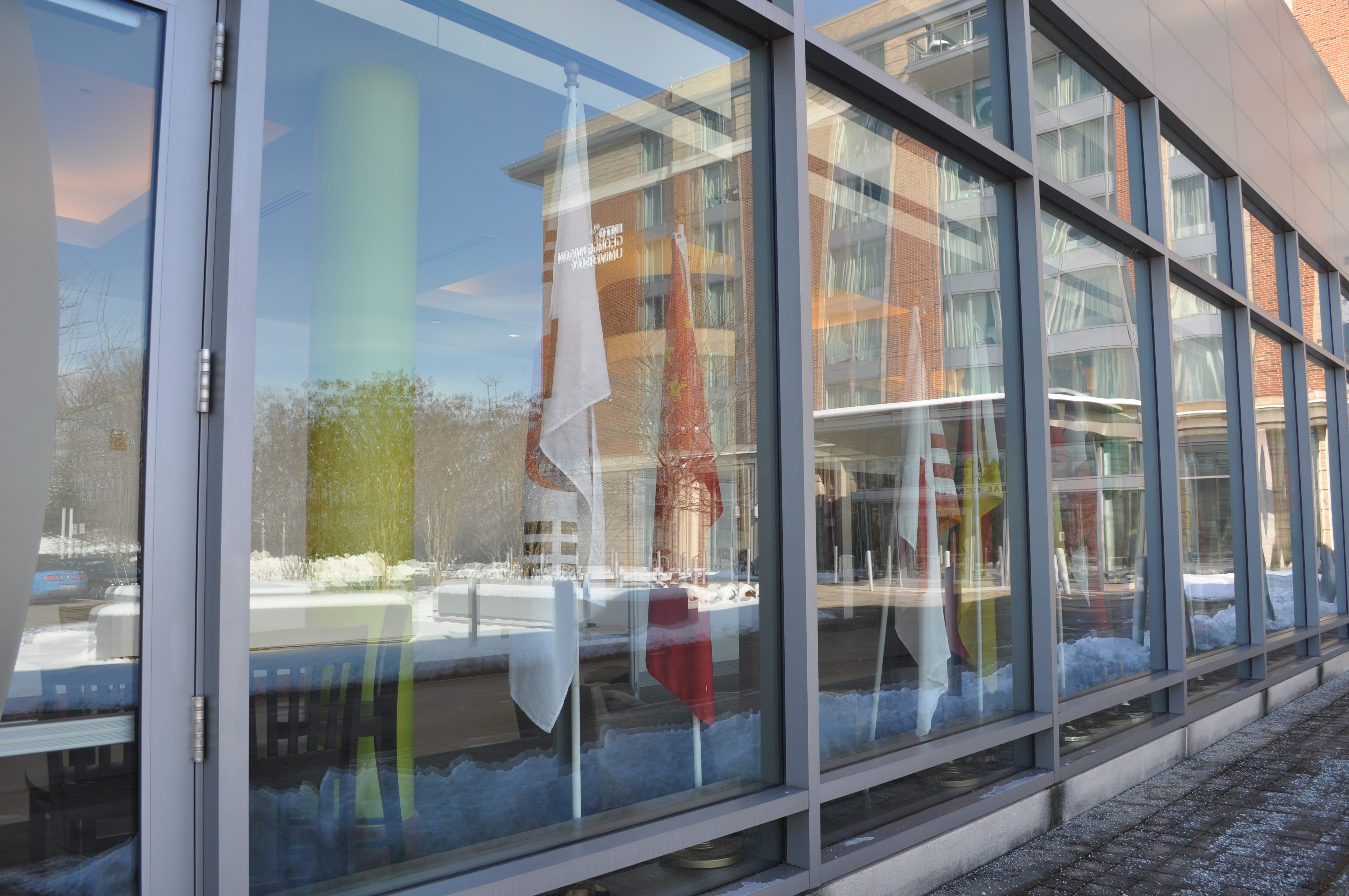
 With no existing road maps for multilingual student success, Mason INTO has joined with the Stearns Center to develop a ground-breaking effort to harness this resource and create a path for faculty and students to support them on their academic journey.
 “At Mason, we pride ourselves on our diversity, but we can’t just point to our population numbers and say ‘look at us’ — we want and need to do more. Our focus is to develop Mason’s agility and ability to work across cultures and languages,” explains INTO’s Interim Academic Director Karyn Kessler. “We have a treasure trove at our fingertips which we can use to prepare Mason grads to have a global mindset and to work on global problems.”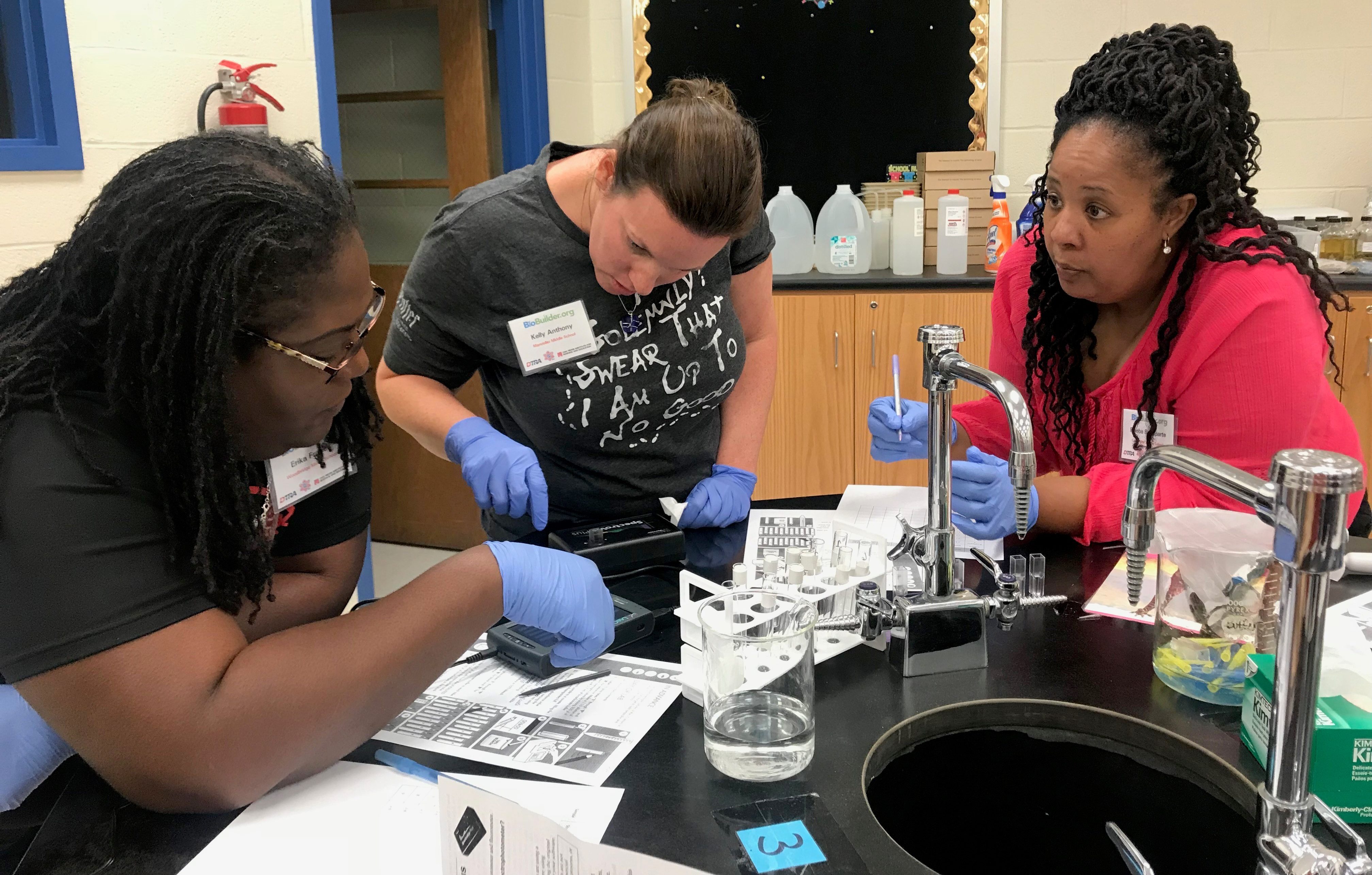
 As a former high school science teacher at Chantilly and Thomas Jefferson in Fairfax County, Andrea Cobb, (PhD in biochemistry) saw the difference with her own eyes. After sending her students off to a summer research experience through Mason’s Aspiring Scientist’s Summer Internship Program (ASSIP), they would return in the fall as changed students. “They came back to school looking and sounding like inspired scientists, with a resume full of authentic research under their belts. I could see the difference in their eyes and read it in their papers,” says Cobb.
 STEM access to real-world, research. ASSIP attracts students from a wide range of schools — from Virginia (including UVA and William and Mary), to California, (including Stanford and Berkeley), as well as students from smaller schools like Troy University and Carleton College. Mentors from Mason’s College of Science donate their time each summer to deliver this rich experience.
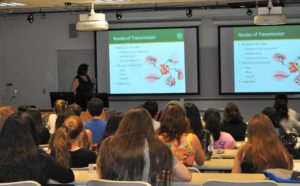
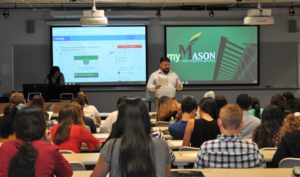
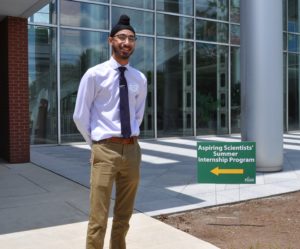 a lot of strengths going through this program, but, importantly, I also learned a lot about my weaknesses, it showed me where I needed to focus to make the most of my time here,” said Bedi. “This program fosters creativity, imagination, and collaboration — it’s truly exciting.” Bedi emphasizes the importance and value of working with a mentor. “I was able to do research with Dr. Caroline Hoemann last year, who is in the Bioengineering Department. We analyzed white blood cell movement and how that might be applied to cancer research and therapy.” Bedi is clearly passionate about his work through ASSIP, but credits the program for giving him hands-on access to important research that brings his passion to life.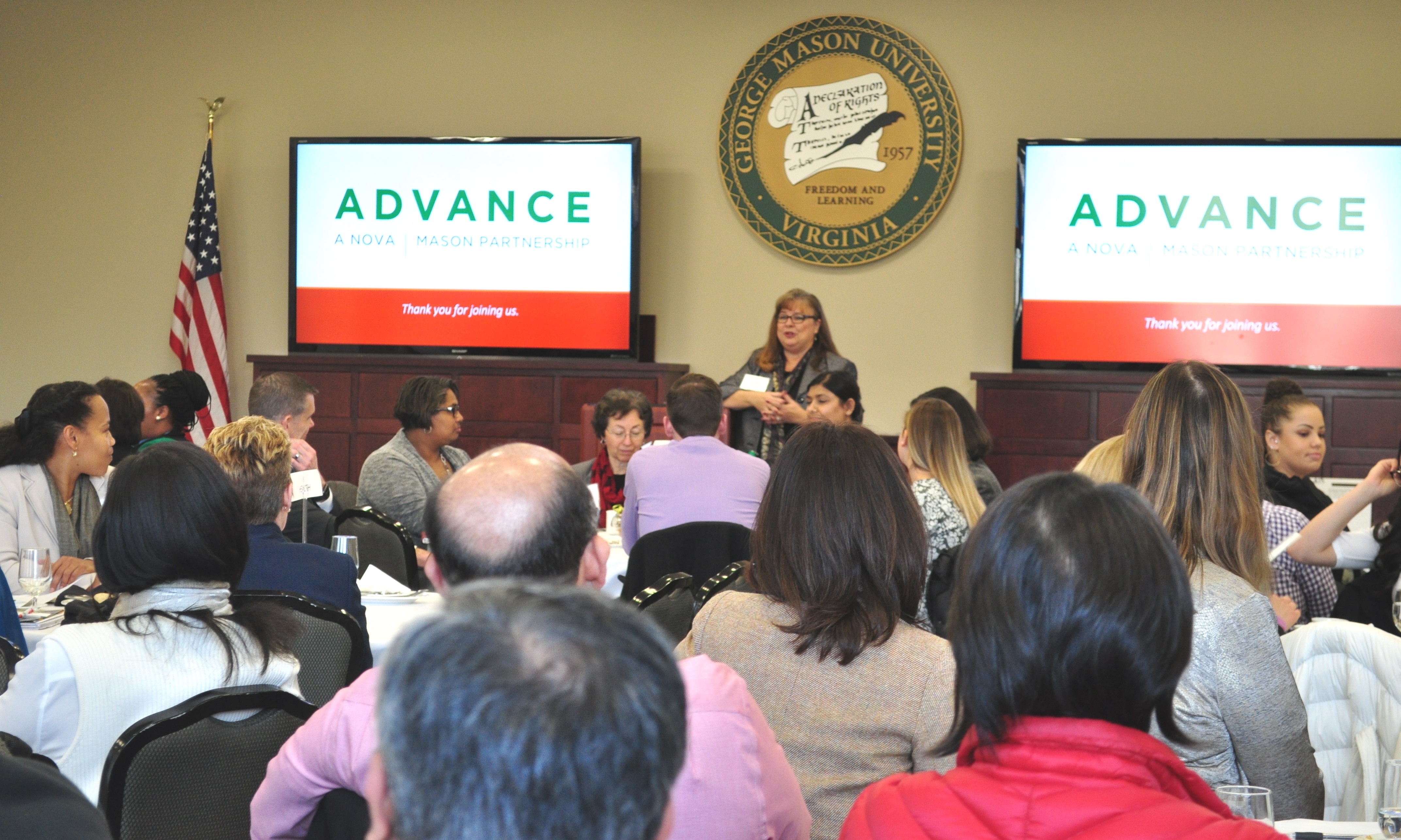
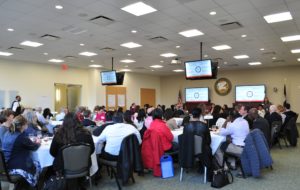
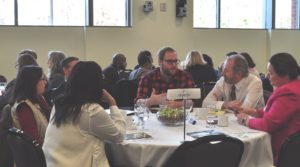 the future employee skill sets desired in the two sectors with an eye toward building educational curricula for the Mason/NOVA ADVANCE students to meet those needs. “We recognize the importance of building relationships with the business community so that we can work together to build the employee workforce necessary to be successful,” explained Janette Muir, Associate Provost for Academic Initiatives and Services at Mason, one of the hosts of the event.
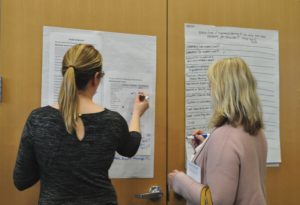 The Summit produced an array of concrete steps to begin to integrate not only the hard, technical skills needed by the business community but also a detailed list of “soft” skills important in any office environment, including communication tools and techniques, office protocol, business development and team building.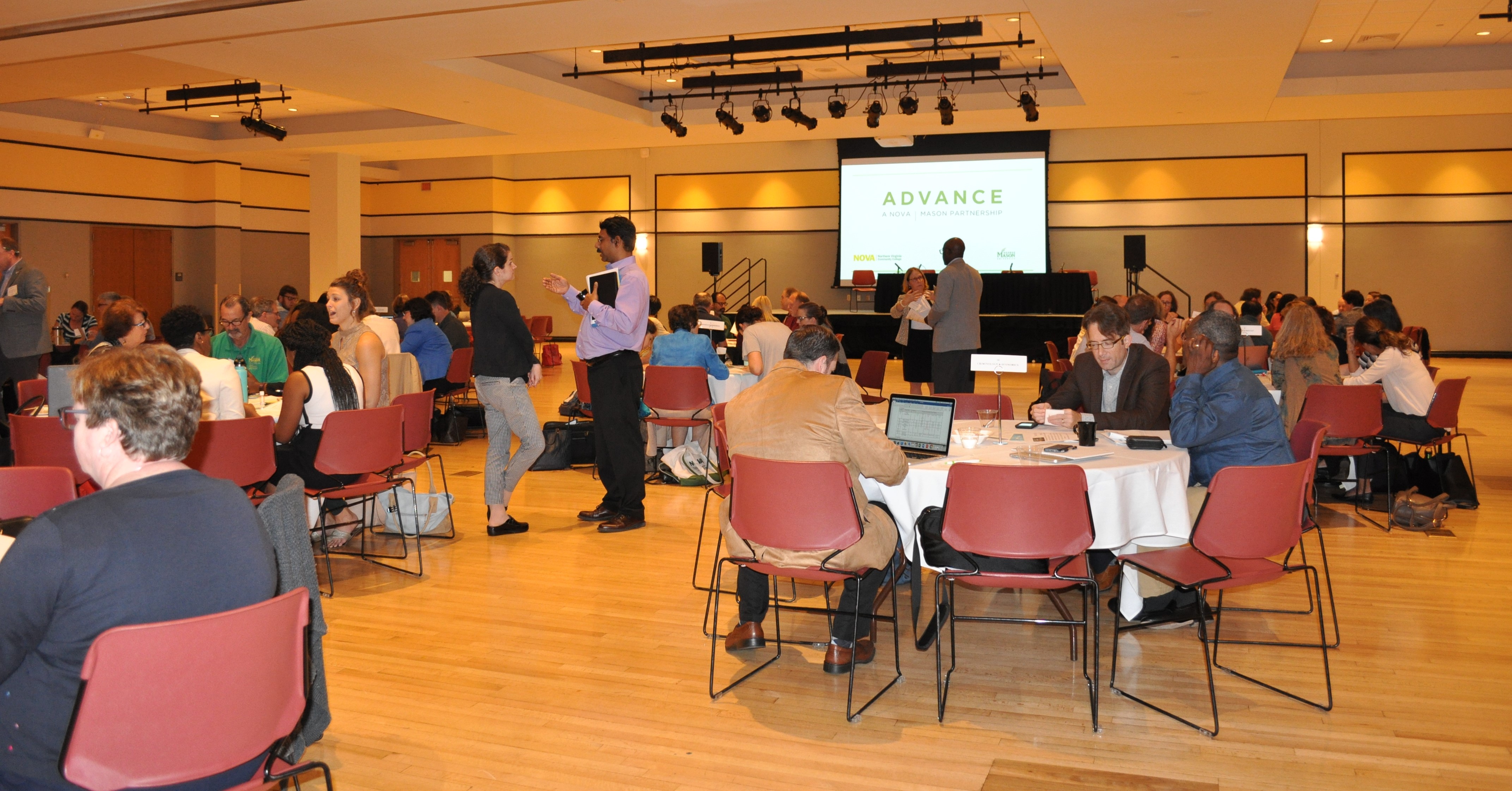
 Virginia Community College (NVCC) and George Mason University volunteered to spend their day off recently aligning courses and designing curricula to help provide a streamlined transition for NVCC students interested in transferring to Mason for a four-year degree.
 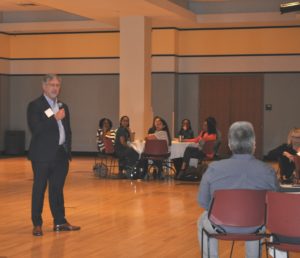 NVCC President Dr. Scott Ralls opened the conference by noting several obstacles facing students in the current transfer process, including a lack of clarity regarding prerequisite courses, confusion due to separate guidance services, and often-tedious paperwork; all resulting in a loss of an average of 15 credits per student. “This meeting is important and historic. Rarely do groups of faculty get together to take on this difficult process – in this room we have educators that care about their students. We’re part of something bigger than ourselves and our institutions,” explained Ralls.
 process, providing access to Mason student life, and streamlining enrollment and registration services, participants broke into groups based on their areas of study and got to work. Professors attending the conference came from a variety of departments including Health, Information Technology, Math, English, Education, Visual Design and the Sciences. At the conclusion, each group created a “pathway” worksheet, outlining each of their courses and the necessary steps to merge or mirror them.
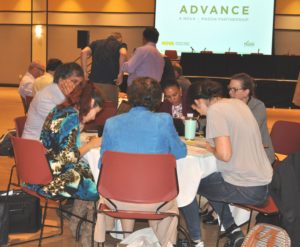 rts here today.”