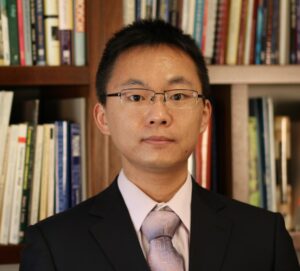
While Wenying Ji, Assistant Professor in the Department of Civil, Environmental, and Infrastructure Engineering at George Mason University, has previously collaborated with Xinghua Gao (Virginia Tech) and Jundong Li (University of Virginia), he saw a new opportunity to take their research deeper through a 4-VA Collaborative Research Grant. Through a 4-VA grant, Ji hoped, he and his fellow researchers could delve into an analysis of stakeholder communications during disaster response, an important addition to his ongoing research integrating advanced data analytics and complex system modeling to improve the performance of infrastructure systems.
Through the 4-VA program, Ji could receive funding from 4-VA@Mason, while his collaborators at Virginia Tech and UVA could also receive modest financial support from their universities through 4-VA. Ji’s hopes came true as the 4-VA@Mason Advisory Board saw the potential in the research; thus, all collaborators obtained support from 4-VA. Ji’s research aimed to model, analyze, and identify effective communication and collaboration patterns that stakeholders utilize in response to disasters.
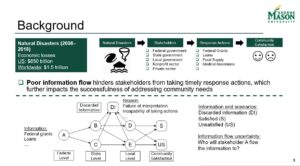
As Ji explains it, during disaster response, the communication process among agencies is complex due to the involvement of a great number of agencies at different hierarchical levels and sectors–the federal, state, and local level agencies; non-governmental agencies; and private contractors. Ji’s goal was to extract effective communication and collaboration patterns through an analysis of historical disaster response documents and evaluate various possible communication and collaboration patterns that may affect stakeholder response.
Their work began with Gao at Virginia Tech who was able to collect a range of valuable data sources (e.g., situational reports and government-issued guidelines) that document stakeholder interaction processes. The team considered situational reports from natural disasters, including Hurricane Irma in Florida and Hurricane Harvey in Texas, and studied the reports documenting a 10-day period.
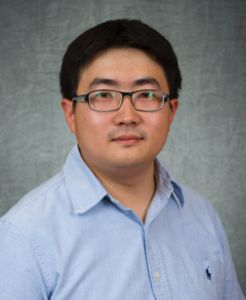
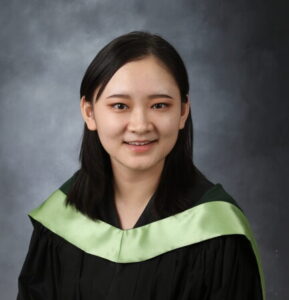
That information was sent to Li, who is an expert in graph modeling. From there, the data went to Ji and graduate student Yitong Li. Li performed much of the analysis and gained valuable, practical experience from the research.
The result of their research has produced a quantitative model which evaluates the impact of information flow on the effectiveness of disaster response. Based on the model, a metric was then designed to evaluate the probability of community satisfaction. The designed model and the metric provide governmental stakeholders interpretable insights for evaluating the impact of information flow on their disaster response effectiveness, so that proactive actions can be targeted for enhanced disaster response. The team’s approach promotes inter-organizational collaboration in emergency management by helping stakeholders easily identify effective communication and collaboration patterns.
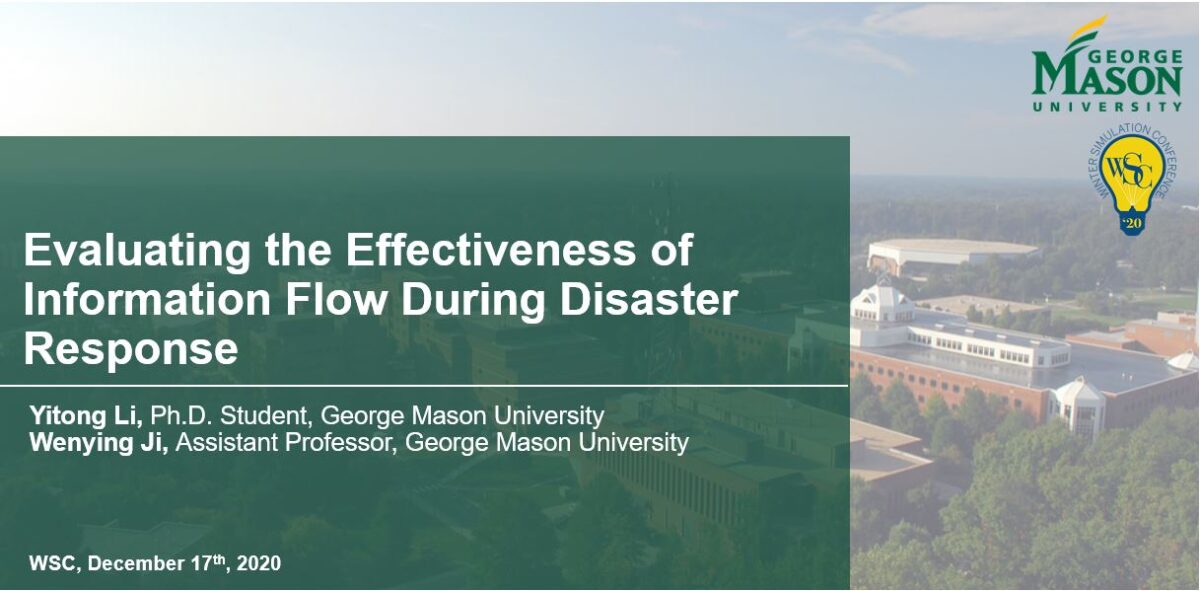
Following their successful research, the group produced a journal paper entitled “Robustness of Stakeholder Response Networks for Infrastructure System Protection” for the American Society of Civil Engineers Journal of Management in Engineering, a conference paper and a presentation entitled “Understanding the Dynamics of Information Flow During Disaster Response Using Absorbing Markov Chains” were produced for the Winter Simulation Conference.
Next steps for the team? They plan to submit the proposal to the Humans, Disasters, and the Built Environment (HDBE) program, which is an NSF funded grant. “Thanks to this grant, we hope to take our project to the next level,” says Ji.
 recognizes there is much to be understood about creating constructive introductions in the school setting. However, she is also keenly aware of a key flaw in the data used in the benchmark research – it is predominantly limited to students who are economically advantaged.
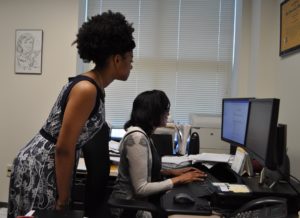 Several months later, with that grant in hand, Garner identified an undergrad student, Tamera Toney, who was interested in the project and would be able to handle some of the data entry and management responsibilities. Toney worked on the project during her senior year at Mason. Garner saw that the 4-VA funding could provide a personal and professional pathway for Toney to enhance her studies. Toney recently graduated and will return in the fall to begin her master’s work in Psychology.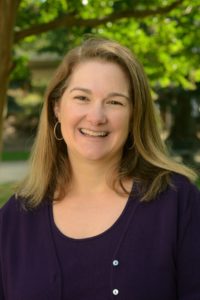
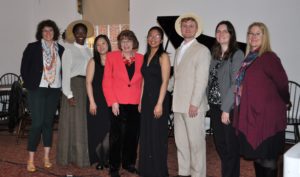
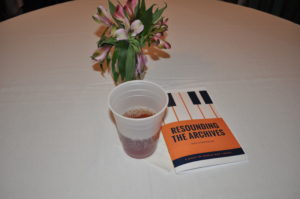 rehearsed and studied the music within its historical context. And similar to good musical composition, RtA worked to a crescendo. For the RtA team, that was a spring evening in Charlottesville when the team of researchers, performers (musicians and singers), videographers and archivists, librarians, faculty and more joined together in UVA’s Colonnade Club Garden Room to fully embrace 17 pieces of WWI music. From “K-K-K Katy” to “Over There” to “Oh How I Hate to Get Up in the Morning” the Colonnade Room sprang to life — circa 1918.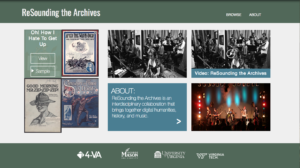
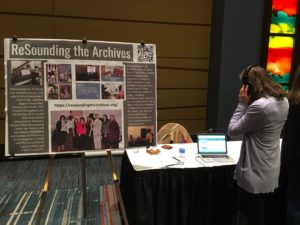
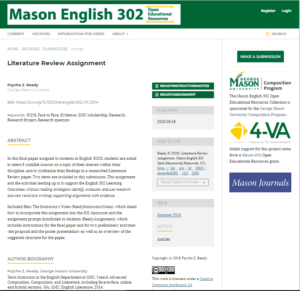 Team member Psyche Z. Ready, assisted by Joyce P. Johnston, took the lead in adapting Mason Journals’ iteration of the Open Journal System (OJS) to meet the needs of English 302 OER collection authors, reviewers, and users. Each item in the new, public-facing collection includes an abstract, instructor’s notes, and creative-commons licensed curricular materials – assignments, activities, and/or background readings – created, adapted, or curated for use in English 302. The OJS platform eases the review process, and also allows user-friendly features such as keyword searching.
 ead PI Moissa Fayissa, PhD. conjectured that this might just be the path for the team to pursue: He believed their current text and lab books were subpar and incomplete as a match for their course. Fayissa saw the need to provide only top-notch materials for this intensive class — which is offered in three sessions in the fall semester and two sessions in the spring semester. Additionally, Fayissa worried about the cost of their then-current textbook. At more than $250, this was a high price to ask students to pay.
 , “The materials search included looking at printed laboratory manuals and online open resources. When we could not find enough information online for the experiment, we referred to the previous laboratory manual and cited the lab manual as the reference. The instructions and background materials found online were rewritten to suit our needs.”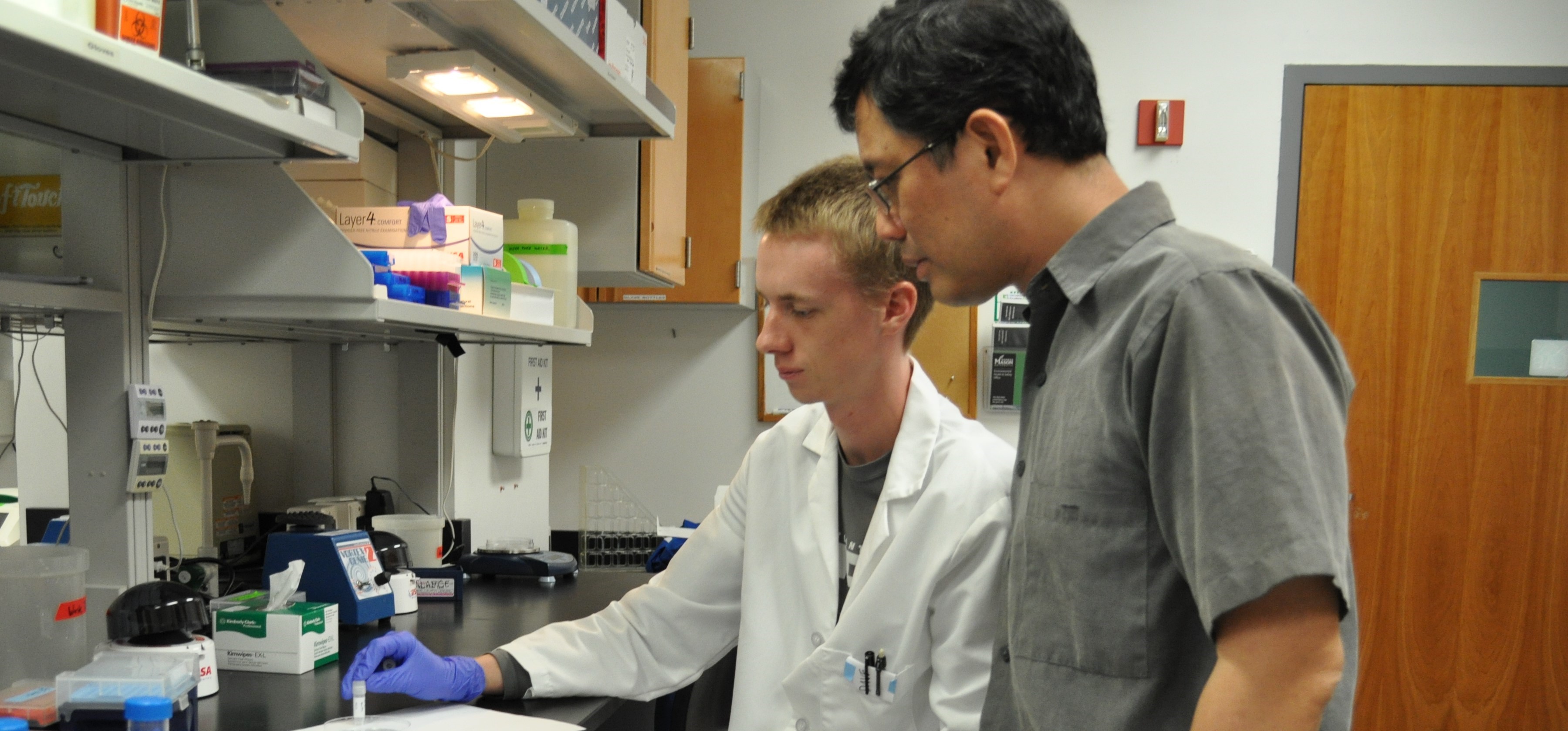
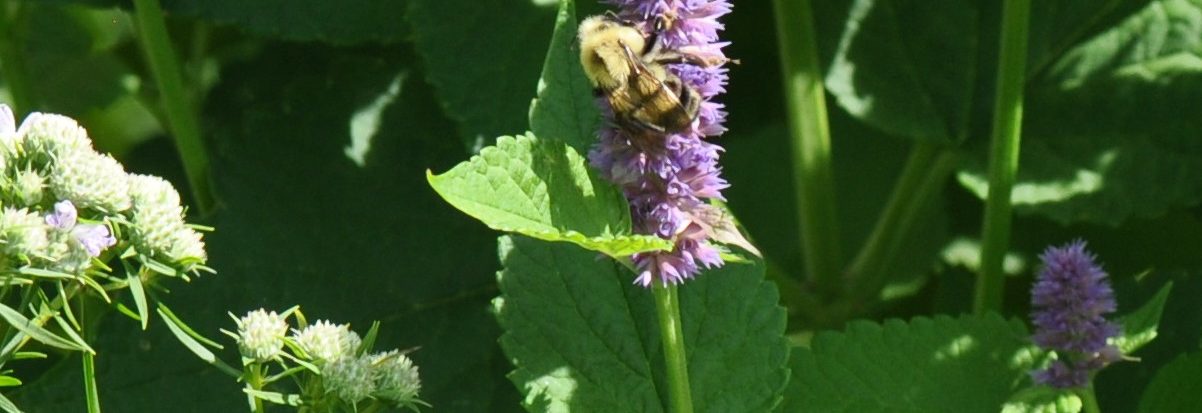
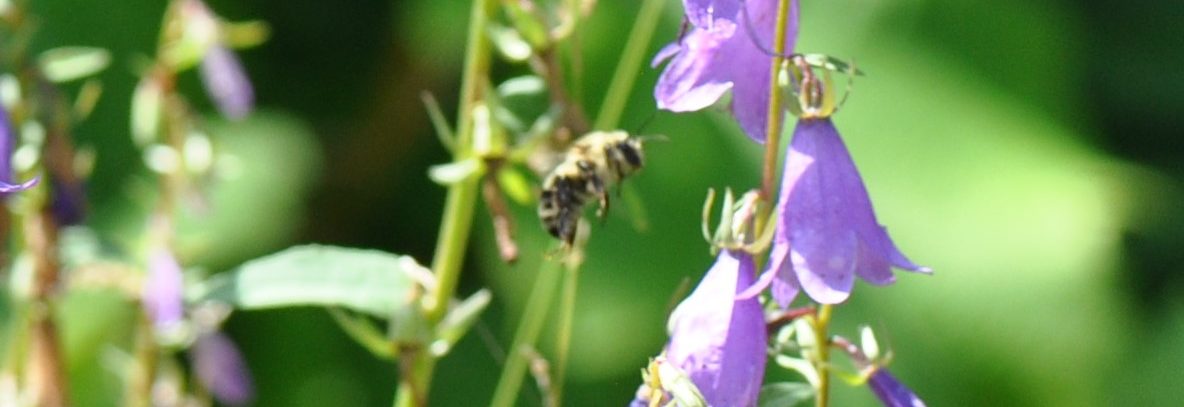
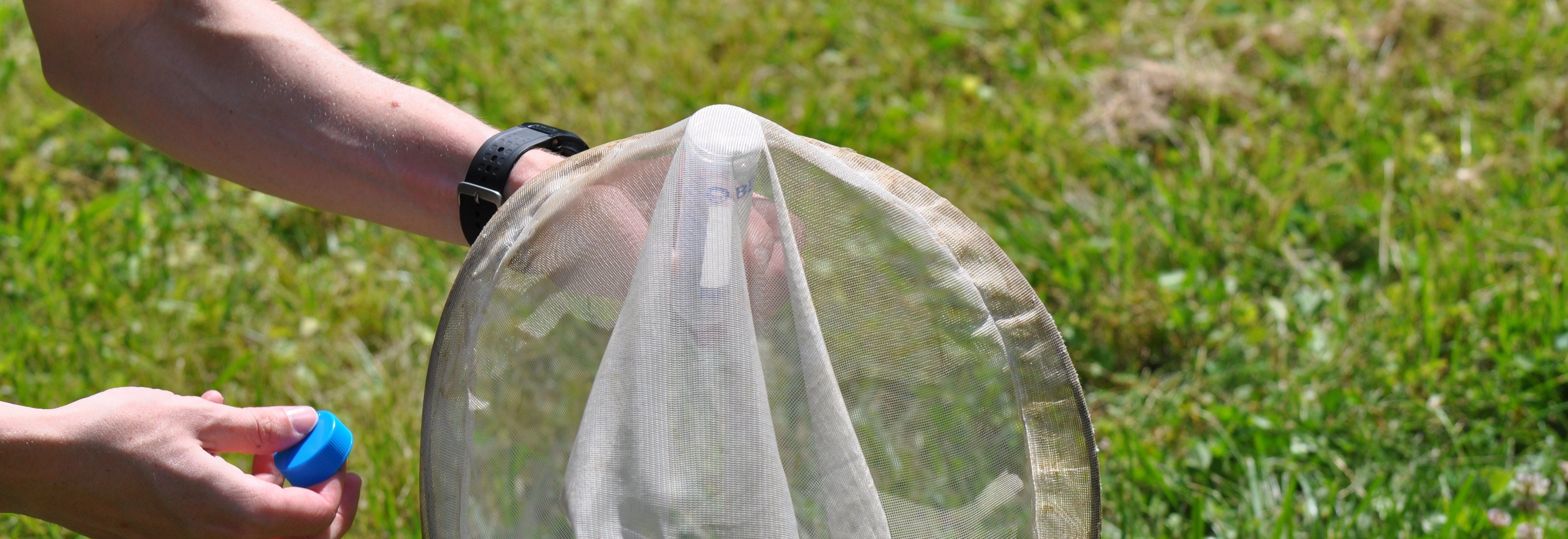
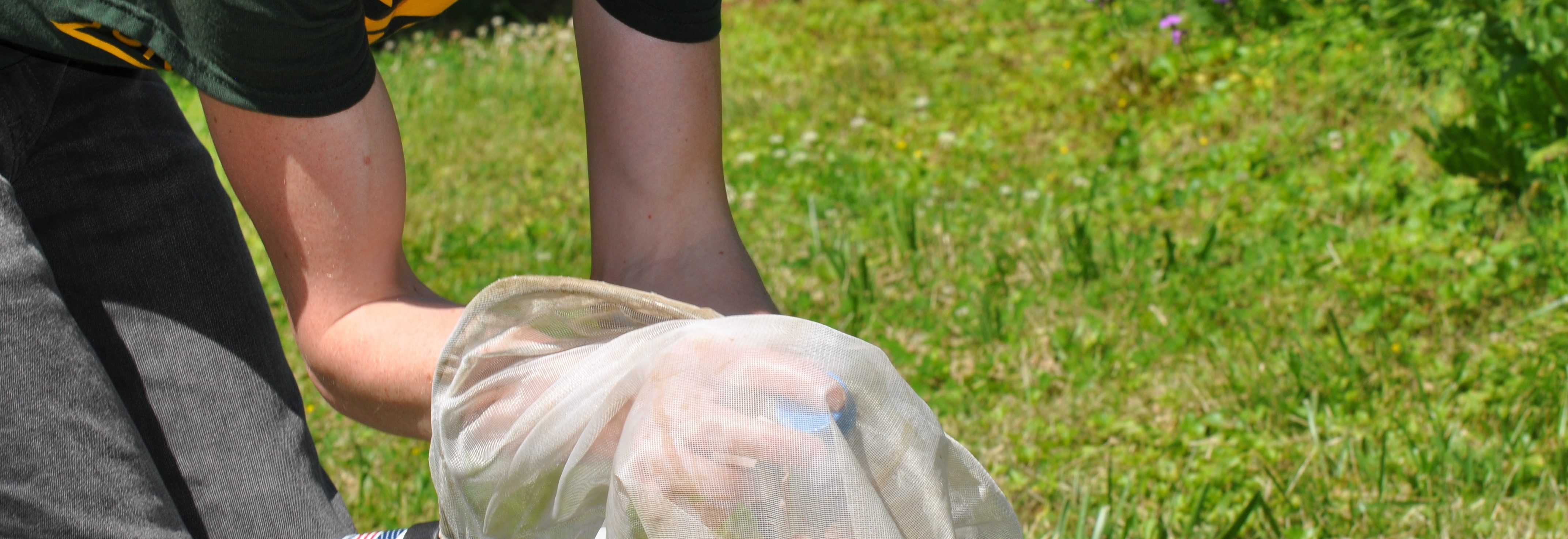
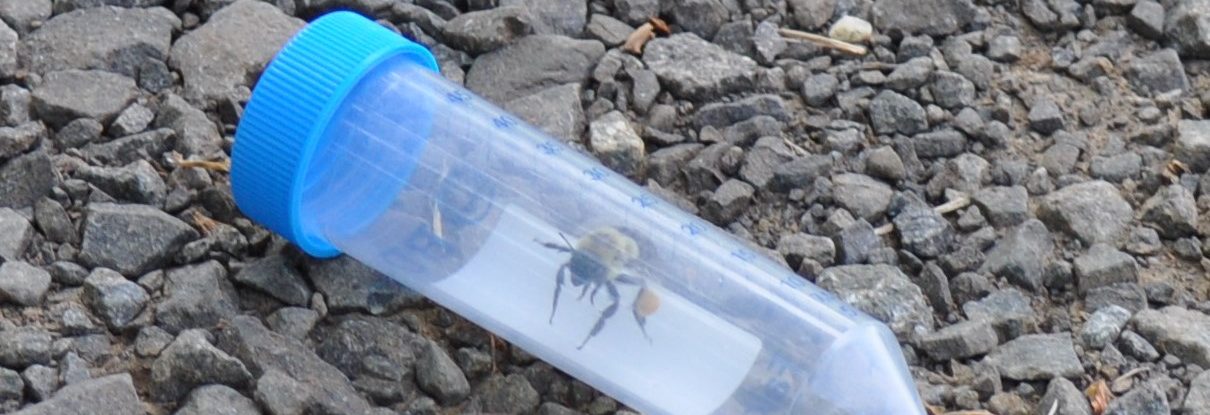
 nesting behavior, genetic diversity and other traits, but the hard science is not there. To take a closer look, Dr. Haw Chuan Lim and his Mason team of graduate and undergraduate students armed with a 4-VA2Mason grant are conducting groundbreaking research via their “High Throughput Bee Pathogen Survey.”
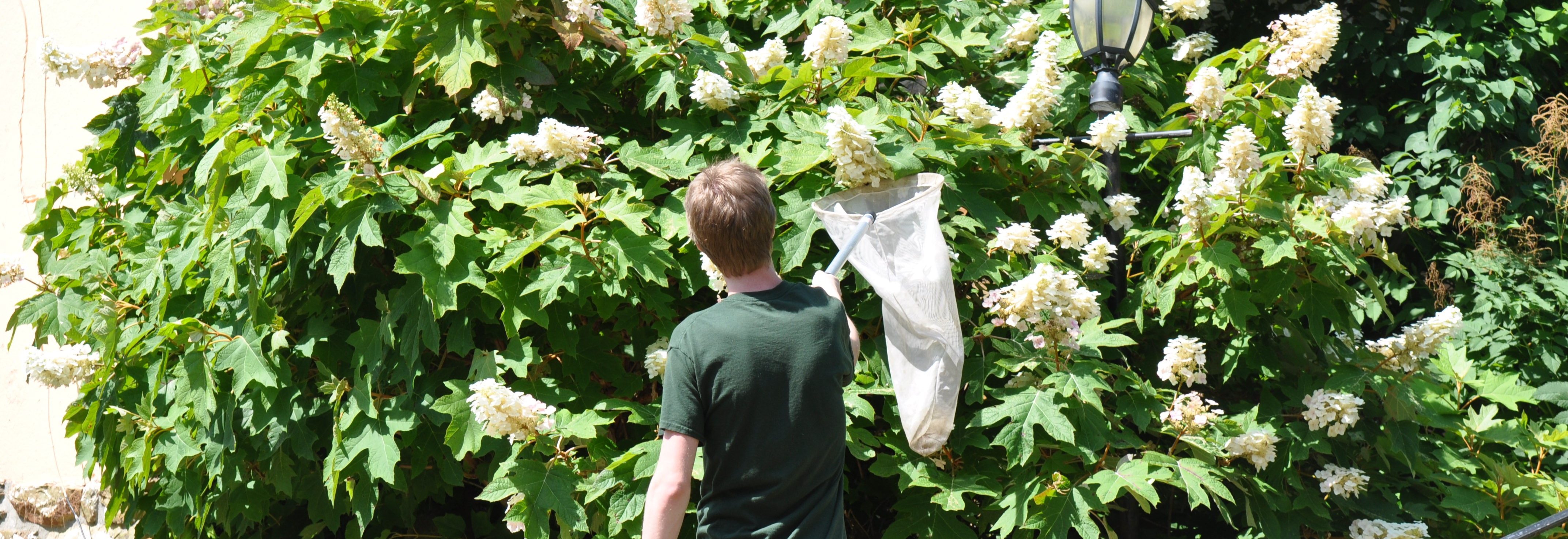
 but to develop state-of-the-art research techniques as they closely investigate extracted RNA and DNA from three bee species in Northern Virginia. Together, they are harnessing the bioinformatics and genomics capabilities at the Mason Sci-Tech campus while developing their own sequence capture probe-set to enable a comprehensive survey of pathogens and micro-parasites. They collaborate closely with Mason’s Rebecca Forkner and UVA’s T’ai Roulston. Both Forkner and Roulston have many years of experience in pollinator biology, using the Virginia Working Landscapes (VWL) program — the sites of the bee collection — and UVA’s Blandy Experimental Farm.
 When the initial series of specimens was harvested, master’s student David Lambrecht went
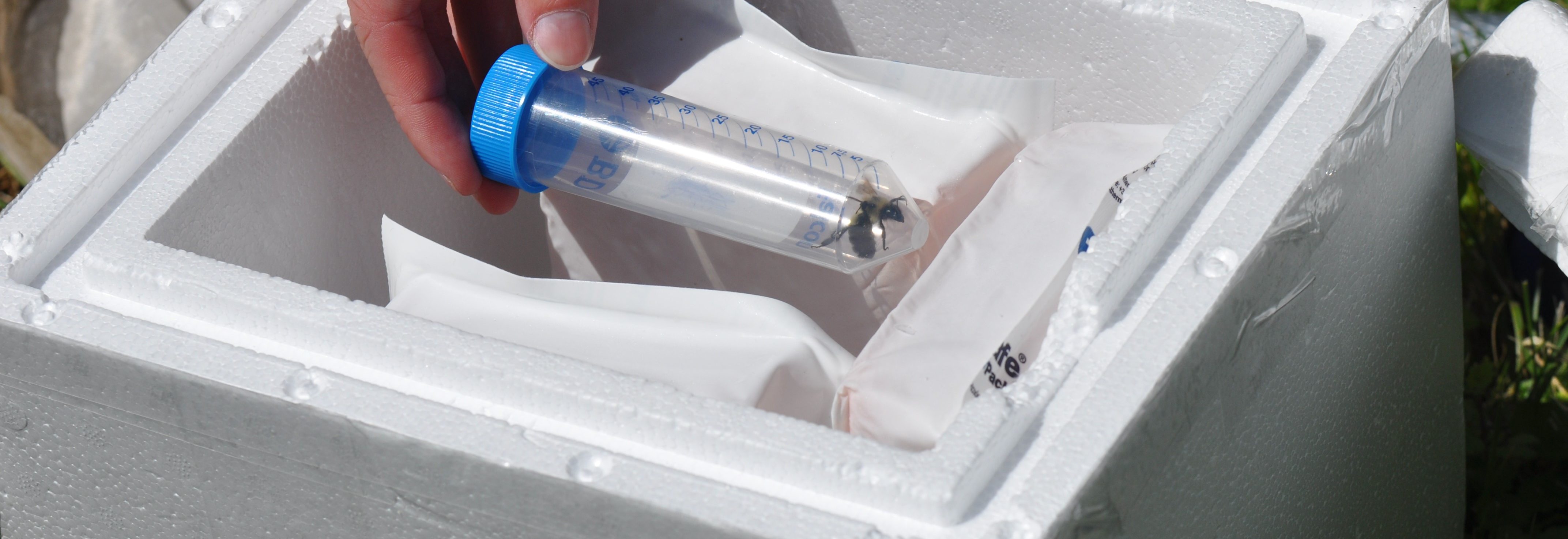
 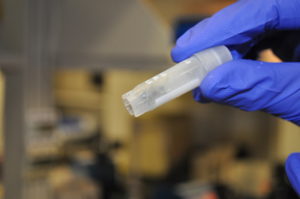 into overdrive. “I’ve spent many long days and nights in this space,” notes Lambrecht as he removes a bee sample from the freezer. After freezing each specimen, the students on the project learned how to extract total RNA and total DNA from each specimen. By using techniques such as target sequence capture and polymerase chain reactions, they can then enrich for and sequence a variety of bee pathogens whose genomes are made up of RNA and DNA molecules.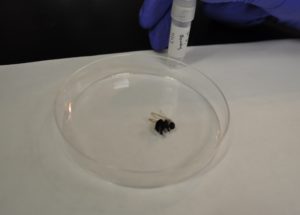
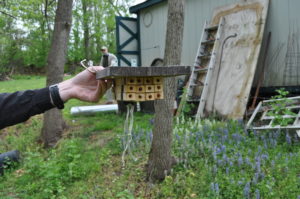 immune responses of bees.