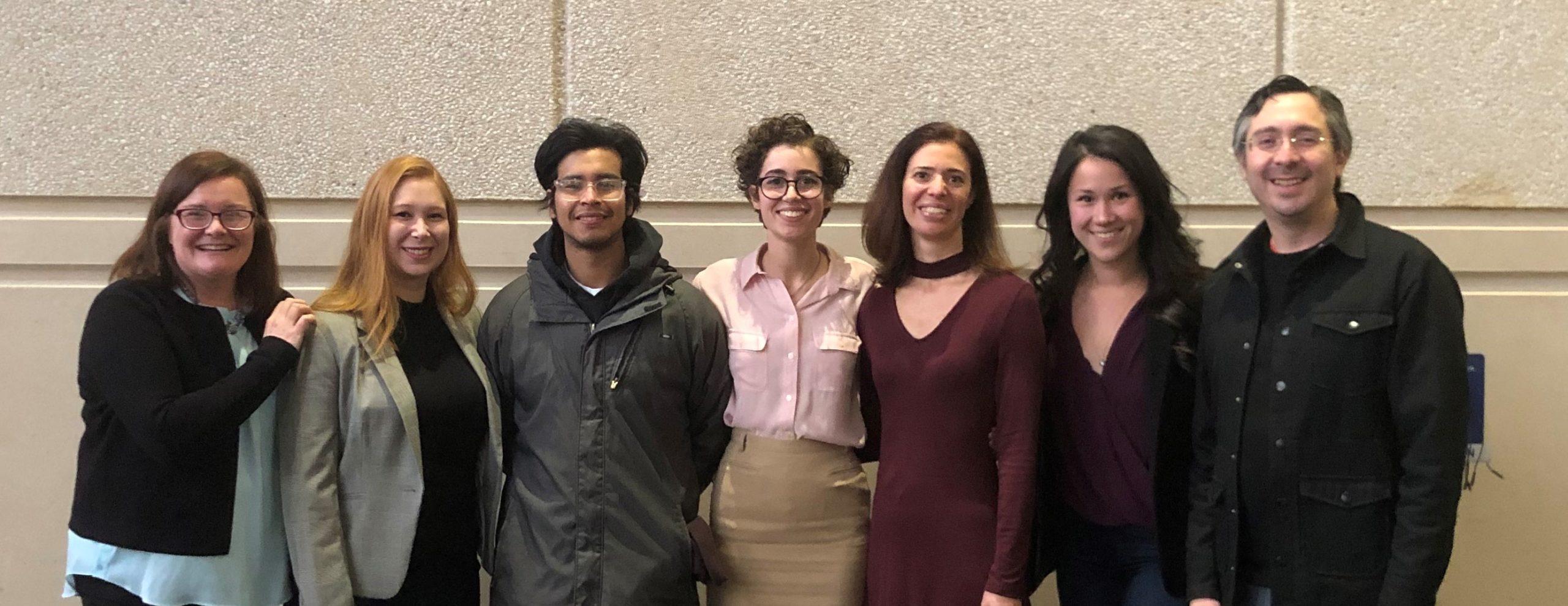
Like any cutting-edge research team, the undergrad and grad students assembled in Dr. Geraldine Grant’s molecular and cell biology lab at George Mason’s Science and Technology Campus knew that in order for their project to be successful they needed a few things to break their way. Specifically, for their 4-VA grant “Prognostic Noninvasive Biomarker Investigation of Induced Sputum and Peripheral Blood in IPF” (Idiopathic Pulmonary Fibrosis), they would need a lot of science, a touch of luck, a drop of art, and more than a little bit of help from their friends.
Their goal was ambitious: Identify biomarkers that would help track the diagnosis and progression of the disease as well as the efficacy, if even detected, of medical treatment. The goal would be a tall order for this difficult-to-diagnose and difficult-to-treat lung condition which affects more than 200,000 people in the U.S alone.
IPF is a progressive, fatal lung disease that is survived by few patients three to five years after diagnosis. With IPF, patients experience severe scarring (fibrosis) of the lungs for an unknown reason. Over time, the scarring gets worse and it becomes difficult for the patient to take in a deep breath and inhale enough oxygen to fill the lungs.
Long-time Grant Lab member and part of the initial team writing the 4-VA@Mason proposal, Dr. Luis Rodriguez explains, “Diagnosing IPF is a difficult task. Most of the time, diagnosis is simply a continuing series of elimination testing. Doctors back into the diagnosis because it was determined that it’s not A, B, or C.” What’s more, Rodriguez points out, “The disease can present in a number of different ways and the only standard for diagnosis confirmation is a sample from the lungs, but through that, the patient is at critical risk.”
However, tackling the diagnosis was just a part of the Grant lab challenge. Treating the disease can also prove problematic, as it can progress slowly or rapidly and the efficacies of treatment are difficult to determine. With few therapeutic options, little to no systematic tracking of treatment, and a wide range of patient responses to said treatment, the work was cut out for the team.
First, they needed data, and a reliable stockpile at that. Their objective was to get a large sample of patients suffering with the disease and to extract RNA. The next step would be to correlate the RNA with the current status of each patient’s disease, which included precise measurements of two important criteria: 1. How they breathe in and out, and 2. How far they can walk in six minutes.
That’s when they called on their first partner in the grant project, Northern Virginia’s INOVA Hospital and Dr. Steve Nathan. INOVA has long been a recognized care and treatment center for IPF and has a history of successful lung transplants for IPF patients. Through INOVA, the Grant team wanted to build that necessary data set to track, if possible, the measurements of disease progression. Nathan and the clinic were all in.
With a base of 40 patients in Nathan’s province, the Grant team got to work – monitoring, measuring and capturing data. The process was long and tedious, and they encountered their share of difficulties. One such roadblock meant refining mitochondria sensors in the patient blood samples measuring changes in oxygen that, in turn, captured the progression of the disease and the effectiveness of the treatment. Their perseverance paid off, however, with a statistically significant reliable data set. (Which, Rodriguez points out, continues to grow and provide valuable information.)
Their next task, then, was to analyze said data in a meaningful and productive way. That’s when they called in their second partner Dr. Norou Diawara, of the Math Department at 4-VA partner school Old Dominion University. Diawara has vast experience and expertise in the field of Biostatistics, which fit the bill for the Grant project.
All efforts paid off with noteworthy results, as the research identified gene signatures that indicated what patients responded to treatment and those that didn’t – a giant leap forward in their medicine.
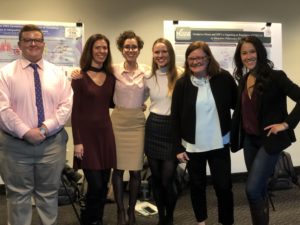
What’s more, Rodriguez notes, is that the initial grant has spawned a cadre of further opportunities including OSCAR undergraduate students continuing the analysis of the data set, and grants submitted to NIH, as well as to NSF for a grant on the biology of mitochondria. The project has also been featured in several poster presentations. One such notable presentation was at the Pulmonary Fibrosis Foundation Summit in September, a convocation of the leaders of research and treatment of Pulmonary Fibrosis, where the poster ranked in the Top 10.
“The 4-VA grant got this ball rolling,” concludes Rodriguez, “and we’ve progressed a long way from the start of this effort. However, I can see this initial research continuing to produce important results for years to come.”
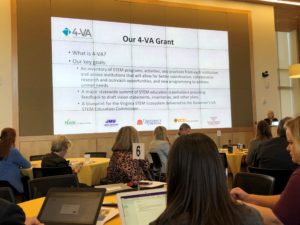 More than 140 leaders from Virginia’s K-12 and higher education institutions, out-of-school providers, the private and business sectors, and state officials and institutions joined together recently to begin the work of developing a blueprint for a statewide STEM network. This structure will be the basis for creating cross sector pedagogies providing Virginia’s youth access to a learning environment which will allow them to grow important skills to engage in science, technology, engineering, and mathematics from PreK – 16. “Virginia’s STEM Summit” was hosted by Virginia Commonwealth University and sponsored through a grant from 4-VA. The project was developed by a group 4-VA schools – VCU, Virginia Tech, George Mason, James Madison, and University of Virginia in coordination with the Virginia Department of Education and the Office of the Governor.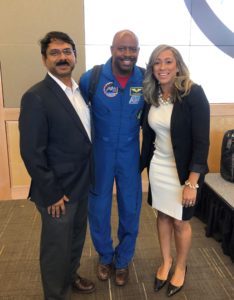
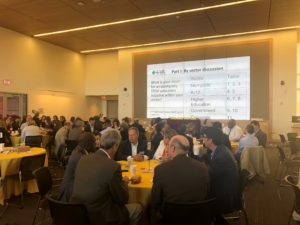 The day concluded with a group effort to integrate the work created at each roundtable into a viable framework for the Commonwealth. The conclusions will provide the basis for the STEM ecosystem build out and will be forwarded to the Virginia’s STEM Education Commission.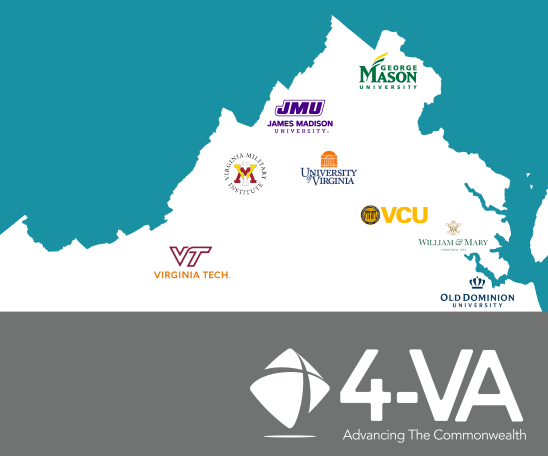
 “We are delighted to bring William and Mary and VMI into our 4-VA collaborative,” said 4-VA Mason Campus Coordinator Janette Muir. “The very strength of 4-VA is collaboration. With our additional partners, our students and faculty have more opportunities — that’s great for higher education in the Commonwealth.”
 of collaboration with our sister institutions.”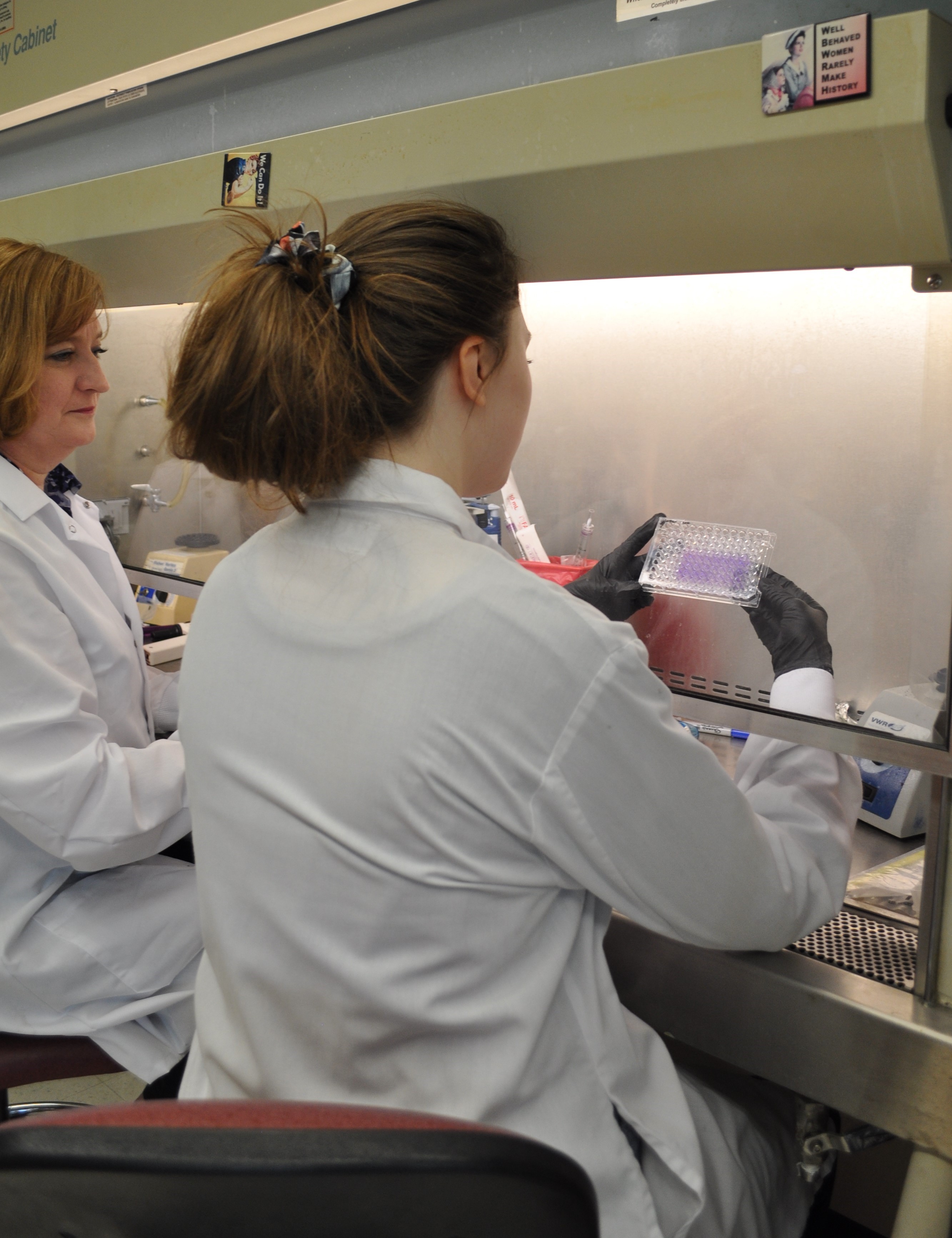
 the classroom to make it interesting and challenging,” explains Kim.
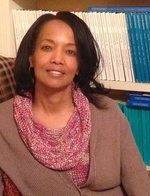 recognizes there is much to be understood about creating constructive introductions in the school setting. However, she is also keenly aware of a key flaw in the data used in the benchmark research – it is predominantly limited to students who are economically advantaged.
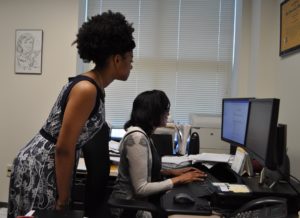 Several months later, with that grant in hand, Garner identified an undergrad student, Tamera Toney, who was interested in the project and would be able to handle some of the data entry and management responsibilities. Toney worked on the project during her senior year at Mason. Garner saw that the 4-VA funding could provide a personal and professional pathway for Toney to enhance her studies. Toney recently graduated and will return in the fall to begin her master’s work in Psychology.
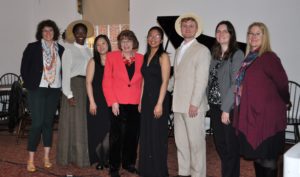
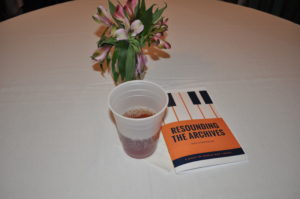 rehearsed and studied the music within its historical context. And similar to good musical composition, RtA worked to a crescendo. For the RtA team, that was a spring evening in Charlottesville when the team of researchers, performers (musicians and singers), videographers and archivists, librarians, faculty and more joined together in UVA’s Colonnade Club Garden Room to fully embrace 17 pieces of WWI music. From “K-K-K Katy” to “Over There” to “Oh How I Hate to Get Up in the Morning” the Colonnade Room sprang to life — circa 1918.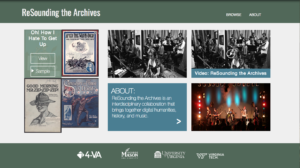
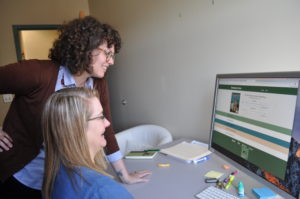
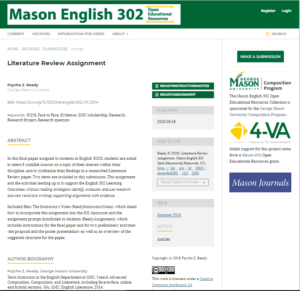 Team member Psyche Z. Ready, assisted by Joyce P. Johnston, took the lead in adapting Mason Journals’ iteration of the Open Journal System (OJS) to meet the needs of English 302 OER collection authors, reviewers, and users. Each item in the new, public-facing collection includes an abstract, instructor’s notes, and creative-commons licensed curricular materials – assignments, activities, and/or background readings – created, adapted, or curated for use in English 302. The OJS platform eases the review process, and also allows user-friendly features such as keyword searching.
 ead PI Moissa Fayissa, PhD. conjectured that this might just be the path for the team to pursue: He believed their current text and lab books were subpar and incomplete as a match for their course. Fayissa saw the need to provide only top-notch materials for this intensive class — which is offered in three sessions in the fall semester and two sessions in the spring semester. Additionally, Fayissa worried about the cost of their then-current textbook. At more than $250, this was a high price to ask students to pay.
 , “The materials search included looking at printed laboratory manuals and online open resources. When we could not find enough information online for the experiment, we referred to the previous laboratory manual and cited the lab manual as the reference. The instructions and background materials found online were rewritten to suit our needs.”